
Azabicyclo compound and salt thereof
a technology of azabicyclo compound and salt, which is applied in the direction of heterocyclic compound active ingredients, biocide, drug compositions, etc., can solve the problems of poor solubility, low oral absorption and liver toxicity, instability in solutions, etc., and achieve excellent hsp90 inhibitory activity
Patent Information
- Authority / Receiving Office
- US · United States
- Patent Type
- Applications(United States)
- Current Assignee / Owner
- Publication Date
- 2012-05-03
Smart Images
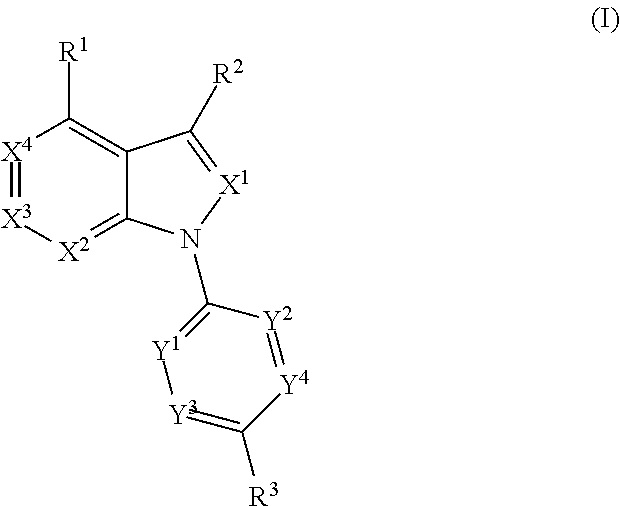
Figure 1 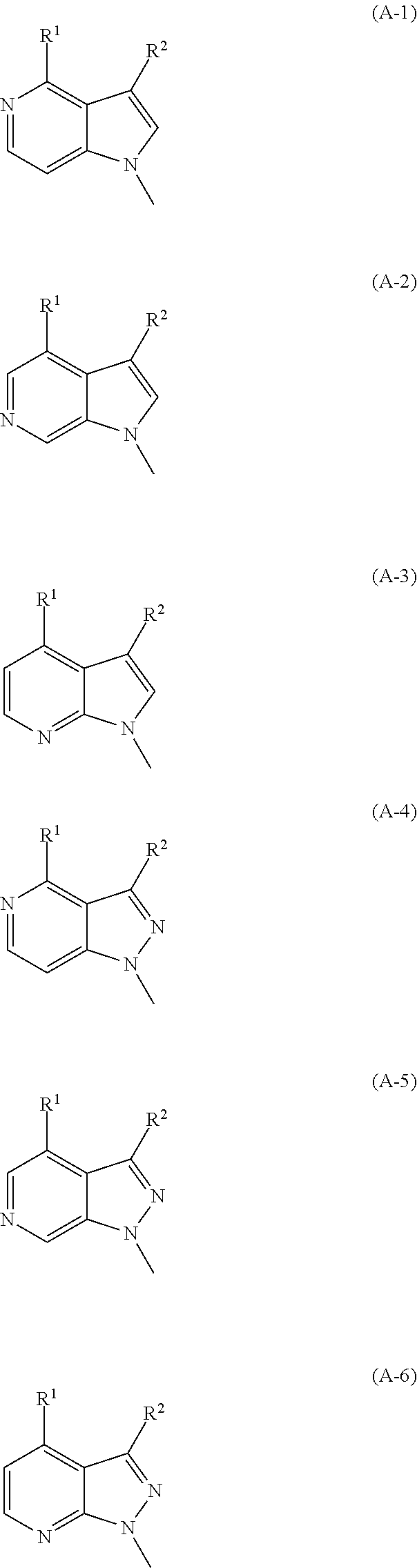
Figure 2 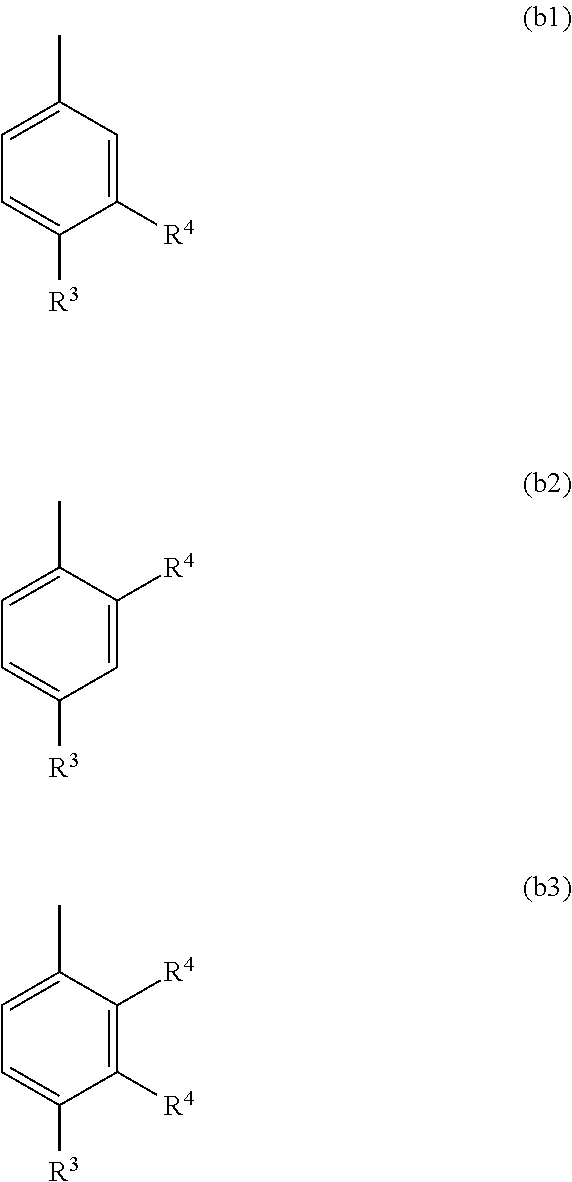
Figure 3
Abstract
Description
FIELD OF THE INVENTION
[0001] The present invention relates to an azabicyclo compound or a salt thereof and a pharmaceutical composition containing the same, particularly, a preventive and / or therapeutic agent for cancer, etc., based on HSP90 inhibitory activity.BACKGROUND OF THE INVENTION
[0002] A group of proteins called molecular chaperons is a multifunctional protein, which promotes the formation of the functional structures of other proteins or maintains these structures, promotes correct association, inhibits unnecessary aggregation, protects other proteins from degradation, and promotes secretion (Non-Patent Document 1). HSP90 is a molecular chaperon as abundant as approximately 1 to 2% of all intracellular soluble proteins and is however unnecessary for the biosynthesis of the majority of polypeptides, unlike other chaperon proteins (Non-Patent Document 1). Signaling-related factors (e.g., ERBB1 / EGFR, ERBB2 / HER2, MET, IGF1R, KDR / VEGFR, FLT3, ZAP70, KIT, CHUK / IKK, BRAF, RAF1, SRC...
Examples
example 1
2-(Trans-4-hydroxycyclohexylamino)-4-{4-(quinolin-3-yl)-3-(trifluoromethyl)-1H-pyrazolo[3,4-b]pyridin-1-yl}benzamide (1)
Example 1(1)
3-(Trifluoromethyl)-1H-pyrazolo[3,4-b]pyridine (1a)
[0150]Normal-butyllithium (a 2.6 M solution in hexane, 87.2 mL) was dropwise added to a solution of N,N-diisopropylamine (25.0 g) in tetrahydrofuran (hereinafter referred to as THF, 300 mL) under a nitrogen atmosphere at −5 to 0° C., and a solution of 2-fluoropyridine (25 g) in THF (50 mL) was dropwise added thereto at −78° C., followed by stirring for 1 hr. Subsequently, a solution of ethyl trifluoroacetate (47.6 g) in THF (50 mL) was dropwise added to the reaction solution at −78° C., followed by stirring at the same temperature for 1 hr. Hydrazine monohydrate (41.3 g) was added thereto, followed by stirring at 60° C. for 6 hr. Water (500 mL) was added to the reaction solution, followed by stirring at 100° C. for 30 min. The precipitate was collected by filtration and dried under reduced pressure to o...
example 1 (
Example 1(7)
2-(Trans-4-hydroxycyclohexylamino)-4-{4-(quinolin-3-yl)-3-(trifluoromethyl)-1H-pyrazolo[3,4-b]pyridin-1-yl}benzamide (1)
[0162]Compound (1f) (0.450 g) was dissolved in dimethyl sulfoxide (hereinafter referred to as DMSO, 2 mL) and ethanol (4 mL). An aqueous sodium hydroxide solution (4 M, 0.851 mL) and a 30% hydrogen peroxide solution (0.193 mL) were added to the resulting solution in this order at room temperature, followed by stirring for 30 min. Water was added to the reaction solution, the reaction solution was distributed between ethyl acetate and water, and the organic layer was washed with saturated saline. The organic layer after the washing was dried over anhydrous sodium sulfate, and then the solvent was distilled away. The residue was purified by neutral silica gel column chromatography (chloroform / methanol) to obtain compound (1) (0.300 g, 65%) as a white solid.
[0163]1H-NMR (DMSO-d6) δ 9.04 (1H, d, J=2.1 Hz), 8.94 (1H, d, J=4.6 Hz), 8.59 (1H, d, J=2.0 Hz), 8.4...
example 2
2-(Trans-4-hydroxycyclohexylamino)-4-{4-(quinolin-3-yl)-3-methyl-1H-pyrazolo[3,4-b]pyridin-1-yl}benzamide (2)
Example 2(1)
3-Methyl-1H-pyrazolo[3,4-b]pyridine (2a)
[0164]Normal-butyllithium (a 2.6 M solution in hexane, 87.0 mL) was dropwise added to a solution of N,N-diisopropylamine (11.2 mL) in THF (100 mL) at −78° C. under a nitrogen atmosphere, followed by increasing the temperature to 0° C. Then, the solution was cooled to −78° C., and a solution of 2-fluoropyridine (6.2 g) in THF (100 mL) was dropwise added thereto at −78° C., followed by stirring for 1 hr. Subsequently, a solution of N-methoxy-N-methylacetamide (8.46 mL) in THF (50 mL) was dropwise added to the reaction solution at −78° C., and then hydrazine monohydrate (31.9 mL) was added thereto, followed by stirring at 60° C. for 1 hr. After distillation of the solvent, water was added to the residue, followed by extraction with ethyl acetate. The organic layer was washed with saturated saline. The organic layer after the wa...