
Surgical stabilizer and closure system
- Summary
- Abstract
- Description
- Claims
- Application Information
AI Technical Summary
Benefits of technology
Problems solved by technology
Method used
Image

Examples
Embodiment Construction
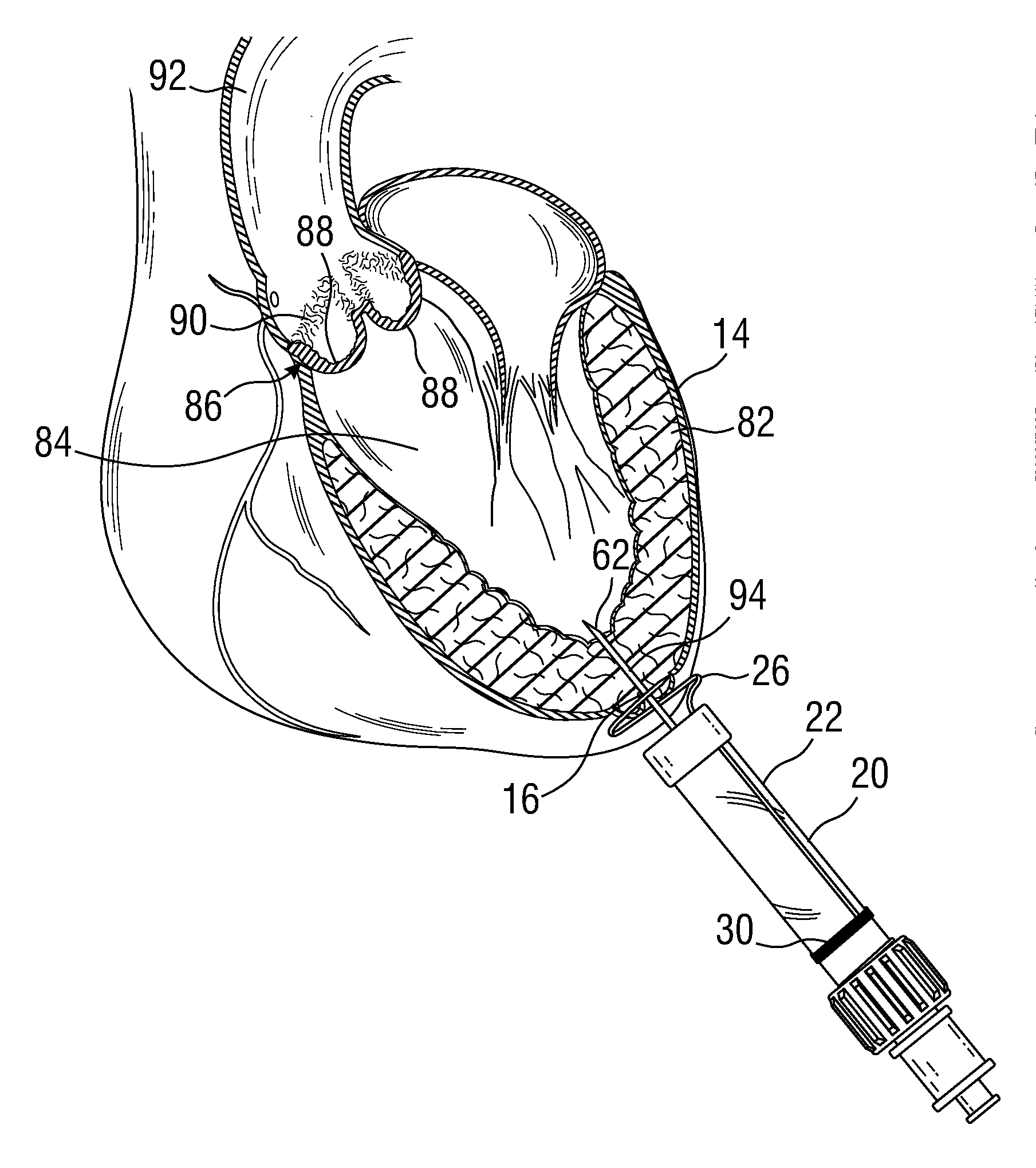
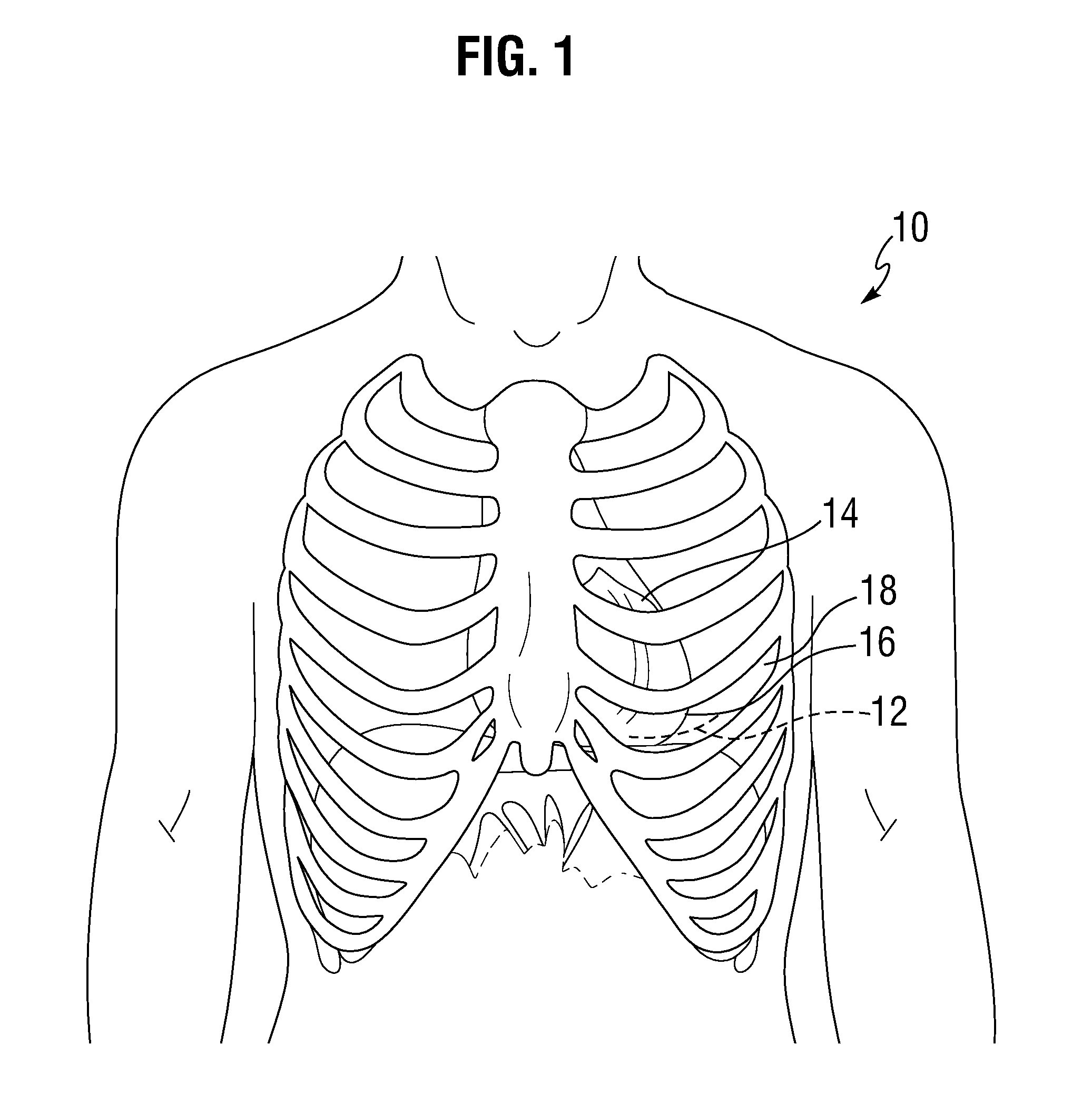
[0033]FIG. 1 depicts a cross-sectional view of a patient 10 where an intercostal incision opening 12 is created to access the patient's heart 14. The heart is a hollow muscular organ of a somewhat conical form, positioned between the lungs in the middle mediastinum and enclosed within the pericardium. The heart rests obliquely in the chest behind the body of the sternum and adjoining parts of the rib cartilages, and generally projects farther into the left than into the right half of the thoracic cavity so that about one-third is situated on the right and two-thirds on the left of the median plane. The heart is subdivided by septa into right and left halves, and a constriction subdivides each half of the organ into two cavities, the upper cavity being called the atrium, the lower the ventricle. The heart therefore consists of four chambers; the right and left atria, and right and left ventricles.
[0034]As seen in FIG. 1, the left ventricular apex (aka LVA) 16 is directed downward, fo...
PUM
 Login to View More
 Abstract
Description
Claims
Application Information
 Login to View More