

In situ bioremediation of contaminated groundwater using electron acceptor salts
a technology of electron acceptor salt and groundwater, which is applied in the direction of biological water/sewage treatment, water treatment compounds, water treatment parameter control, etc., can solve the problems of btex compounds being susceptible to anaerobic biodegradation, low solubility of dissolved oxygen in water, and low dissolved oxygen solubility in water
- Summary
- Abstract
- Description
- Claims
- Application Information
AI Technical Summary
Benefits of technology
Problems solved by technology
Method used
Image

Examples
examples
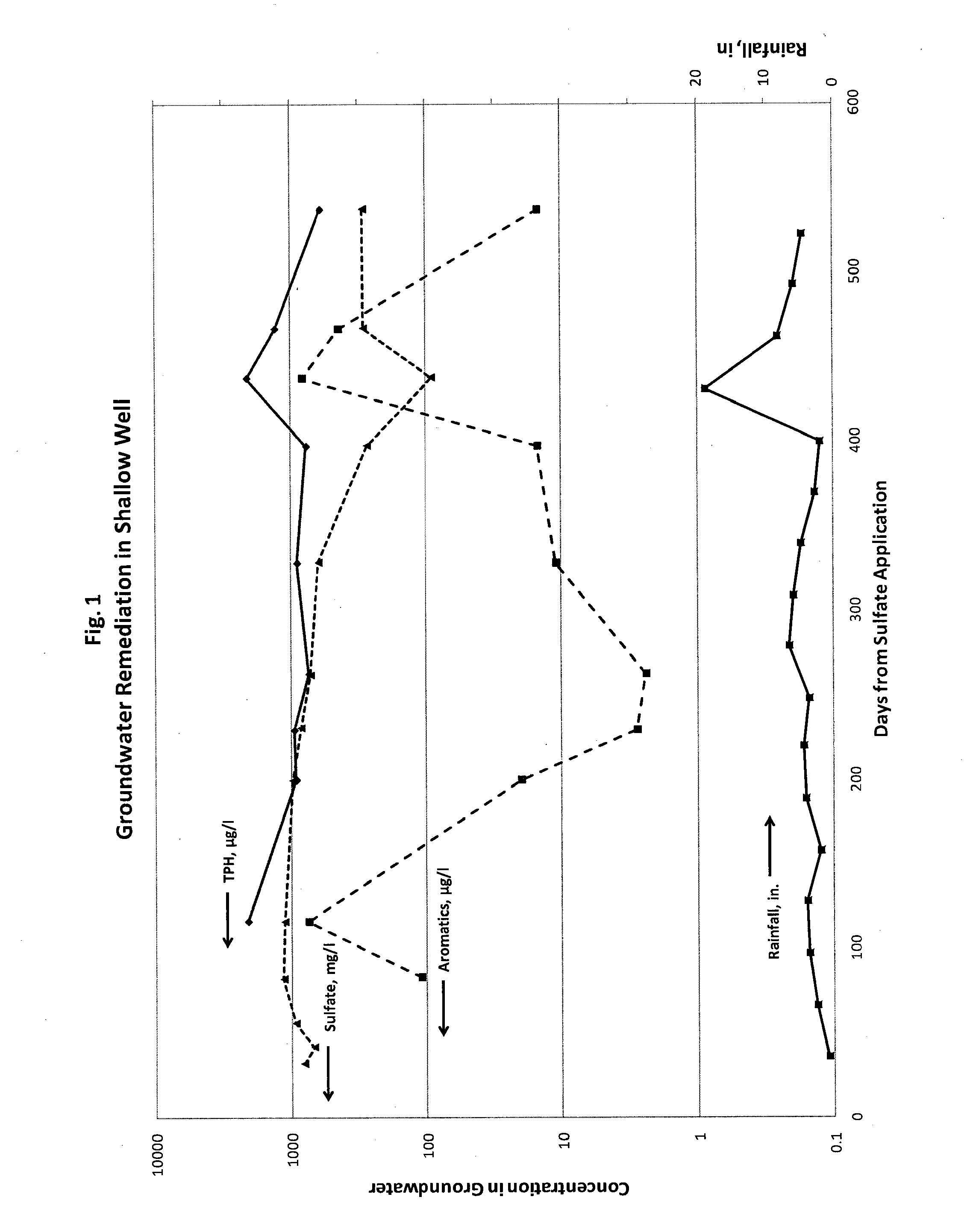
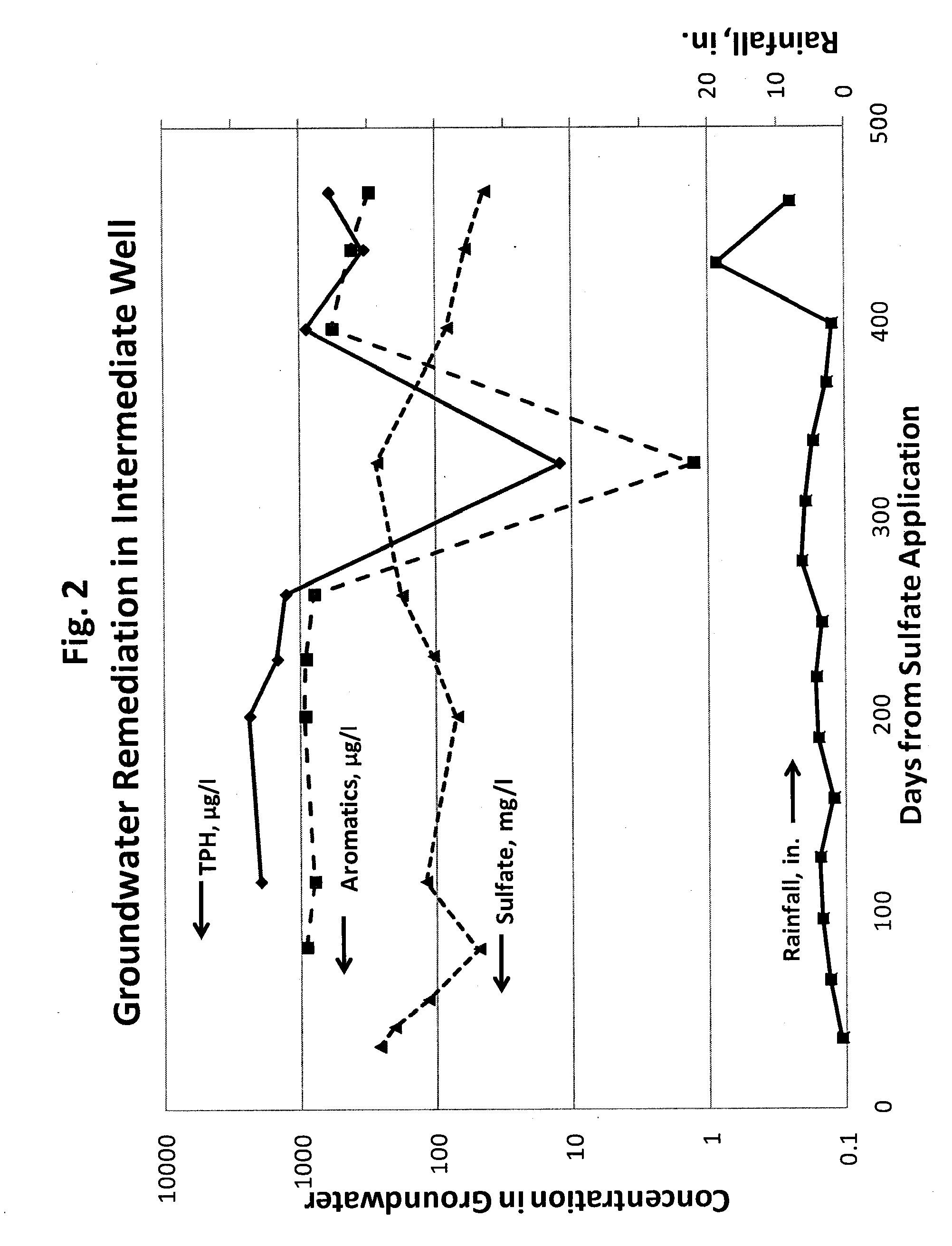
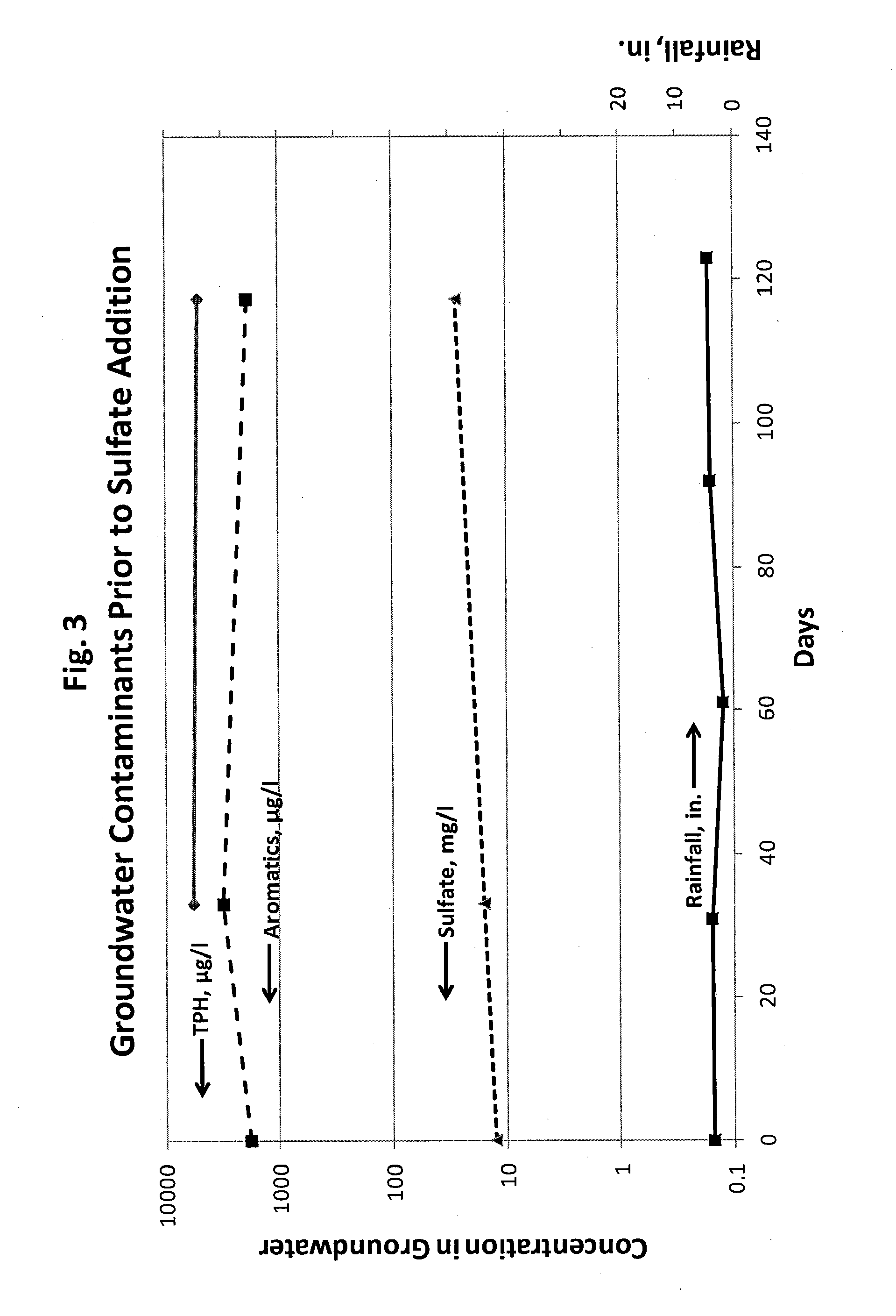
[0040]A vacant site, with no surface infrastructure, overlying contaminated groundwater, was selected for treatment. The aquifer at this site had a hydraulic conductivity of greater than 10−3 cm / sec. At this site, 650 pounds of gypsum was land applied to a 50 ft×50 ft area of the site, and irrigated with 25,000 gal of water over 8 days. Following this application, groundwater from the monitoring wells in the pilot area was periodically sampled. These wells included a shallow well at a depth of 1.5 to 8.5 ft below ground surface and an intermediate well at 8.5 ft to 13.5 ft below ground surface. Water samples from each level were periodically analyzed for sulfate, aromatics and total petroleum hydrocarbons (TPH, typically in the C6 to C12 range) to evaluate the effectiveness of the land application in delivering sulfate to the groundwater and its impact on contaminant concentrations.
[0041]FIG. 1 shows the changes in sulfate, aromatics and TPH concentrations in the shallow well follow...
PUM
| Property | Measurement | Unit |
|---|---|---|
| hydraulic conductivity | aaaaa | aaaaa |
| depth | aaaaa | aaaaa |
| concentration | aaaaa | aaaaa |
Abstract
Description
Claims
Application Information
 Login to View More