
Encapsulation system featuring an intelligent network component
a network component and encapsulation system technology, applied in digital computers, wireless network protocols, instruments, etc., can solve the problems of poor performance and a large and achieve the effect of improving system performance and reducing the amount of signalling traffic required
- Summary
- Abstract
- Description
- Claims
- Application Information
AI Technical Summary
Benefits of technology
Problems solved by technology
Method used
Image

Examples
Embodiment Construction
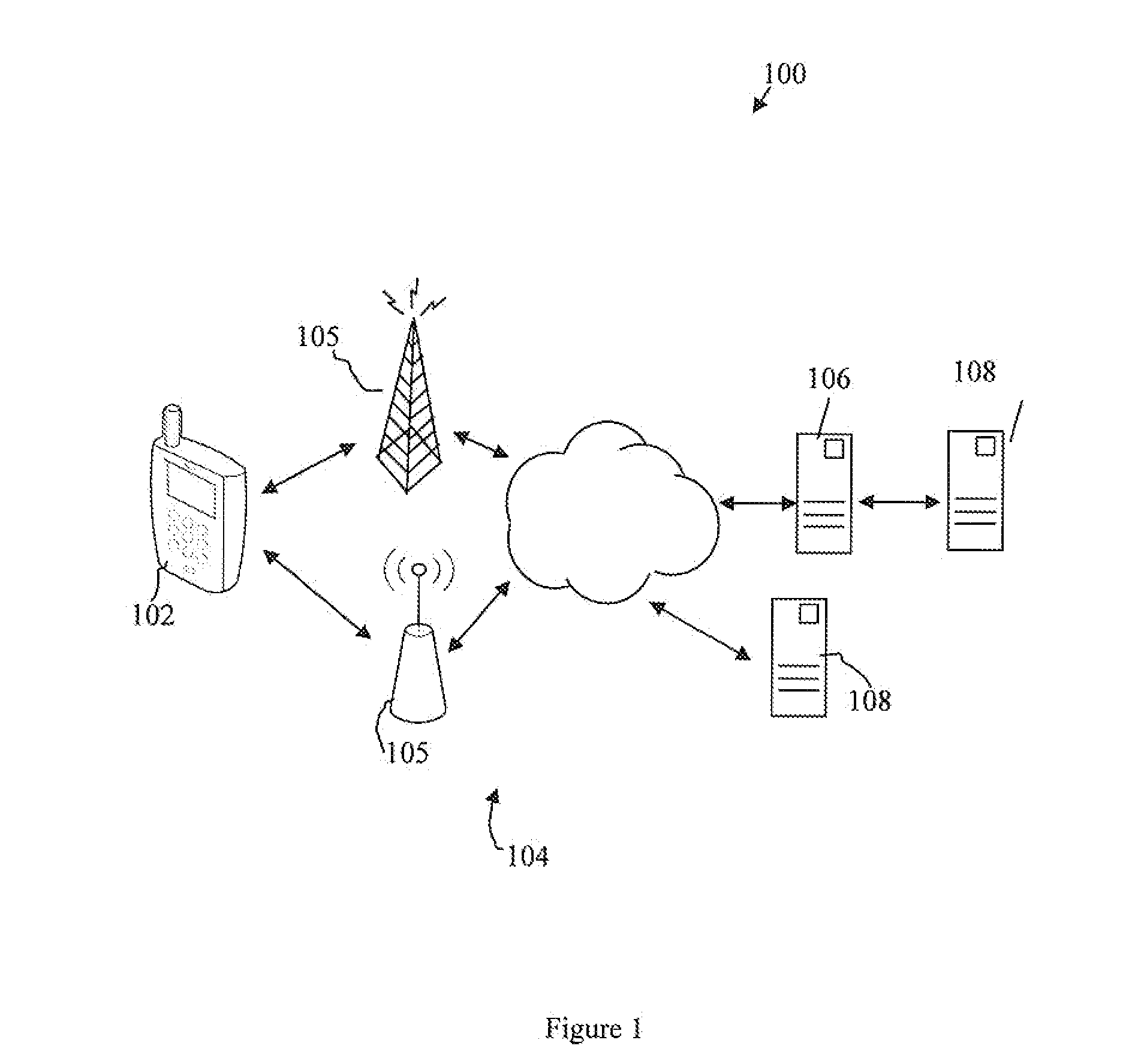
[0015]For convenience, like numerals in the description refer to like structures in the drawing. Referring to FIG. 1, an encapsulation system is illustrated generally by numeral 100. The encapsulation system 100 includes a client 102, a communication network 104, a network component 106, and a server 108.
[0016]The client 102 encapsulates data and transmits it, via the communication network 104, to the network component 106. The network component 106 decapsulates the data and transmits it to the server 108. Accordingly, depending on the implementation, the client 102 may refer to a personal computing device used directly by a user, such as a personal computer, notebook, tablet, smart phone, smart appliance and the like. Alternatively, the client 102 may refer to a peripheral device that is in direct communication with the personal computing device, on the same side of the network 104, such as a modem, router and the like.
[0017]Conversely, the network component 106 encapsulates data t...
PUM
 Login to View More
 Abstract
Description
Claims
Application Information
 Login to View More