

Undersea Free Vehicle and Components
a free vehicle and submerged technology, applied in underwater equipment, waterborne vessels, special-purpose vessels, etc., can solve the problems of difficult communication with the free vehicle, unfavorable commanding of the free vehicle, and no general-purpose free vehicle platform that can be adapted to a variety of purposes, so as to improve line-of-sight range and reception stability, and simple reconfiguration
- Summary
- Abstract
- Description
- Claims
- Application Information
AI Technical Summary
Benefits of technology
Problems solved by technology
Method used
Image

Examples
Embodiment Construction
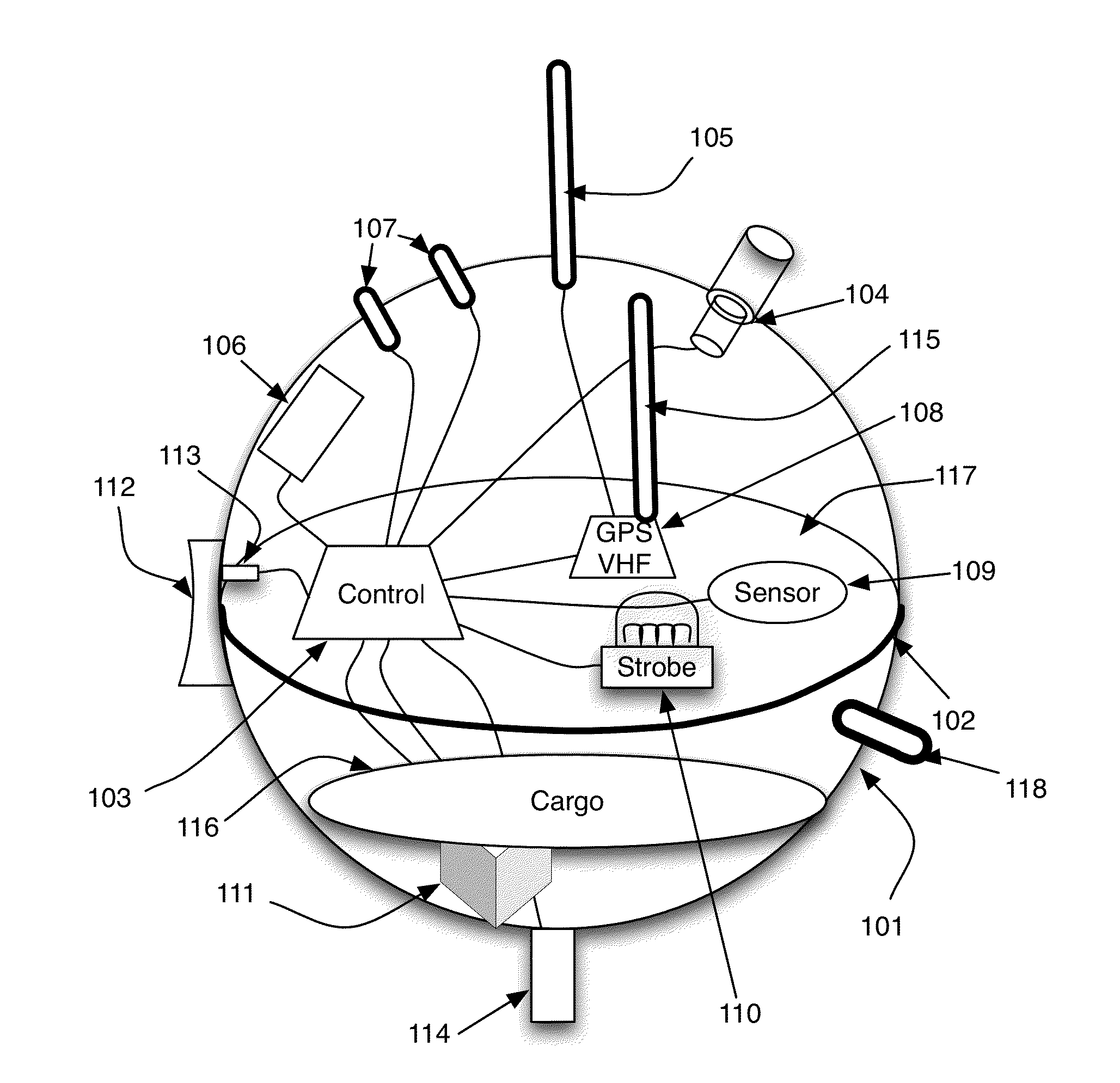
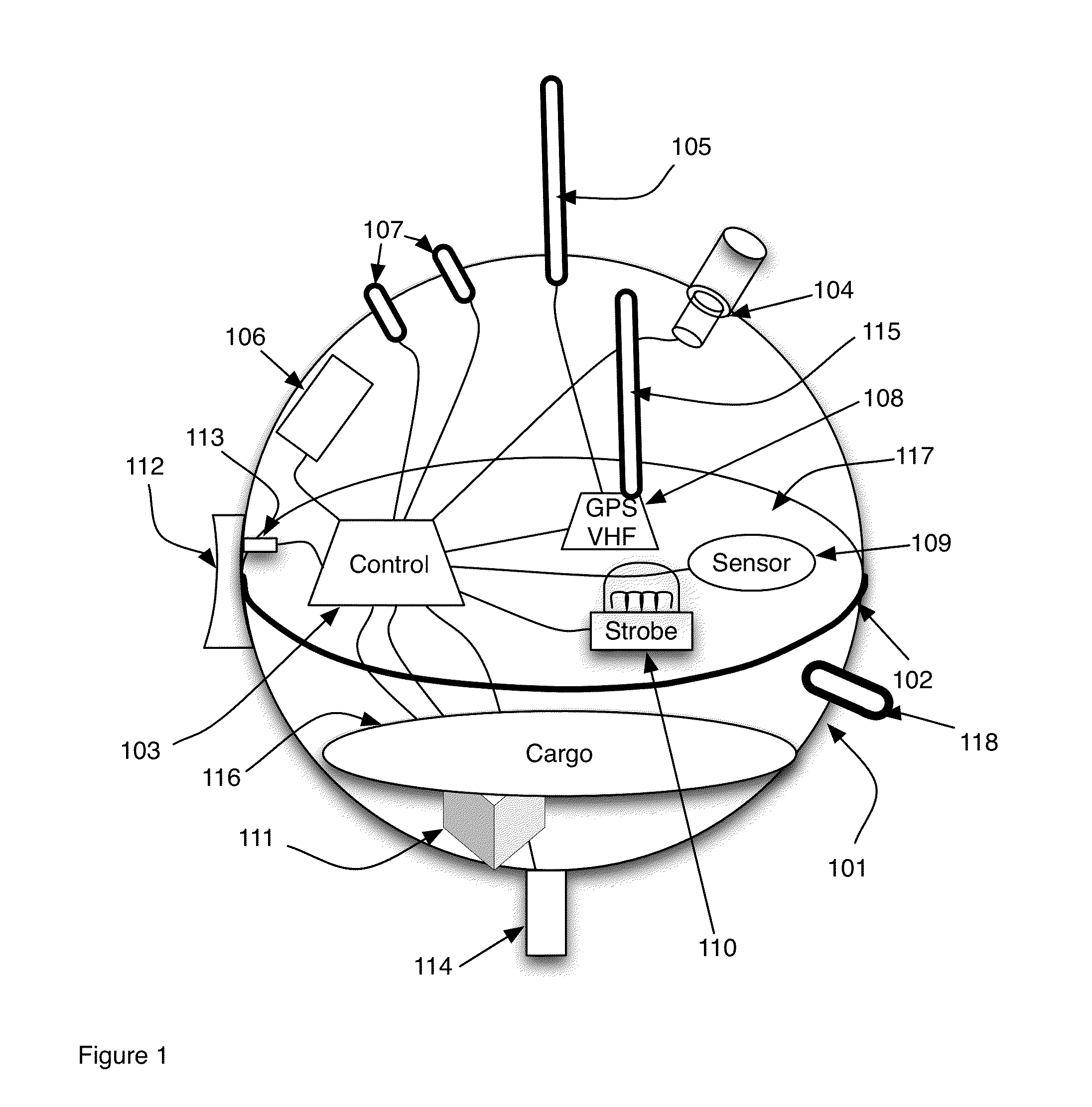
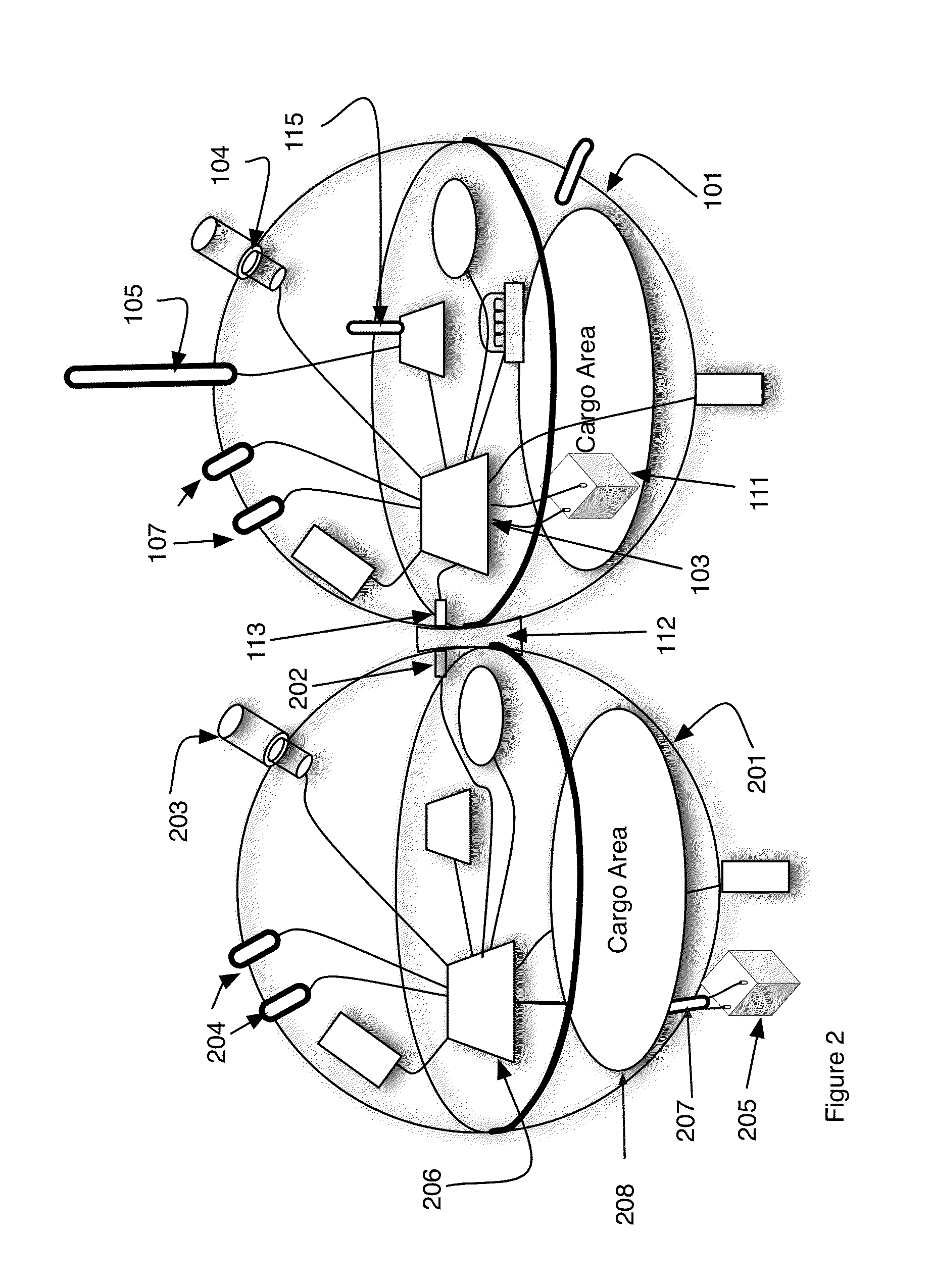
[0020]Referring to FIG. 1 an exemplary system used to practice the invention is shown. The free vehicle is comprised of a housing 101 that either contains components in its interior or has components attached to its exterior. The housing is restrained within a free flooding frame, not shown, that permits the assembly of all the components herein described as a single integral platform that may be simply deployed and recovered from a surface vessel. In the embodiment shown the housing is a sphere. The sphere may be made of glass, plastic, metal or any other material that can form a sealed environment and operate at the pressures encountered at ocean depths. In the embodiment shown a glass sphere is used. The sphere in the present embodiment is comprised of two hemispheres that are joined at a lap joint 102. Other embodiments include cylinders, boxes and irregular shapes. In use in deep-sea operations the housing is sealed and partially evacuated and / or purged with dry air or nitrogen...
PUM
 Login to View More
 Abstract
Description
Claims
Application Information
 Login to View More