

System and method for increasing coherence length in lidar systems
- Summary
- Abstract
- Description
- Claims
- Application Information
AI Technical Summary
Benefits of technology
Problems solved by technology
Method used
Image

Examples
Embodiment Construction
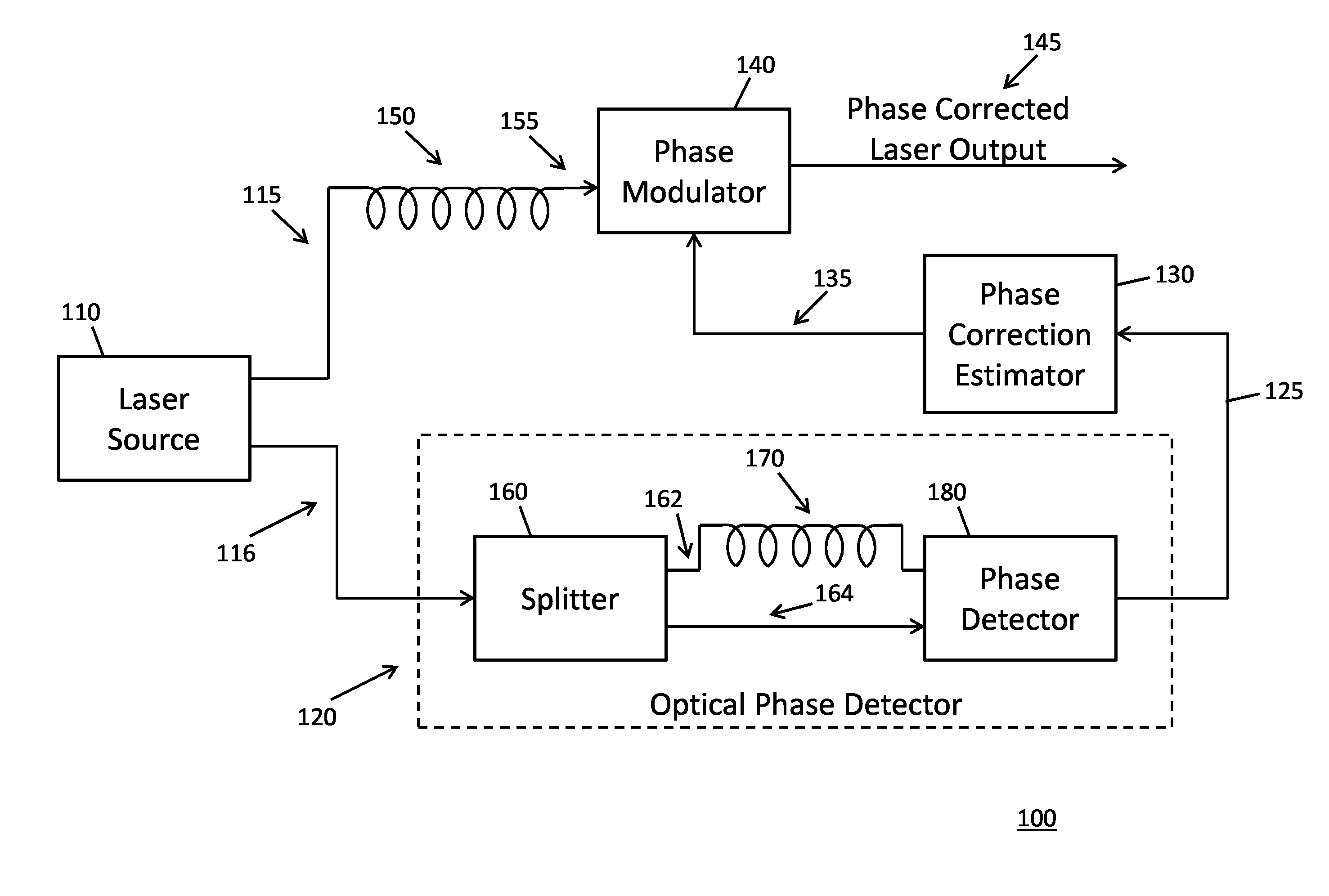
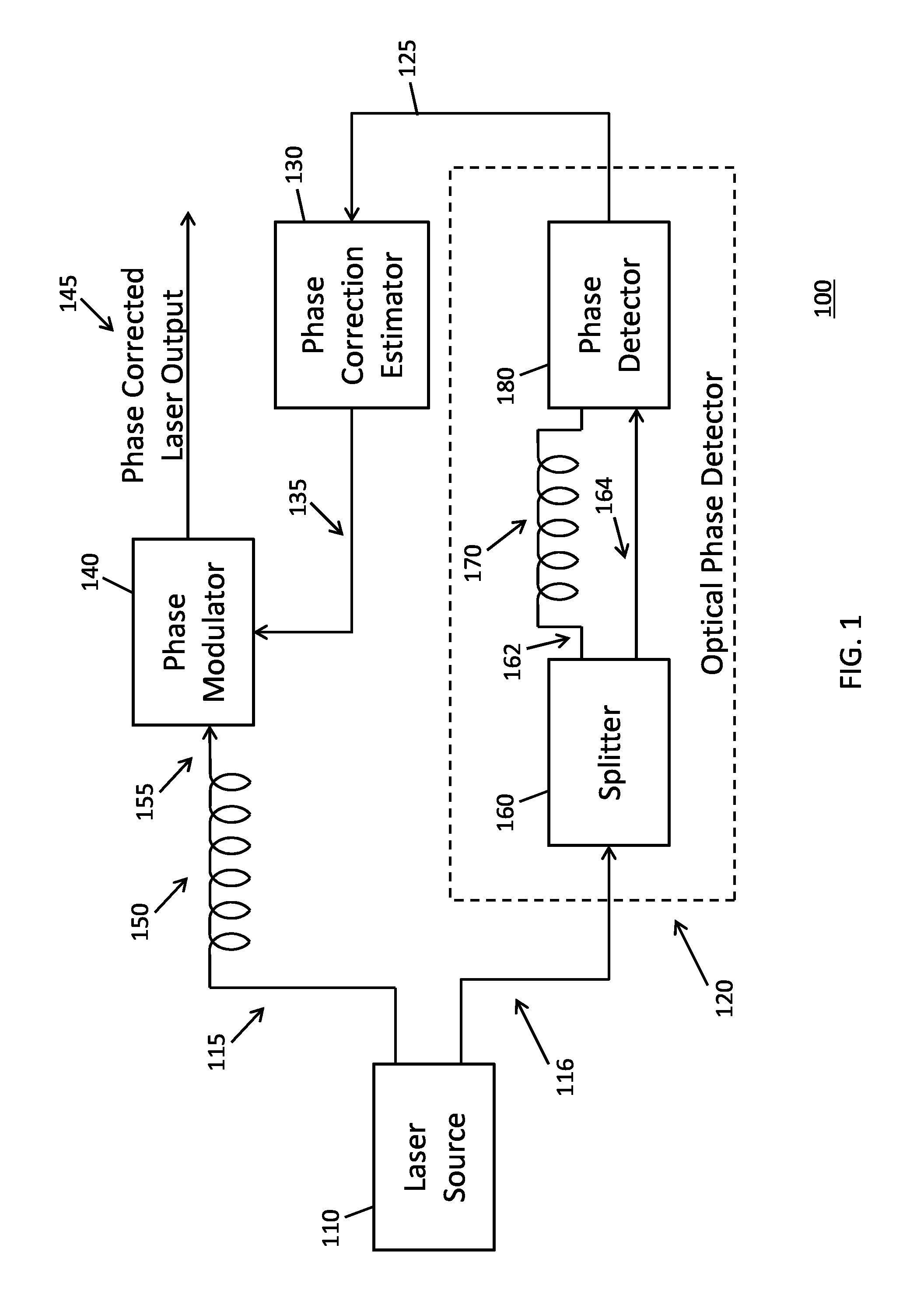
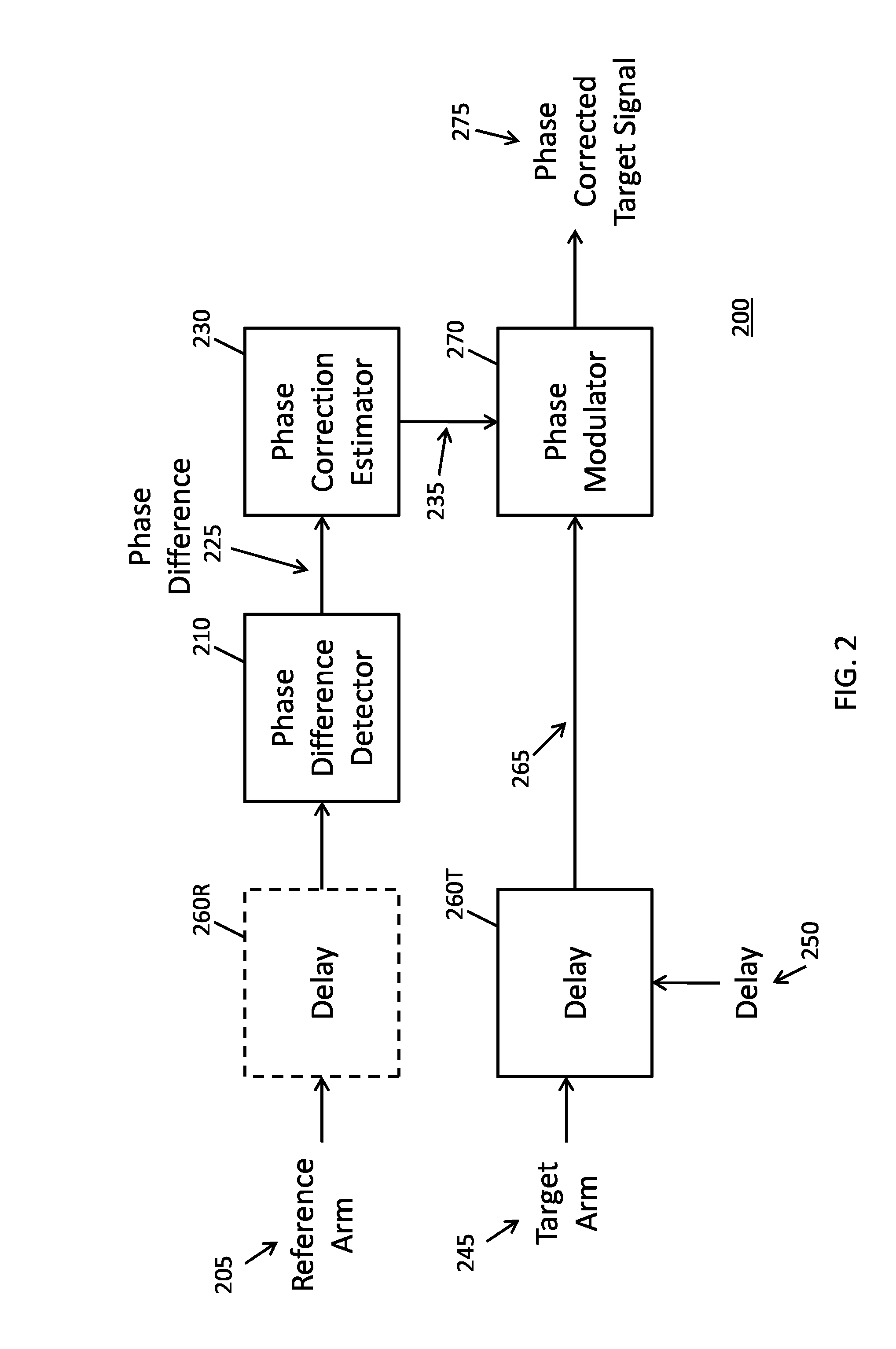
[0013]A conventional frequency modulated, continuous wave lidar system that employs a tunable laser source (i.e., lasers) typically suffers from reduced coherence length, which in turn, impacts an overall effective range of the lidar system. The presence of “phase wandering” (i.e., variation in phase over time, also “phase variance”) in the output signals of these lasers negatively impacts the coherence length of the lidar system. Conventional methods to correct the output signals for phase wandering are unable to do so across a wide band of frequencies like those used by a frequency-modulated lidar system. As a result of phase wandering and other conventional system constraints, certain vibrations on a surface of a target, particularly those having sub-micron amplitudes, are difficult to measure because they may appear as additive noise at one or more frequencies within an effective bandwidth of the lidar system.
[0014]Various implementations of the invention are now described. In s...
PUM
 Login to View More
 Abstract
Description
Claims
Application Information
 Login to View More