Check patentability & draft patents in minutes with Patsnap Eureka AI!

Process for the production of tetrachloromethane

a technology of tetrachloromethane and tetrachloromethane, which is applied in the field of tetrachloromethane production processes, can solve the problems of prohibitively high cost, limited commercial availability of many chlorinated propenes, and use of raw materials and/or starting materials that are prohibitively expensive, etc., and achieves greater reaction selectivity, cost saving, and high yield

Active Publication Date: 2014-11-13
BLUE CUBE IP
View PDF3 Cites 13 Cited by
  • Summary
  • Abstract
  • Description
  • Claims
  • Application Information

AI Technical Summary

Benefits of technology

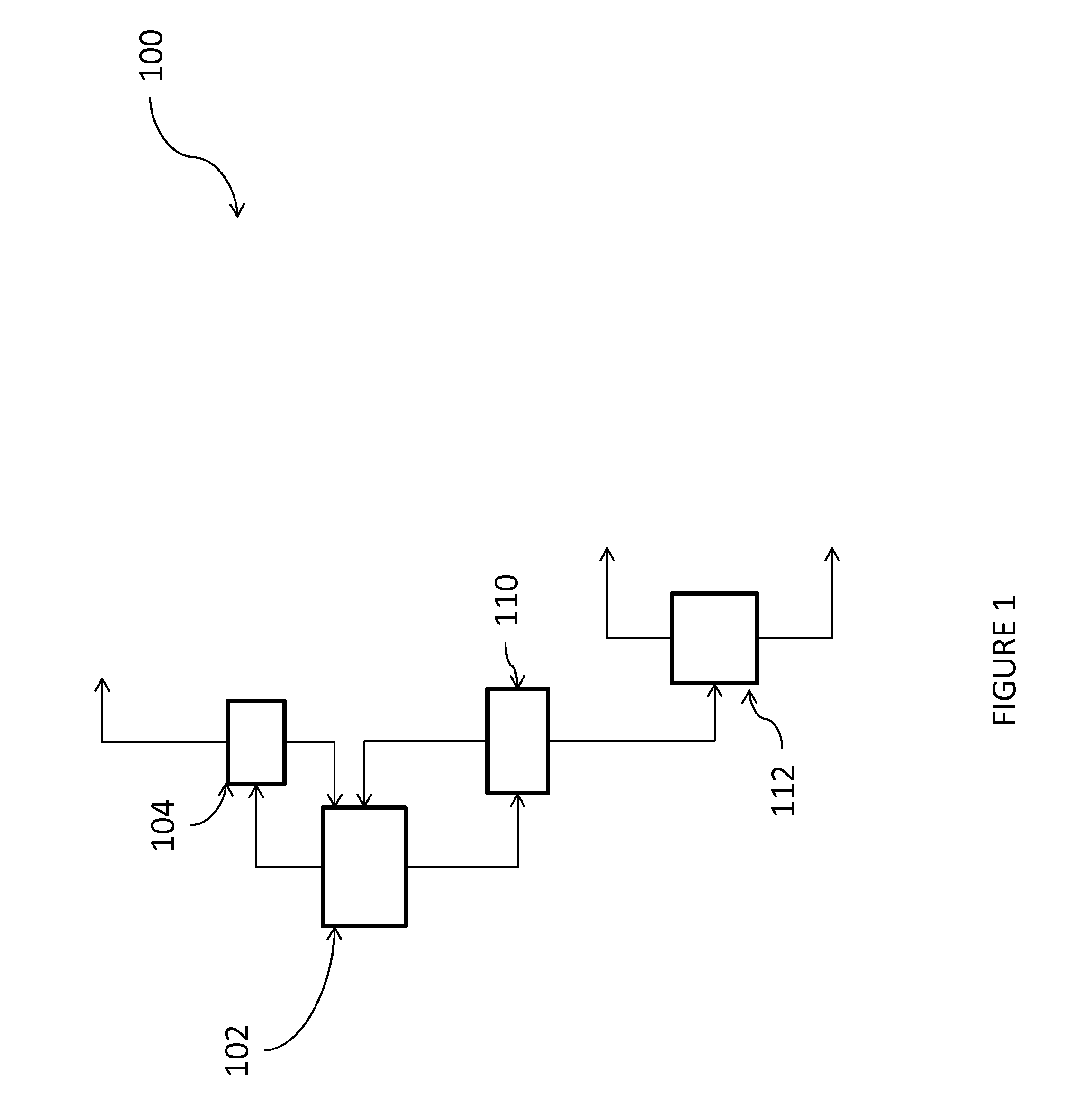
The present invention relates to processes for producing tetrachloromethane. These processes use partially chlorinated methanes as starting materials and rely on a free radical catalyst to facilitate chlorination. These processes offer lower intensity conditions and higher yields of tetrachloromethane and chloroform as byproducts. Recycling of reactants can further increase the yield and conversion, providing cost savings. In summary, these processes offer efficient and cost-effective ways to produce tetrachloromethane.

Problems solved by technology

Unfortunately, many chlorinated propenes may have limited commercial availability, and / or may only be available at prohibitively high cost.
This may be due at least in part to the fact that conventional processes for their manufacture may require the use of raw materials and / or starting materials that are prohibitively expensive, or otherwise too limited in the throughputs that can be achieved, to be economically produced by manufacturers on the large scale required to be useful as feedstocks.
Such raw materials may be produced in limited quantities as by-products of other processes, or, may be produced by processes that may be less than optimal in terms of selectivity and / or yield, process operating and / or capital cost, safety, and / or environmental acceptability.

Method used

the structure of the environmentally friendly knitted fabric provided by the present invention; figure 2 Flow chart of the yarn wrapping machine for environmentally friendly knitted fabrics and storage devices; image 3 Is the parameter map of the yarn covering machine
View more

Image

Smart Image Click on the blue labels to locate them in the text.
Viewing Examples
Smart Image
  • Process for the production of tetrachloromethane

Examples

Experimental program
Comparison scheme
Effect test

example 1

Conversion of Methylene Chloride to Chloroform and Tetrachloromethane

[0037]Methylene chloride (M2) is reacted with chlorine in the liquid phase at 82° C. and 70 psig in the presence of a 40 watt UV black light in a 1 inch ID tube reactor jacketed with circulating water from a 15° C. temperature-regulated water bath at ambient pressure. The organic phase is analyzed on a Varian 6000 gas chromatograph equipped with a 30 meter DB-5 fused-silica capillary column. Using 69-70 minute residence time and a methylene chloride / chlorine molar feed ratio of 1.32, liquid product analysis shows 22.72 wt %, 53.3 wt %, and 24 wt % of the methylene chloride, chloroform, and tetrachloromethane, respectively. In other words, a 3 / 1 chloroform / tetrachloromethane molar product ratio is obtained at 66% methylene chloride conversion.

example 2

Conversion of Methyl Chloride and Methylene Chloride to Chloroform and Tetrachloromethane

[0038]Methyl chloride and methylene chloride, at a molar ratio of 1 / 4, are reacted with chlorine in the liquid phase in the presence of 100 ppm of AIBN at 70 psig and 84° C. in a ½ inch ID and 18 inch long tube. At flow rates of 1, 4, and 2.5 grmole / hr of methyl chloride, methylene chloride and chlorine, respectively, methyl chloride and methylene chloride conversions of 61.4 and 27.5%, respectively, are obtained. The product mixture comprises 4.1 wt. % methyl chloride, 48.4 wt. % methylene chloride, 38.0 wt. % chloroform, and 9.5 wt. % tetrachloromethane. The ratio of chloroform to tetrachloromethane is found to be 5.2.

example 3

Chlorination of Chloroform to Tetrachloromethane

[0039]Forty five to 55 gallons of liquid chloroform was chlorinated at a temperature of from 35° C. to 40° C. using 400 watt H1 mercury vapor lamp with a wavelength of from 300 to 500 millimicrons. The reaction is conducted in a 30 inch ID nickel tank equipped with triangular chlorine bubbler and three-light well. The percent tetrachloromethane in the liquid product is determined using specific gravity. After adding 300 lbs of Cl2, 95mole % of tetrachloromethane is obtained in the product mixture.

the structure of the environmentally friendly knitted fabric provided by the present invention; figure 2 Flow chart of the yarn wrapping machine for environmentally friendly knitted fabrics and storage devices; image 3 Is the parameter map of the yarn covering machine
Login to View More

PUM

PropertyMeasurementUnit
temperatureaaaaaaaaaa
pressureaaaaaaaaaa
pressureaaaaaaaaaa
Login to View More

Abstract

Processes for the production of tetrachloromethane are provided. The present processes involve catalyzing the chlorination of a feedstream comprising partially chlorinated methanes with a free radical initiator. Cost savings are thus provided relative to conventional processes that require the use of high temperatures and / or pressures, and safety concerns are alleviated or eliminated.

Description

FIELD[0001]The present invention relates to processes for the production of tetrachloromethane.BACKGROUND[0002]Hydrofluorocarbon (HFC) products are widely utilized in many applications, including refrigeration, air conditioning, foam expansion, and as propellants for aerosol products including medical aerosol devices. Although HFC's have proven to be more climate friendly than the chlorofluorocarbon and hydrochlorofluorocarbon products that they replaced, it has now been discovered that they exhibit an appreciable global warming potential (GWP).[0003]The search for more acceptable alternatives to current fluorocarbon products has led to the emergence of hydrofluoroolefin (HFO) products. Relative to their predecessors, HFOs are expected to exert less impact on the atmosphere in the form their much lower GWP. Advantageously, HFO's also exhibit low flammability and low toxicity.[0004]As the environmental, and thus, economic importance of HFO's has developed, so has the demand for precu...

Claims

the structure of the environmentally friendly knitted fabric provided by the present invention; figure 2 Flow chart of the yarn wrapping machine for environmentally friendly knitted fabrics and storage devices; image 3 Is the parameter map of the yarn covering machine
Login to View More

Application Information

Patent Timeline
no application Login to View More
Patent Type & Authority Applications(United States)
IPC IPC(8): C07C17/013
CPCC07C17/013C07C17/10C07C19/041Y02P20/582
Inventor TIRTOWDJOJO, MAX MARKUSRANDOLPH, DANNY EUGENE
Owner BLUE CUBE IP
Features
  • R&D
  • Intellectual Property
  • Life Sciences
  • Materials
  • Tech Scout
Why Patsnap Eureka
  • Unparalleled Data Quality
  • Higher Quality Content
  • 60% Fewer Hallucinations
Social media
Patsnap Eureka Blog
Learn More