
Mass spectrometry systems with convective flow of buffer gas for enhanced signals and related methods
a buffer gas and mass spectrometry technology, applied in the field of mass spectrometry, can solve the problems that conventional mass spectrometers are unsuitable for these situations, and achieve the effect of increasing the peak heigh
- Summary
- Abstract
- Description
- Claims
- Application Information
AI Technical Summary
Benefits of technology
Problems solved by technology
Method used
Image

Examples
examples
Introduction
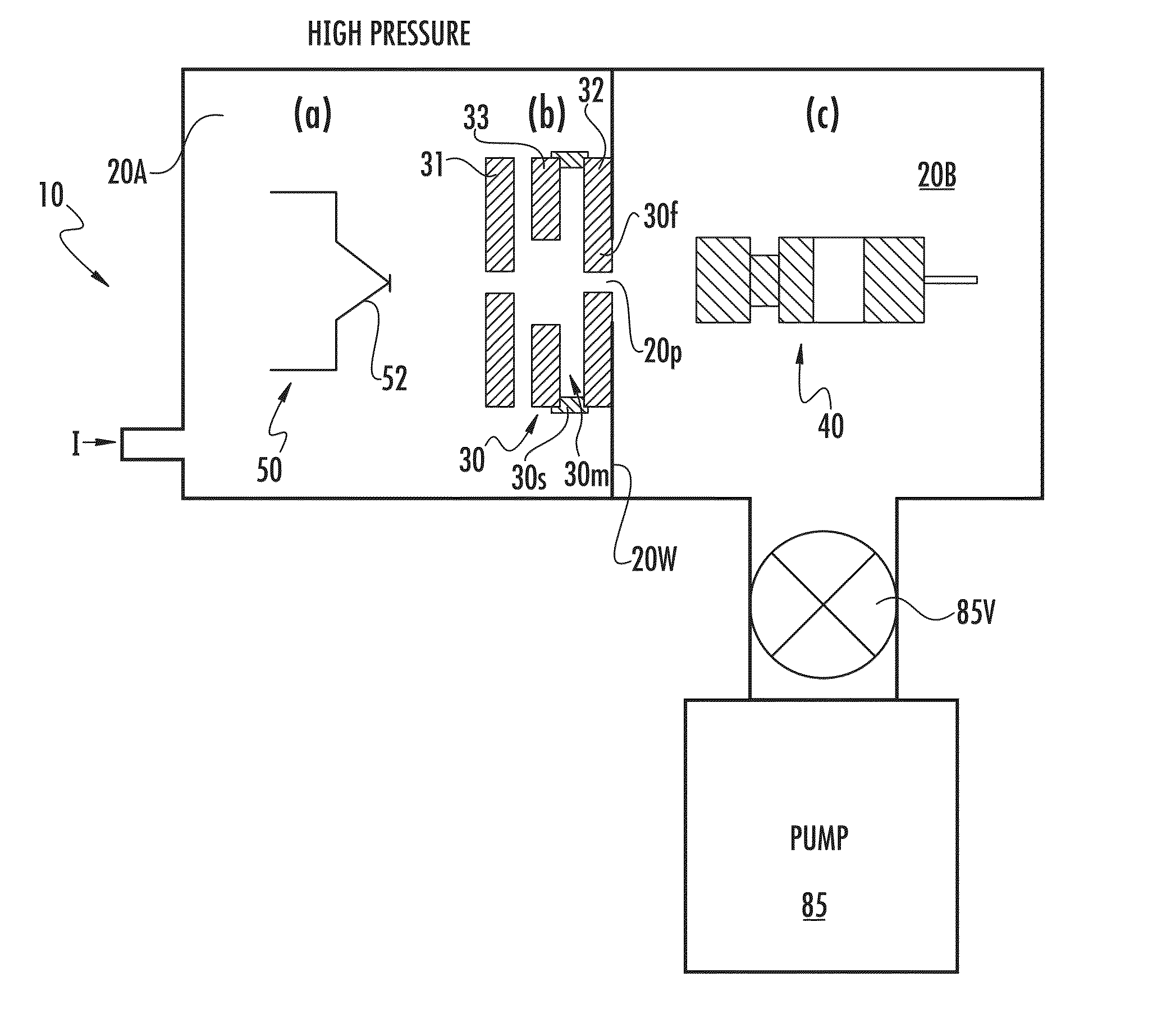
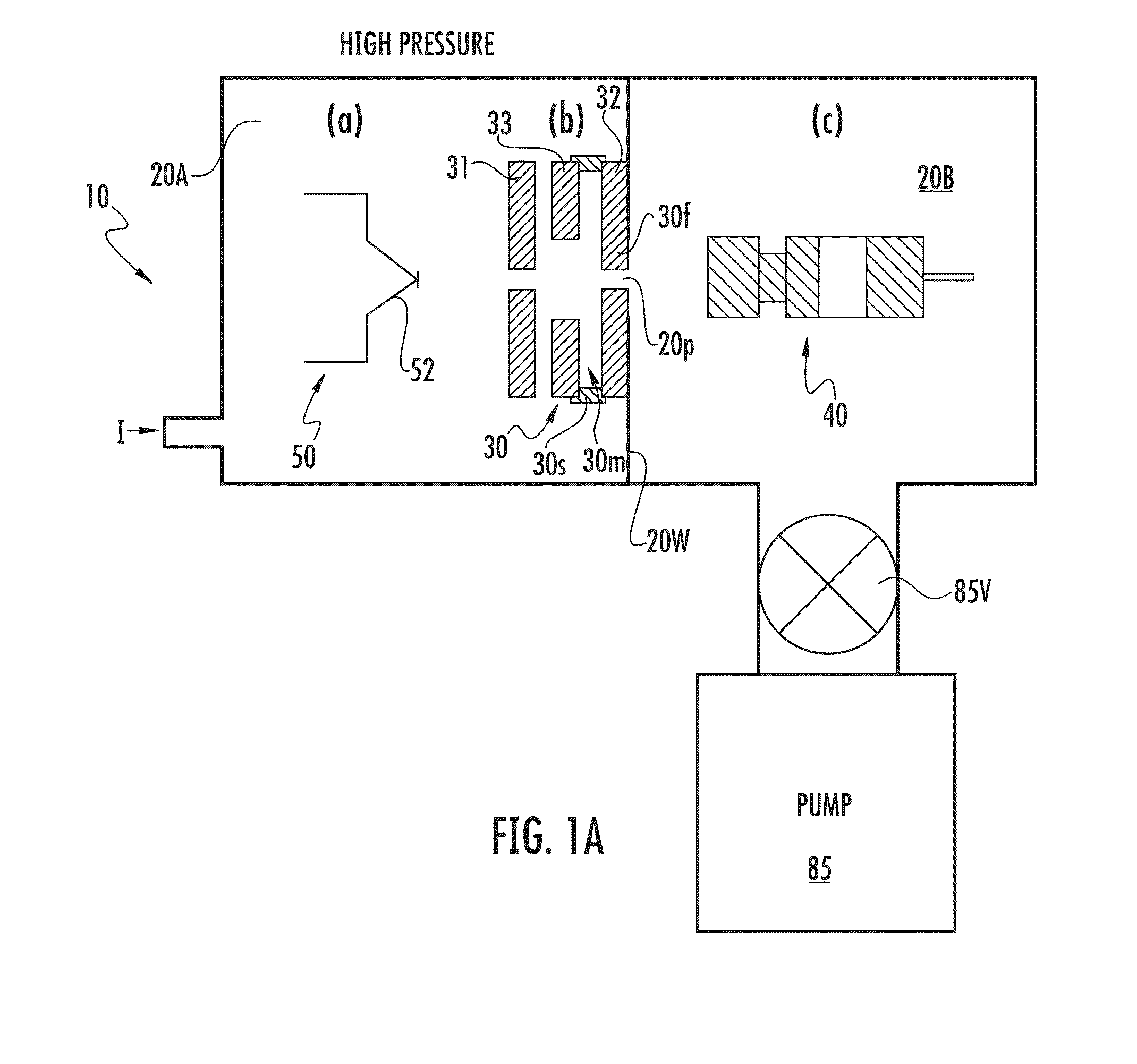
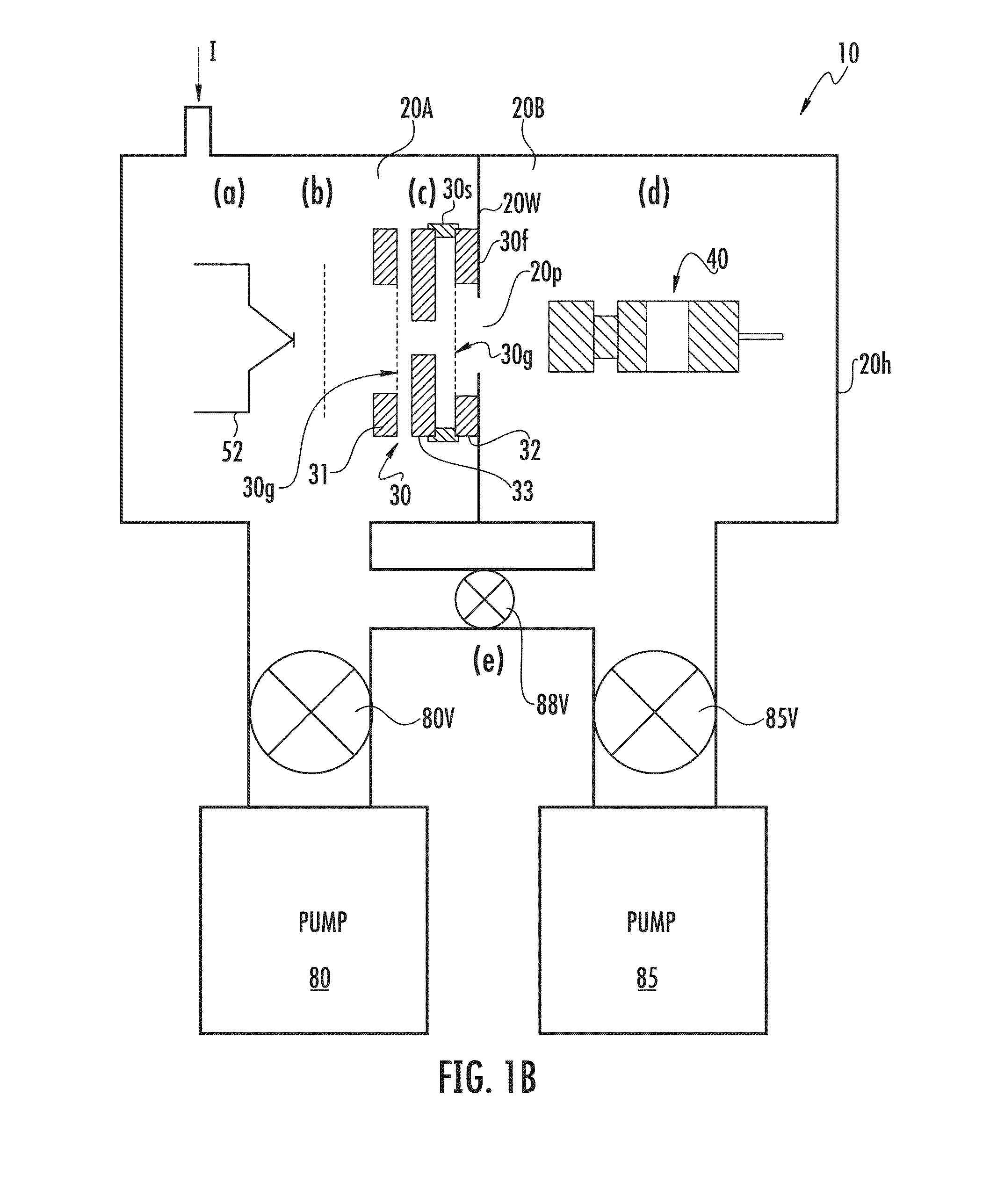
[0198]Miniature cylindrical ion traps (CIT) at pressures of 1 Torr were chosen for reduction to practice examples of some embodiments of the present invention. Significant reduction in size, weight, and, power (SWaP) results from the diminished pumping requirements of high-pressure operation. Standard electron multiplier detectors cannot be utilized at high pressures. Dual differentially pumped chambers were used to simultaneously achieve reduced pumping requirements and high detector sensitivity. In these configurations, the ionizer / trap and detector are held at two different pressures. One result of differential pumping is gas flow through the CIT mounted on the partition between the chambers. Simulations and experimental studies of the impact of buffer gas flow on mass spectral performance are discussed below.
Experimental Setup
[0199]During the experiment, the trap chamber was held at a constant pressure P1 adjusted by a needle valve. A 10 liter Tedlar bag was connecte...
PUM
 Login to View More
 Abstract
Description
Claims
Application Information
 Login to View More