

Foam based non-newtonian materials for use with aircraft engine components
a technology of aircraft engine and non-newtonian materials, which is applied in the direction of machines/engines, synthetic resin layered products, liquid fuel engines, etc., can solve the problems of graphite composites, ingested objects striking the blade near the leading edge, and aircraft engine components used in jet engine applications are susceptible to foreign object impact damage,
- Summary
- Abstract
- Description
- Claims
- Application Information
AI Technical Summary
Benefits of technology
Problems solved by technology
Method used
Image

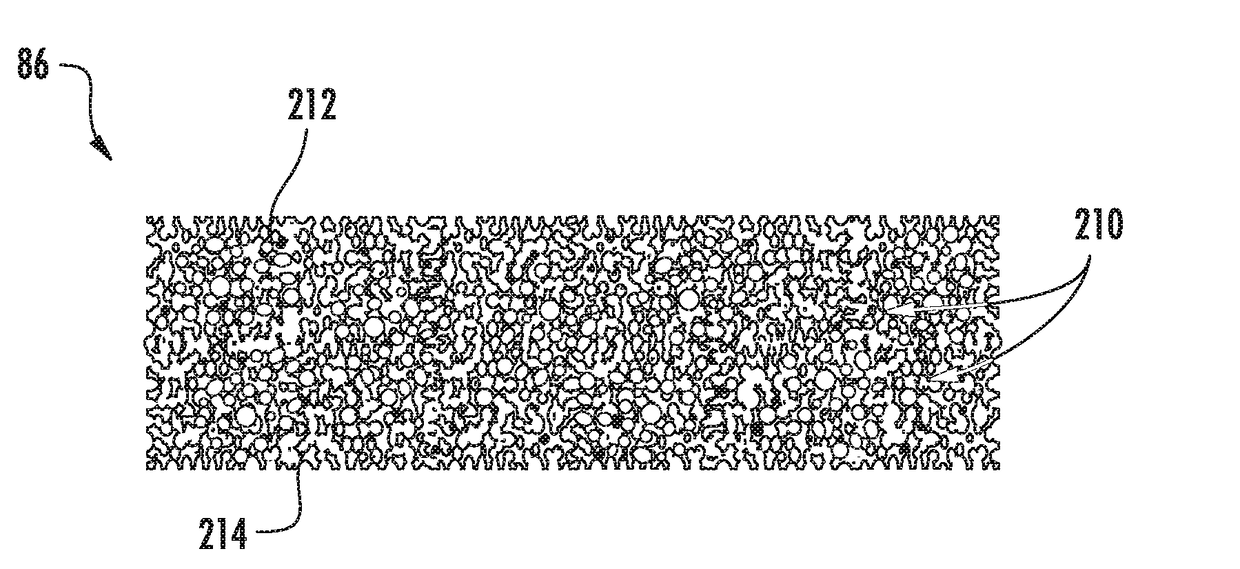
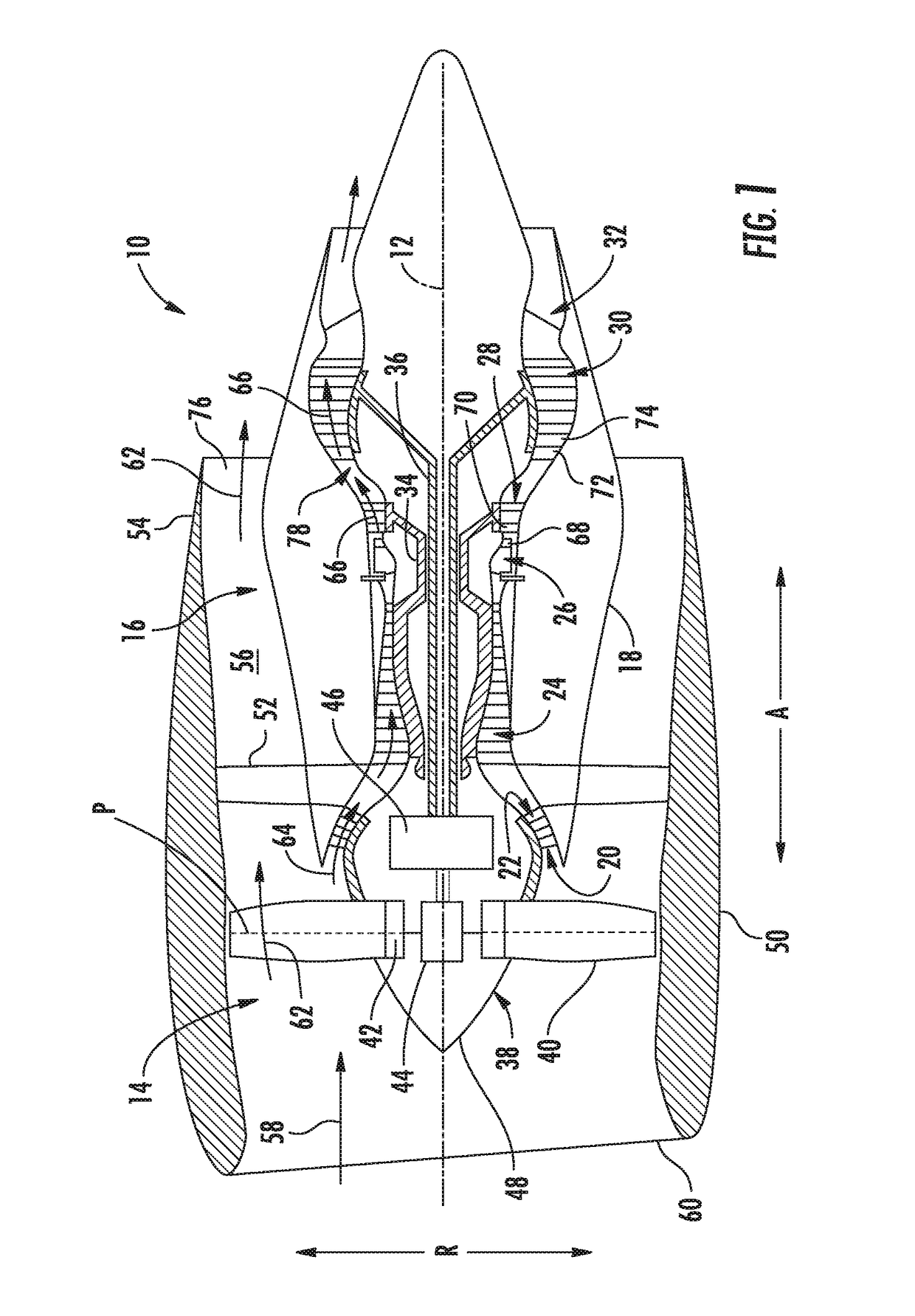
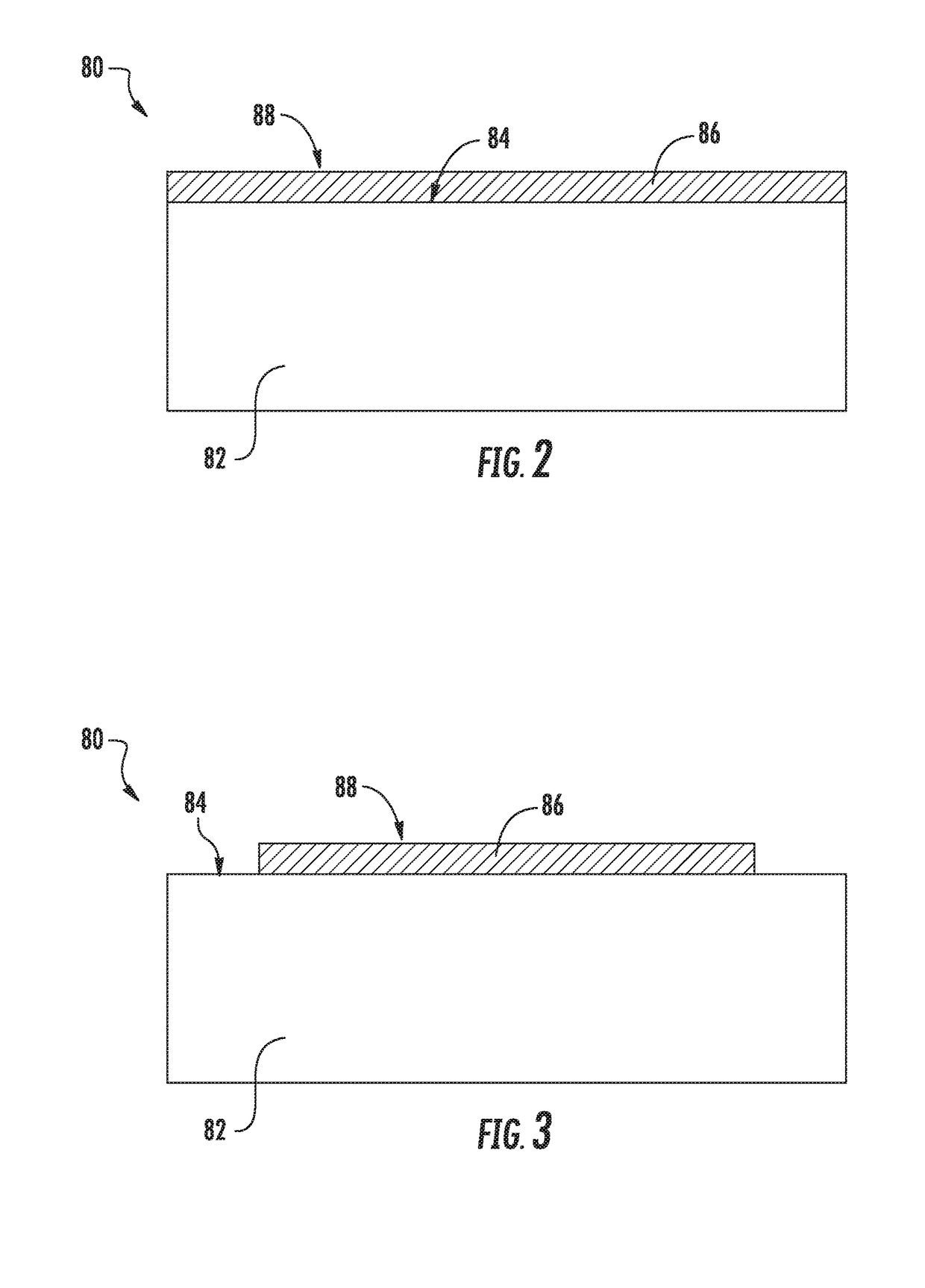
Examples
Embodiment Construction
[0021]Reference now will be made in detail to embodiments of the invention, one or more examples of which are illustrated in the drawings. Each example is provided by way of explanation of the invention, not limitation of the invention. In fact, it will be apparent to those skilled in the art that various modifications and variations can be made in the present invention without departing from the scope or spirit of the invention. For instance, features illustrated or described as part of one embodiment can be used with another embodiment to yield a still further embodiment. Thus, it is intended that the present invention covers such modifications and variations as come within the scope of the appended claims and their equivalents.
[0022]In the present disclosure, when a layer is being described as “on” or “over” another layer or substrate, it is to be understood that the layers can either be directly contacting each other or have another layer or feature between the layers, unless ex...
PUM
| Property | Measurement | Unit |
|---|---|---|
| Diameter | aaaaa | aaaaa |
| Diameter | aaaaa | aaaaa |
| Elastomeric | aaaaa | aaaaa |
Abstract
Description
Claims
Application Information
 Login to View More