However, it is also the construction of rail vehicles as such and the construction of the railway itself that is the source of noise and vibration.
At high speeds of the trains noise and vibration are caused by the aerodynamic design of railway vehicles, etc.
These railways do not contain gravel
ballast, which would otherwise absorb noise and vibration in the railway track.
Therefore, these
solid railways have higher emissions of noise and vibration into the surrounding area than gravel ballasted tracks.
However, the
disadvantage of this
system is the fact that they can be hardly used on a railway with transverse railway sleepers and gravel
ballast.
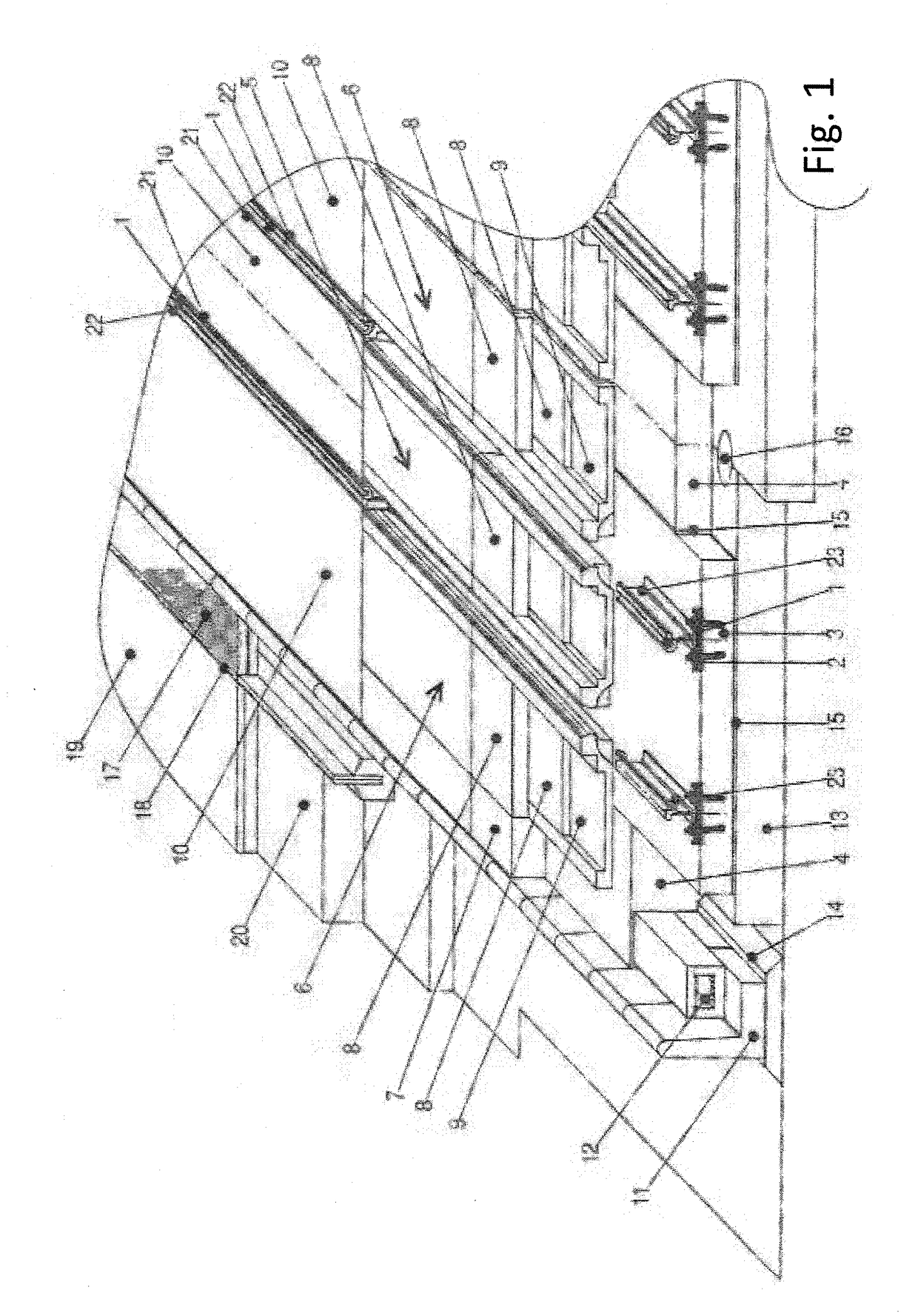
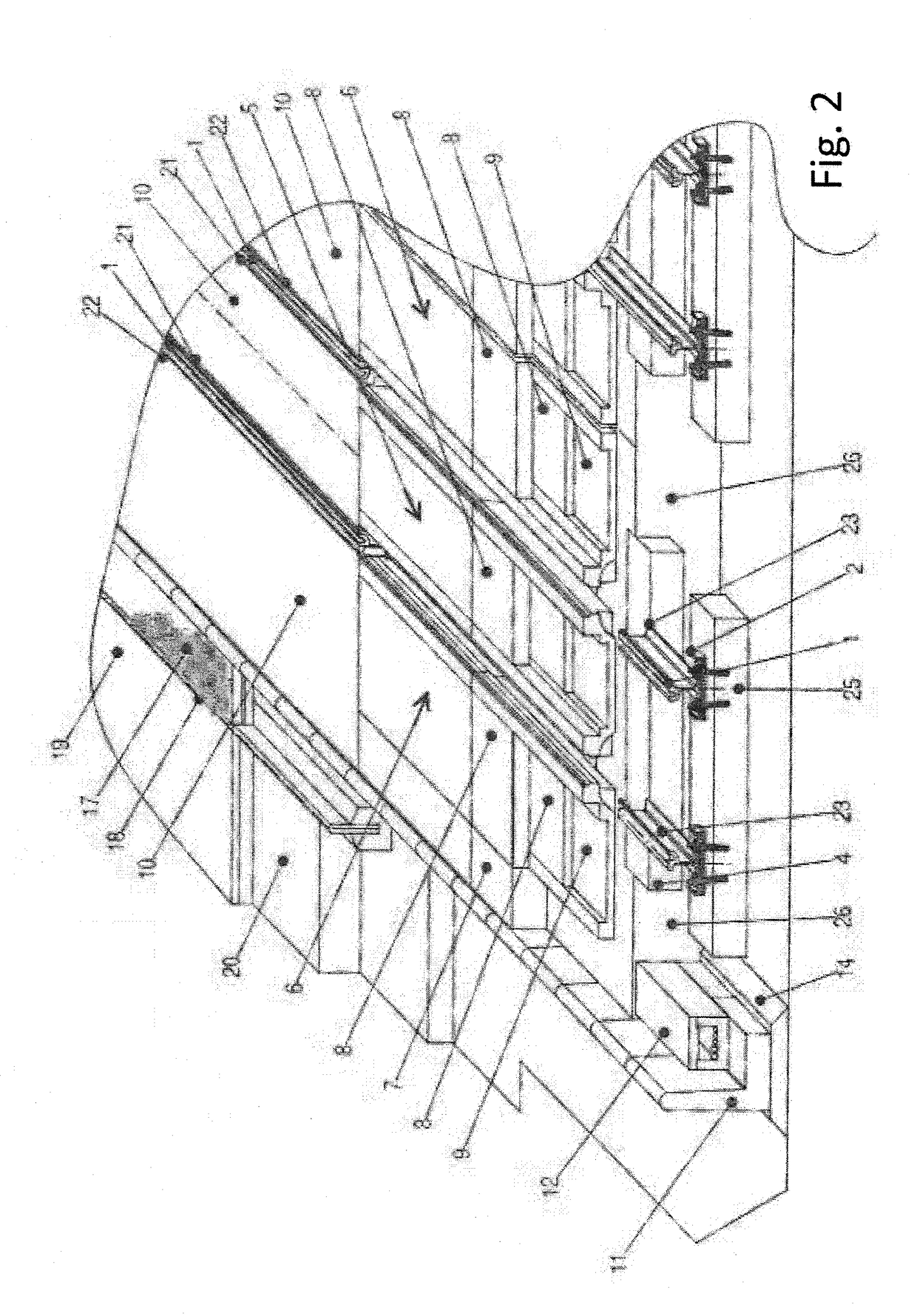
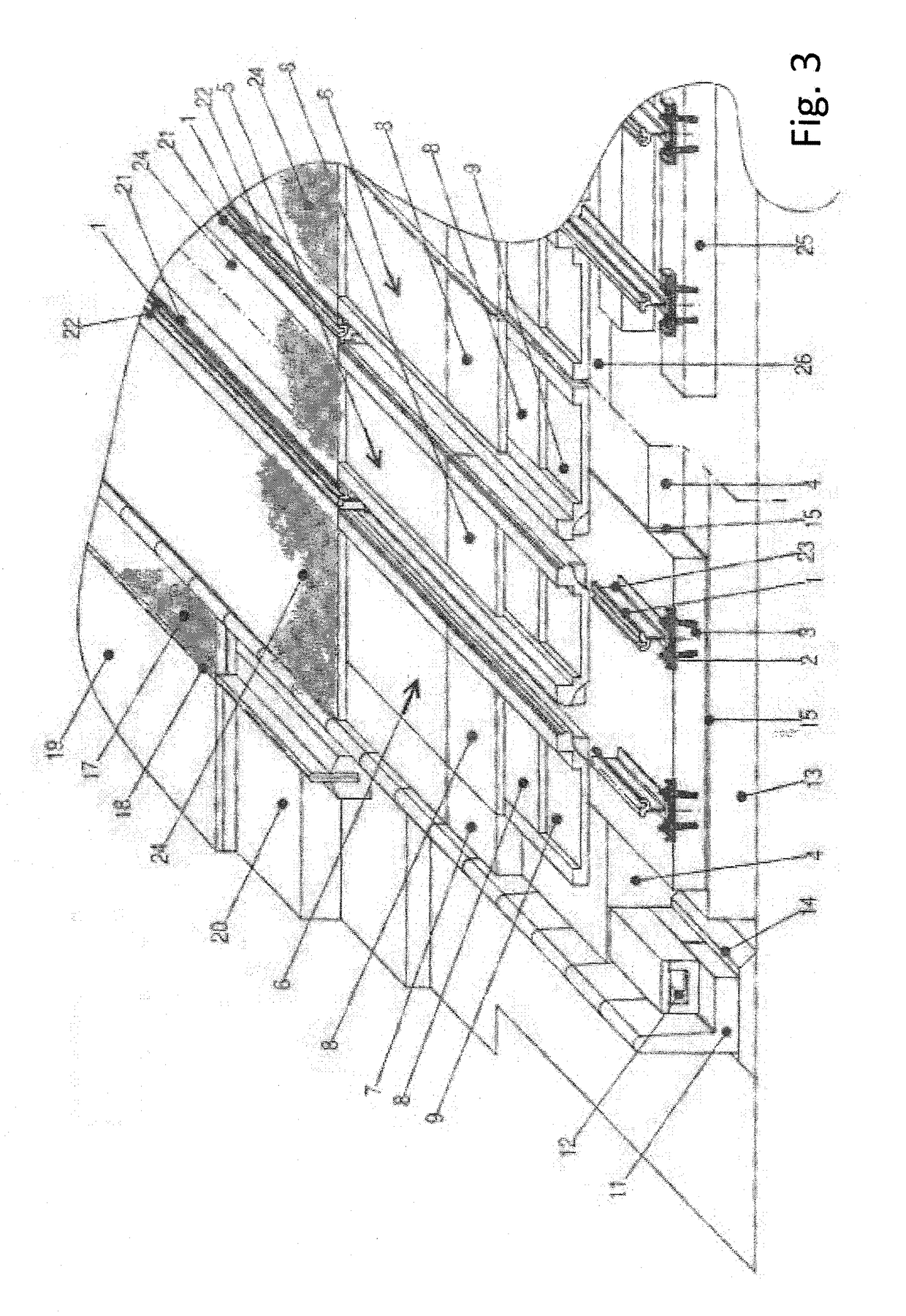
On the other hand, the solution reducing the propagation of vibration and noise by forming a compact horizontal pad filling the space between the rails and between the tracks with elastomeric and noise-absorbing elements and / or cultivation
layers, especially organic
layers with grass or other appropriate plants makes it difficult or completely impossible to perform the
control system of rail fastening and to carry out the maintenance of the geometry of the gravel-ballasted tracks by means of tamping.
During the maintenance of rail fastenings and the maintenance of the rails by tamping it is therefore necessary to dismantle completely the structural
layers, which results in partial, but in most cases complete deterioration of these layers and consequently they have to be replaced with new ones.
Tall urban buildings with a
prevalence of vertically oriented surfaces lead to an increase in the amount of
shortwave radiation and to its reflection into the adjacent space and thereby they have a negative
impact on the climate, causing an increase in local temperature, reducing
humidity, affecting
wind speed and direction, influencing rainfall in a given area, etc.
Moreover, the
soil cover consists of organic components, which are gradually consumed by the growing plants and the structure of the
soil cover is gradually becoming denser and, as the case may be, it may also become compacted due to the driving rail vehicles, which results not only in decreasing the vegetative abilities of the plants, but also in reducing the ability of such a soil layer to retain water.
Changes in the water
absorption capacity of the
soil cover of the track and changes in the homogeneity of the structural layers of the track may during torrential rains or during times of prolonged rainy periods even lead to soil
erosion and to dangerous undermining of the track grid, which negatively affects the quality and safety of the railway track.
Properly maintained natural lawns on the soil cover of railway tracks are always economically challenging, and these costs are covered largely by public budgets.
Related to this is also the issue of requirements for reducing emissions and noise and vibration propagation both into the surrounding open spaces and within the space of a rail vehicle.
Nevertheless, these requirements can be met by the known systems only to a considerably limited extent, or fulfilling them involves considerable additional costs so as to maintain all the functions of the systems, especially the functions of the green track.



 Login to View More
  Login to View More