
Drug delivery devices and methods for administering substances to a body cavity by heterogenous aerosolization for treatment of binge-eating disorders andor obesity
a heterogenous aerosol and drug delivery technology, applied in the direction of single-unit apparatus, peptide/protein ingredients, metabolic disorders, etc., can solve the problems of n2b targeting and its limitations, dripping and/or swallowing of liquid formulations, and difficulty in exact dosing of intranasal drug application, etc., to achieve the effect of effective treatment level and efficient level of treatment of condition
Patent Information
- Authority / Receiving Office
- US · United States
- Patent Type
- Applications(United States)
- Current Assignee / Owner
- Publication Date
- 2020-10-01
Smart Images
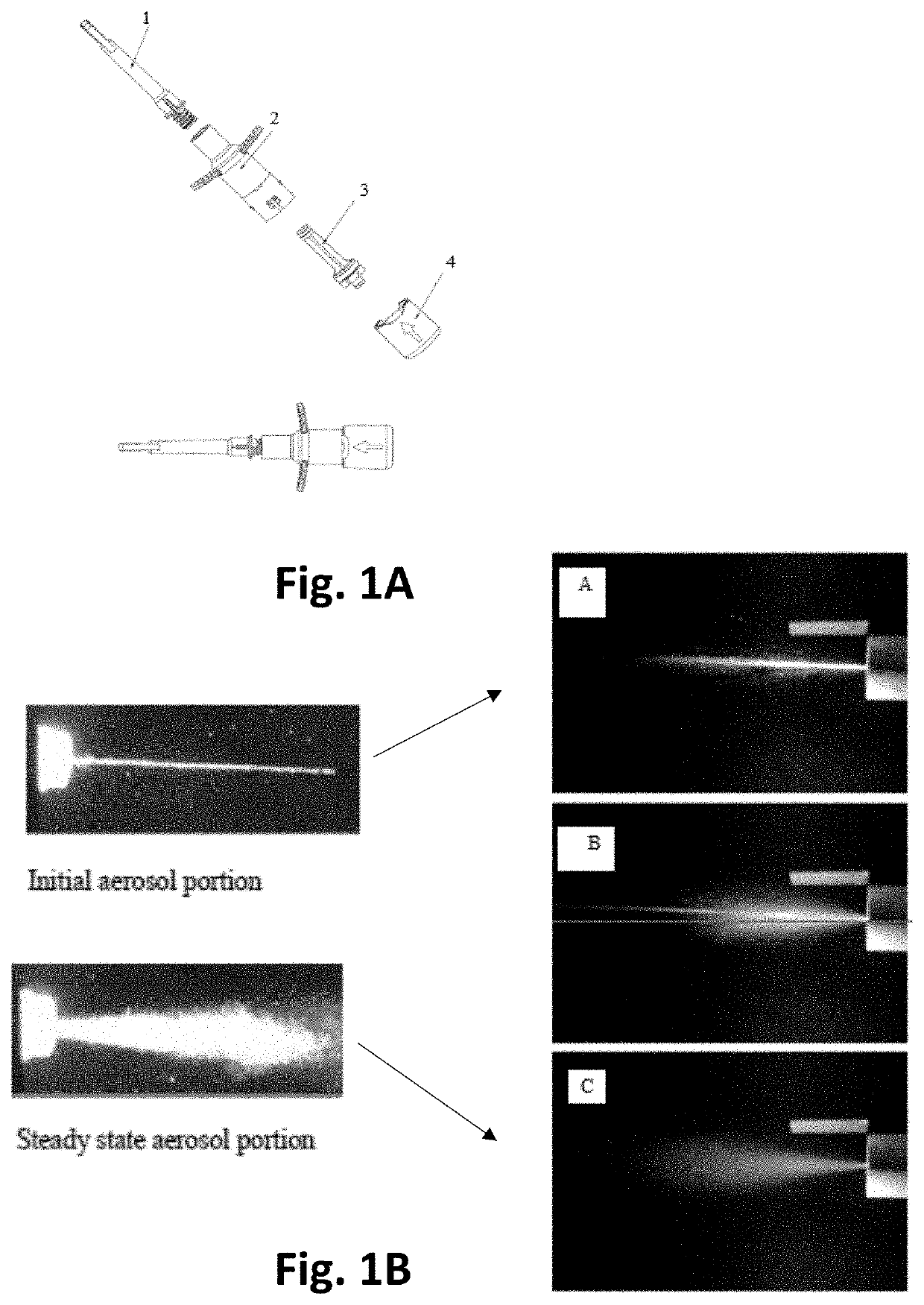
Figure 1 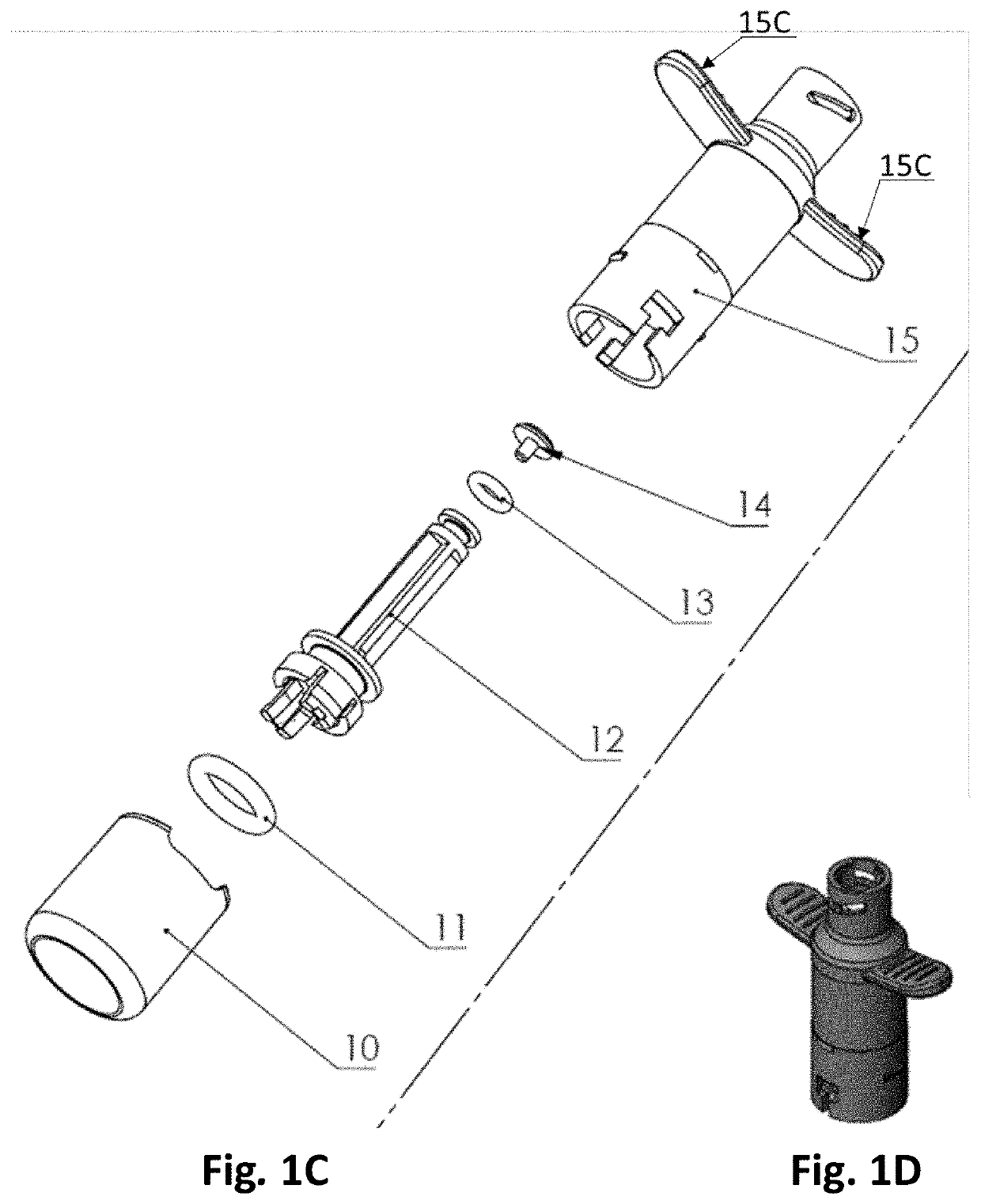
Figure 2 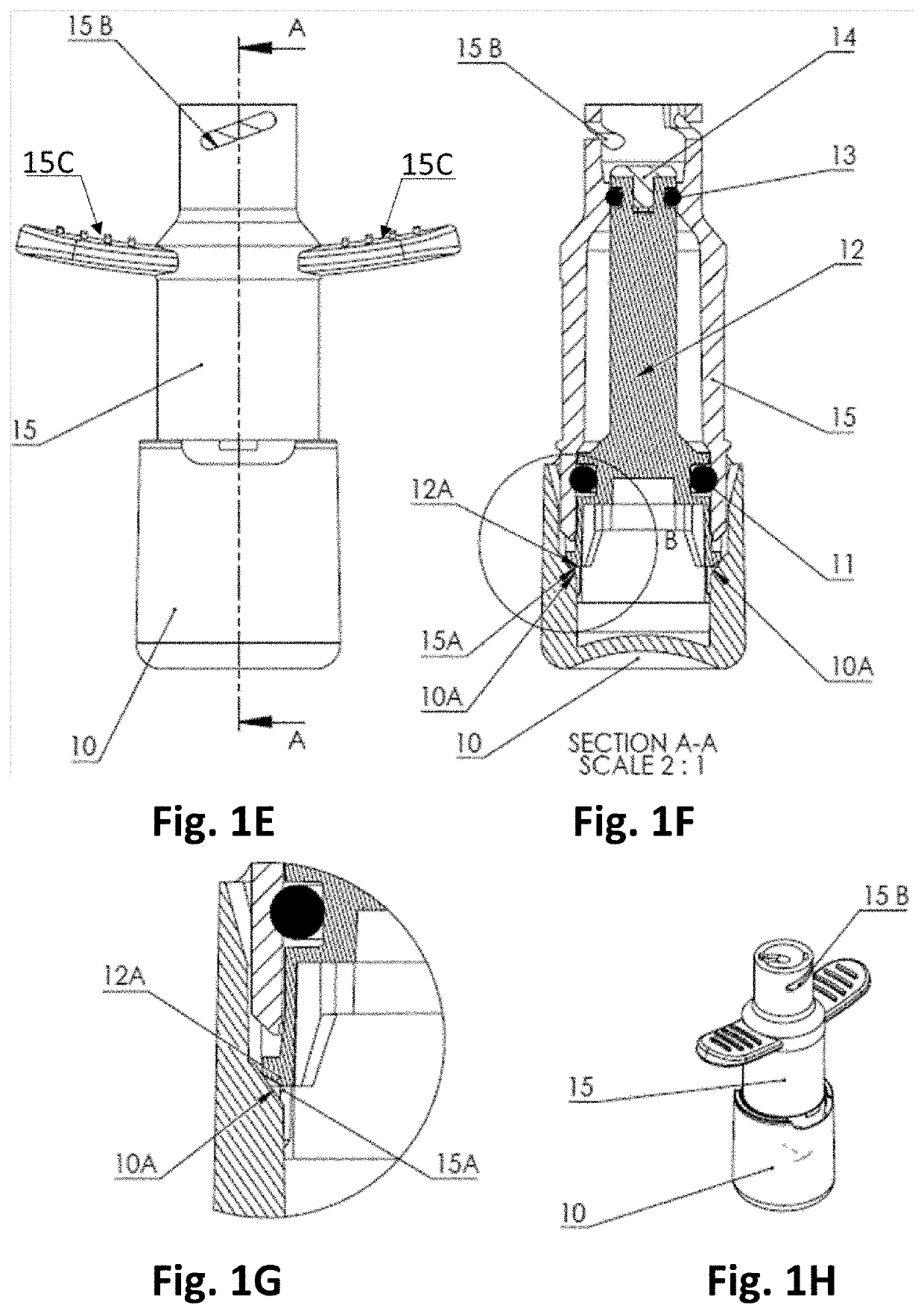
Figure 3
Abstract
Description
CROSS REFERENCE TO RELATED APPLICATIONS
[0001] This application is a Continuation-in-Part of U.S. application Ser. No. 16 / 810,096 filed on Mar. 5, 2020 which is a Continuation of U.S. application Ser. No. 15 / 982,630 filed on May 17, 2018 which is a Continuation-in-Part of U.S. application Ser. No. 14 / 733,143 filed on Jun. 18, 2015 which claims the benefit of and priority to U.S. Provisional Application No. 62 / 177,986 filed on Feb. 19, 2015 and U.S. Provisional Application No. 62 / 077,246 filed on Nov. 9, 2014. U.S. application Ser. No. 15 / 982,630 claims further priority to U.S. Provisional Application No. 62 / 507,816 filed on May 18, 2017.
[0002] Further, this application is a Continuation-in-Part of U.S. application Ser. No. 16 / 810,226 filed on Mar. 5, 2020 which is a Continuation-in-Part of U.S. application Ser. No. 15 / 982,996 filed on May 17, 2018 which is a Continuation-in-Part of U.S. application Ser. No. 14 / 733,143 filed on Jun. 18, 2015 which claims the benefit of and priority to U...
Examples
example 1
Embodiments of the Device of the Present Invention
[0249]Treatment of pain & central nervous system is found useful by utilizing a device of the present invention, see items 1-4, FIG. 1A, for the delivery of various medicaments; e.g., treatment of chronic conditions such as Alzheimer's, Parkinson's, depression, pain, seizures, epilepsy and acute migraine, conscious sedation and sleep aids. As shown in FIG. 1A, the device comprises, inter alia, a BFS nose piece (1), a pressurized-fluid container (2), an air chamber gate (3) and an activation mechanism base (4).
[0250]FIGS. 1A and 1C-1H shows an embodiment of the body (10, 15) of a nasal delivery device, with FIG. 1D showing the exterior of the body and FIG. 1C showing an exploded view.
[0251]The nosepiece is not shown. The body comprises a base (10), an air chamber gate (12) with a first gate O-ring (11) at its proximal end and a second gate O-ring (13) at its distal end. The distal end of the air chamber gate (12) is covered by a conta...
example 2
ing Disorder (BED) and Obesity
[0329]The following example illustrates the use of Intranasal delivery of Topiramate to treat BED and obesity. The device could be any of the described above or any other device that utilize intranasal delivery.
[0330]Obesity is a medical condition in which excess body fat has accumulated to an extent that it may have a negative effect on health. People are generally considered obese when their body mass index (BMII), a measurement obtained by dividing a person's weight by the square of the person's height, is over 30 kg / m2; the range 25-30 kg / m2 is defined as overweight. It is further evaluated in terms of fat distribution via the waist-hip ratio and total cardiovascular risk factors. BMI is closely related to both percentage body fat and total body fat. In children, a healthy weight varies with age and sex. Obesity in children and adolescents is defined not as an absolute number but in relation to a historical normal group, such that obesity is a BMI g...
example 3
Trial
[0404]In order to demonstrate the efficiency of the intranasal delivery of topiramate to treat BED, a clinical trial was performed.
[0405]The clinical trial was conducted at Hadassah medical center, Israel, after approval by the local IRB and the ministry of health. In the test, the blood PK following the intranasal administration in escalating doses was analyzed, together with establishing its safety and acceptance by users.
[0406]This study was designed to be a single center, open label study. All topiramate doses in all 3 cohorts were administered by a trained study staff. The study consisted of 3 study cohorts with 3 dosing days for each subject: Cohort #1: Subjects were administered with total of 30 mg IN (intranasal) dose of topiramate, 15 mg in each nostril. Cohort #2: Subjects were administered with total of 60 mg IN dose of topiramate, 30 mg in each nostril. Cohort #3: Subjects were administered with total of 180 mg IN dose of topiramate by 3 repeated doses of 60 mg with...