Zero Voltage Switching Flying Capacitor Power Converters

US20220247310A1Active Publication Date: 2022-08-04WITTENBREDER JR ERNEST HENRY
7 Cites 2 Cited by

Patent Information

Authority / Receiving Office
US · United States
Current Assignee / Owner
Publication Date
2022-08-04

Smart Images

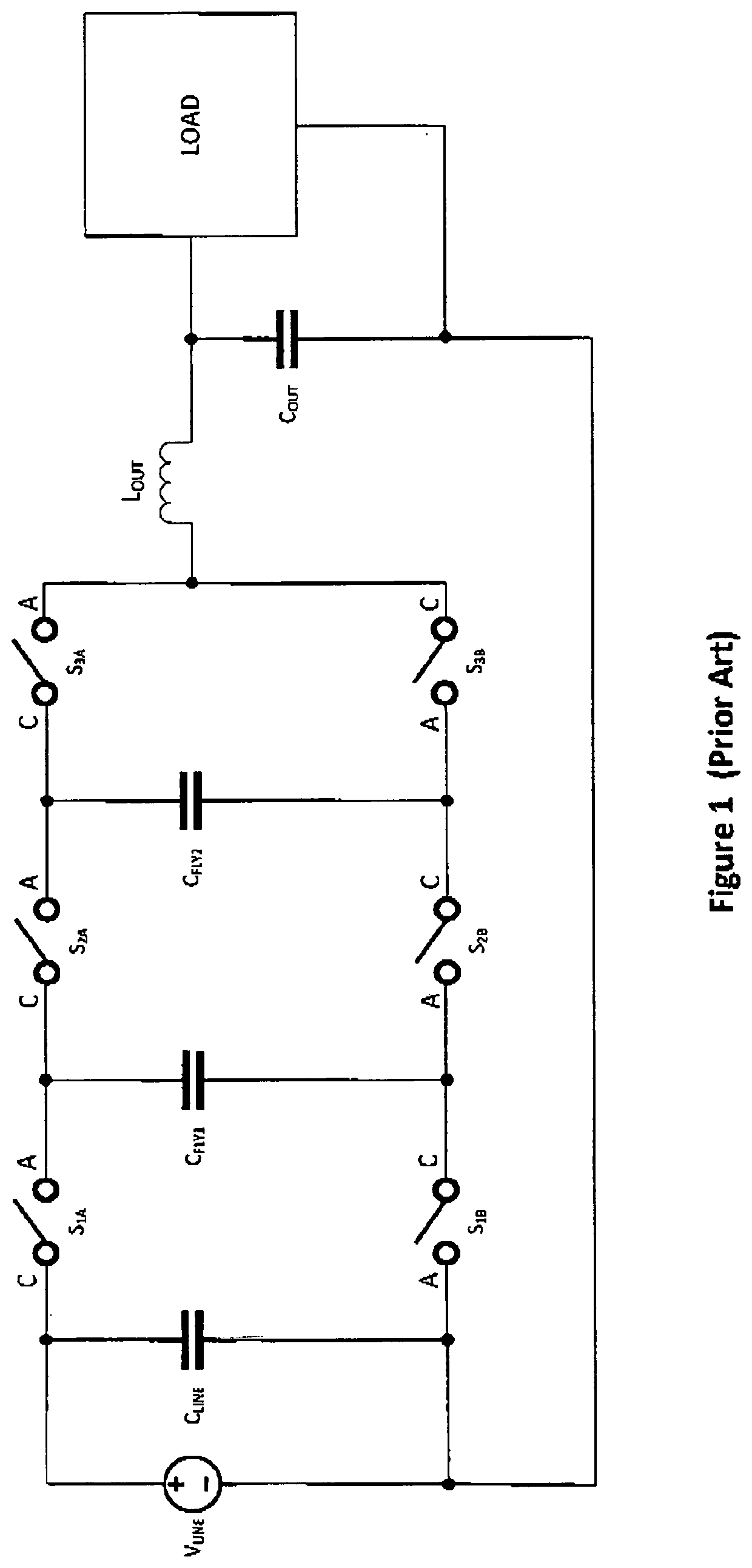
  • Figure 1
    Figure 1
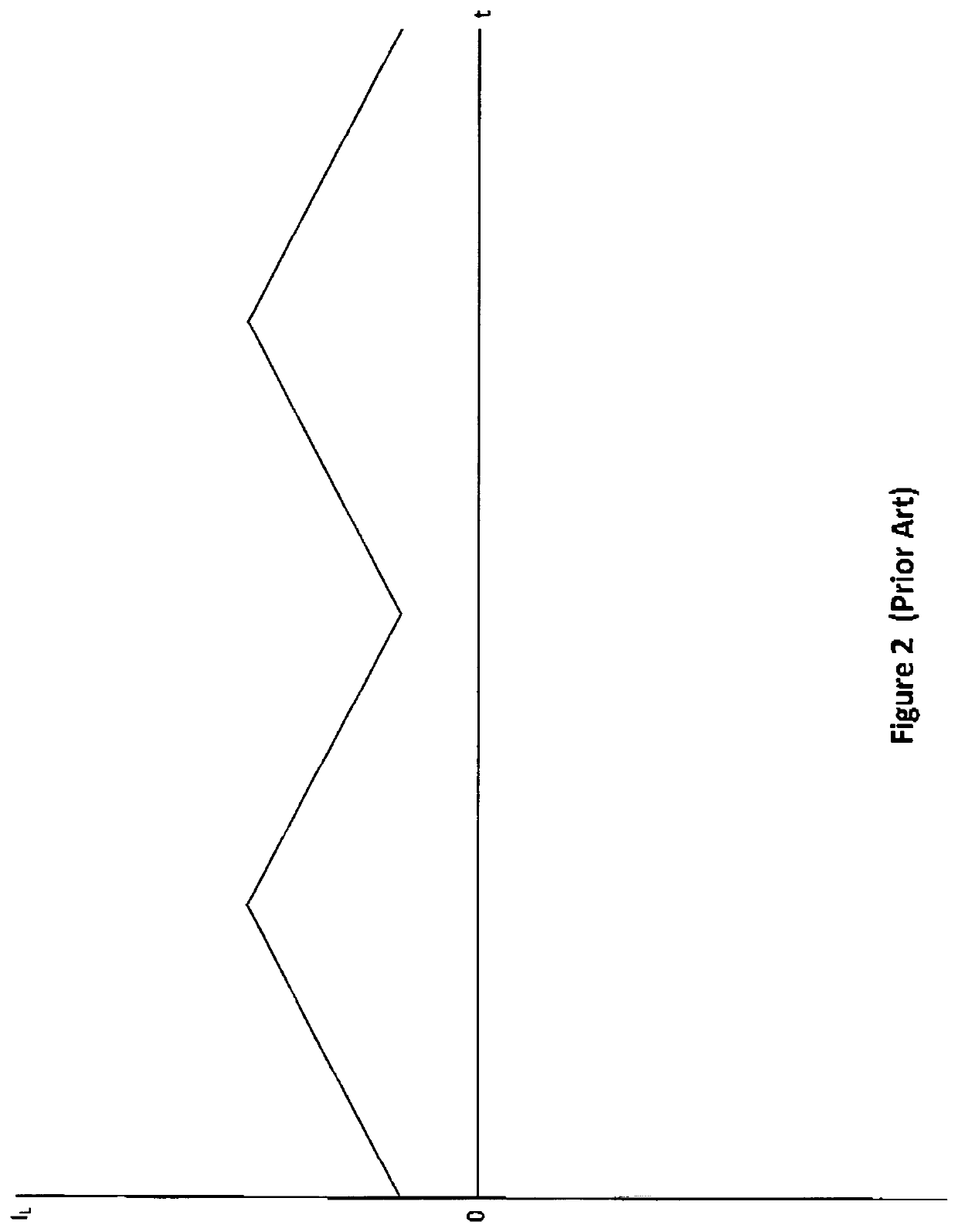
  • Figure 2
    Figure 2
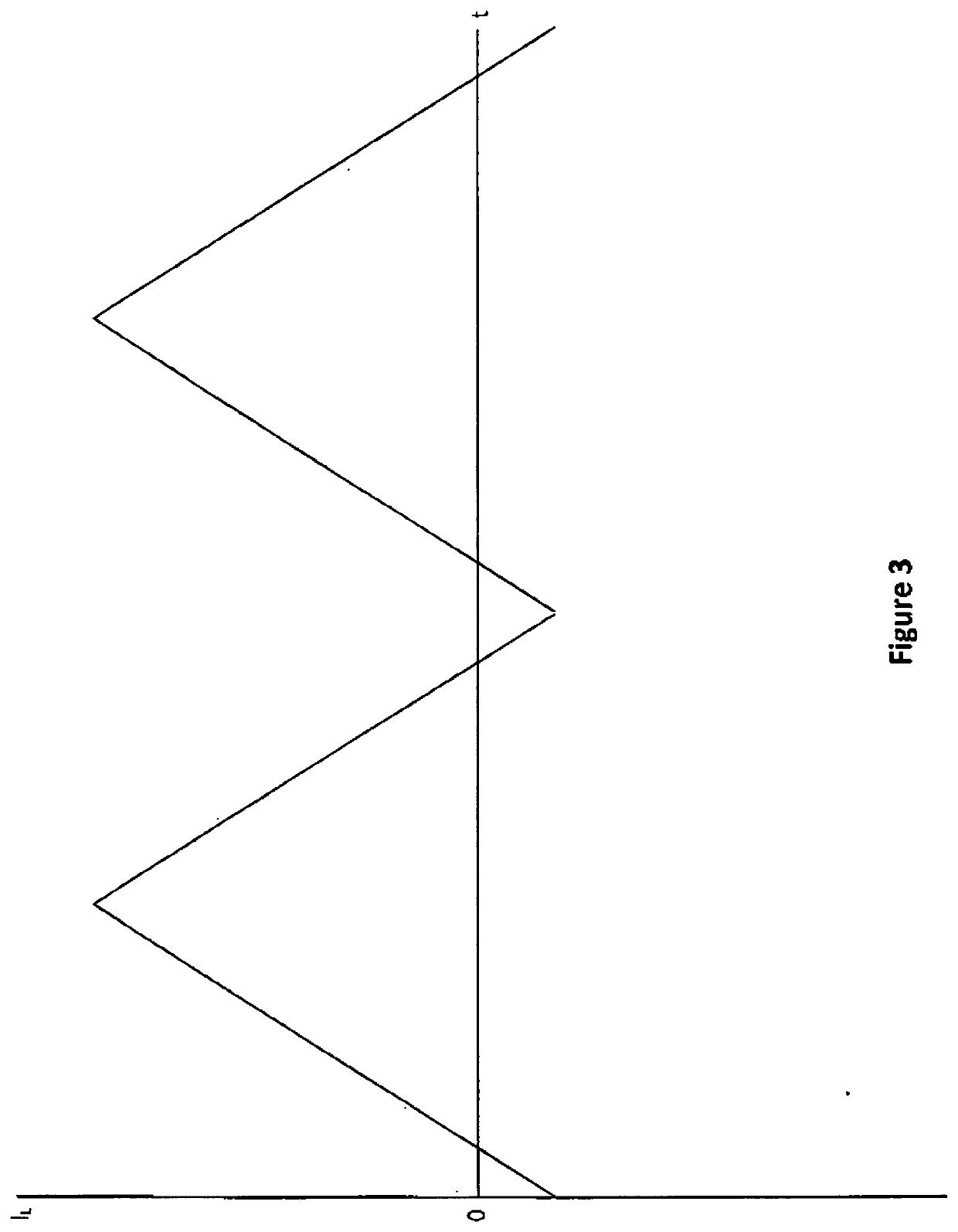
  • Figure 3
    Figure 3
Patent Text Reader

Abstract

Circuit structures and methods are described for achieving zero voltage switching in flying capacitor converters for both isolated and non-isolated applications. A first method is described in which zero voltage switching is achieved by operating the circuit with a variable frequency so that each switch in its on state remains on until the magnetizing current in a main inductor is reversed to a current magnitude sufficient to drive a zero voltage switching transition for a main switch. A second method is implemented with a main coupled inductor wherein a winding current is reversed and energy in a leakage inductance drives a zero voltage switching transition for a main switch. A third method is implemented with auxiliary inductors, auxiliary switches, and auxiliary capacitors which reverse the current in the auxiliary inductor which provides the necessary energy for driving a zero voltage switching transition for a main switch.
Need to check novelty before this filing date? Find Prior Art

Description

BACKGROUND OF THE INVENTIONField of the Invention

[0001] The subject invention generally pertains to electronic power conversion circuits, and, more specifically, to high frequency, switched mode electronic power converters. The subject matter relates to new circuits and techniques for achieving higher efficiency and higher power density in non-isolated dc to dc power converters compared to prior art power converters.Description of Related Art

[0002] Studies and real world examples have shown that non-isolated power converters with magnetic energy storage elements having large step down or step up voltage conversion ratios have high component stresses compared to power converters with smaller ratios at equivalent power levels. As a result, magnetic energy storage converters with higher step up or step down ratios have greater component power losses, lower efficiencies, and higher failure rates. Magnetic component stresses dictate the size and efficiency of the magnetic components. Flyin...

Examples

Embodiment Construction

[0036]A preferred embodiment of the subject invention is illustrated in FIG. 8. The FIG. 8 Circuit is a boost converter for accomplishing power factor correction. The difference between the FIG. 8 circuit and the prior art lies in the fact that the inductor current reverses during each switching cycle, as illustrated in FIG. 3. The reversal of the inductor current means that there is stored magnetic energy in the inductor available for driving a zero voltage turn on transitions for all switches for all transitions. In an initial state, switches S1B, S2B, and S3A are on and switches S1A, S2A, and S3B are off and current in the inductor, L, is ramping up and flowing through inductor L from left to right. The current path is through the on switches and flying capacitor CFLY2, which is charging. In a first switching transition S2B is turned off. The stored magnetic energy in L tries to maintain the current in L so the voltage at node P rises, and the voltages at the C terminals of S3A a...