
Gum application in wheyless cream cheese systems
a technology of wheyless cream cheese and cream cheese, which is applied in the field of cream cheese production, can solve the problems of excessive softness and undesirable texture characteristics, and achieve the effects of reducing production costs, reducing production costs, and reducing production costs
- Summary
- Abstract
- Description
- Claims
- Application Information
AI Technical Summary
Benefits of technology
Problems solved by technology
Method used
Image

Examples
example 1
Production of Wheyless Cream Cheese Using Two Stage Gum Addition
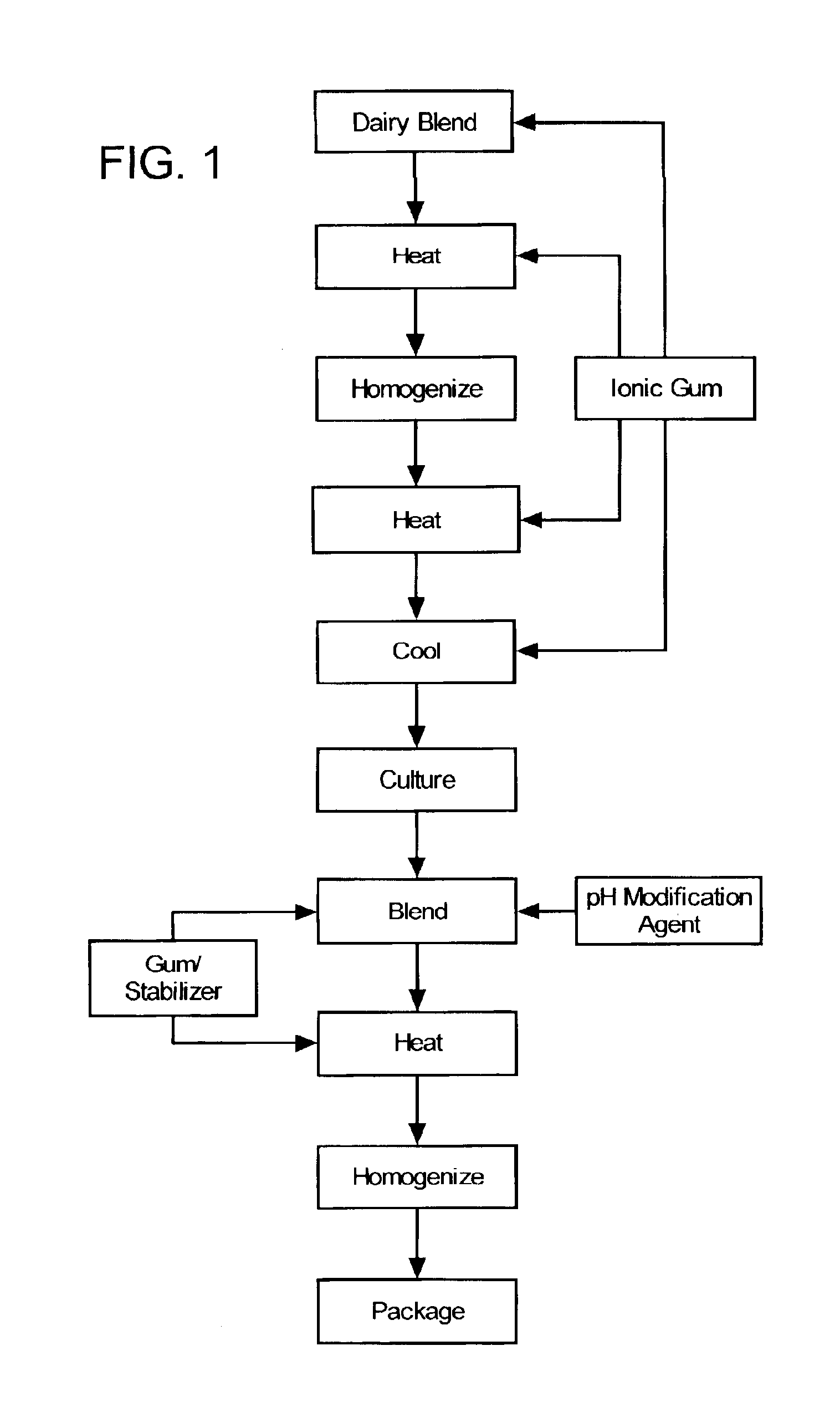
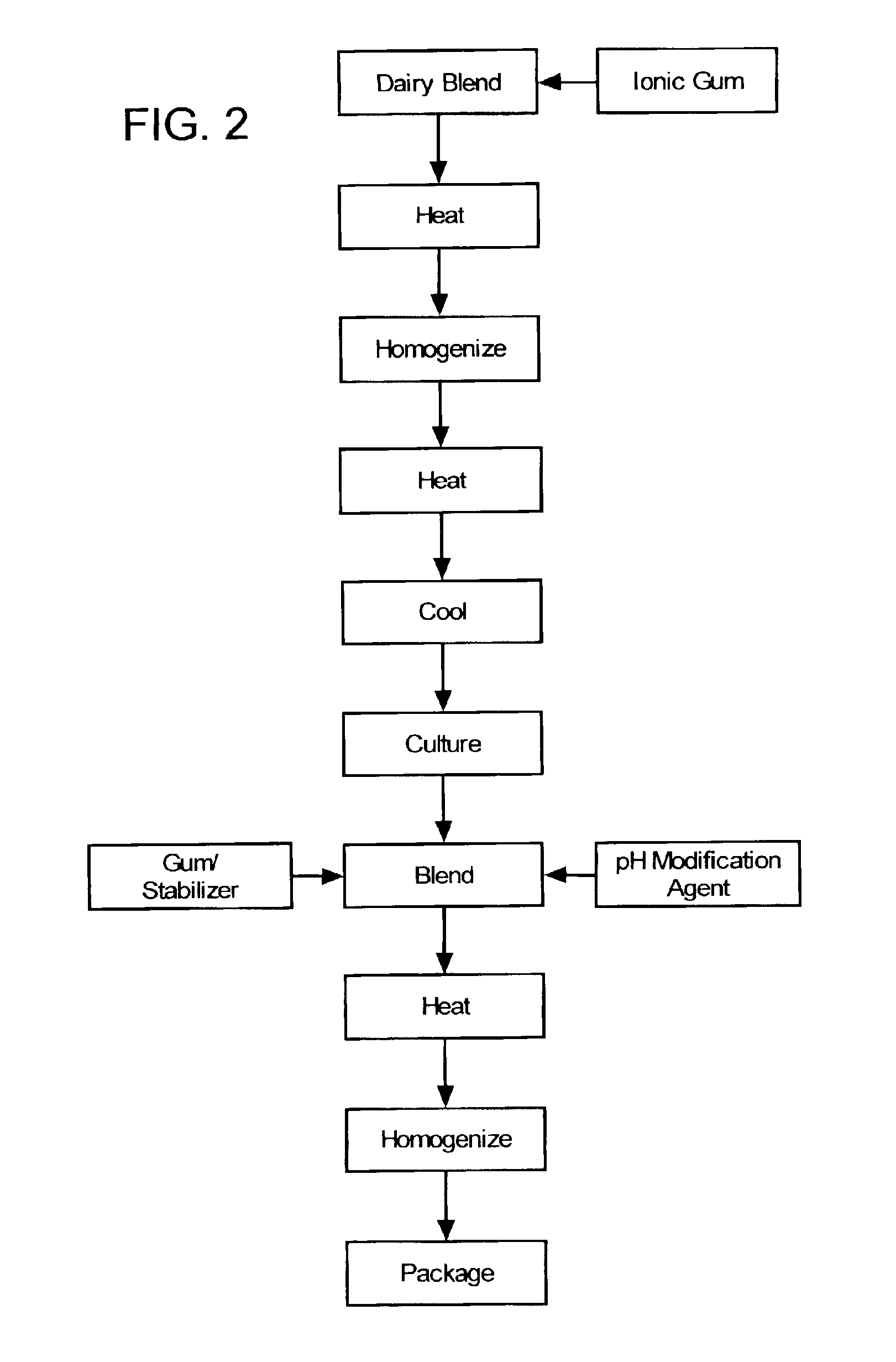
[0054]This example provides an example of the process of the present invention as illustrated generally in FIGS. 1 and 2. A cream cheese was prepared using the following procedure:[0055](1) A dairy liquid was prepared by mixing cream (46.2 percent), whole milk (32.8 percent), water (15.4 percent), AMP 8000 (3.94 percent; whey protein isolate from Proliant Inc., Ames, Iowa), and whey protein concentrate (WPC 34; 0.40 percent; Kraft, Inc., Northfield, Ill.) to form a final composition of 68 percent moisture, 30 / 70 casein / whey ratio, 22 percent fat, and 5 percent true protein;[0056](2) The dairy liquid was mixed in a Breddo mixer to form a first dairy mixture;[0057](3) Except for control samples, gum (i.e., 0.02 percent xanthan (CP-Kelcol, San Diego, Calif.), 0.01 percent GP418 (kappa-carrageenan; FMC Biopolymers, Philadelphia, Pa.), or 0.1 percent alginate (ISP Alginates Inc., San Diego, Calif.)) was added (referred to he...
PUM
 Login to View More
 Abstract
Description
Claims
Application Information
 Login to View More