Method and apparatus for avoiding unwanted sensing in a cardiac rhythm management device

a rhythm management and heart rhythm technology, applied in the direction of heart stimulators, electrotherapy, therapy, etc., can solve the problems of complex pacing modes and configurations, ineffective stimulation pulses, and inability to achieve the effect of avoiding misidentification of artifacts, reducing the likelihood of failure, and enhancing the blanking or refractory period

US6944499B2Inactive Publication Date: 2005-09-13CARDIAC PACEMAKERS INC
8 Cites 14 Cited by

Patent Information

Authority / Receiving Office
US · United States
Patent Type
Patents(United States)
Current Assignee / Owner
Publication Date
2005-09-13
Estimated Expiration
Not applicable · inactive patent

Smart Images

  • Figure 1
    Figure 1
  • Figure 2
    Figure 2
  • Figure 3
    Figure 3
Patent Text Reader

Abstract

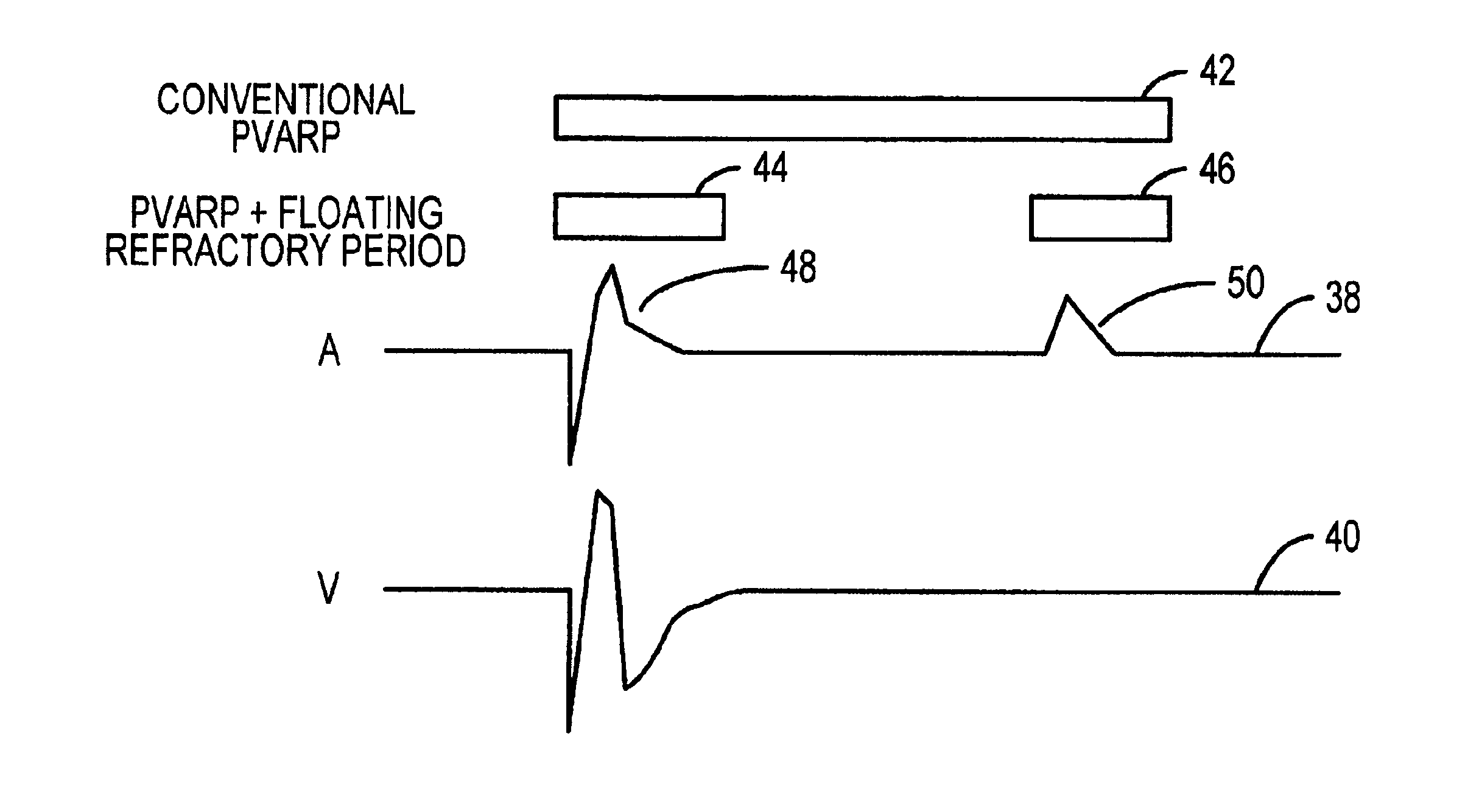
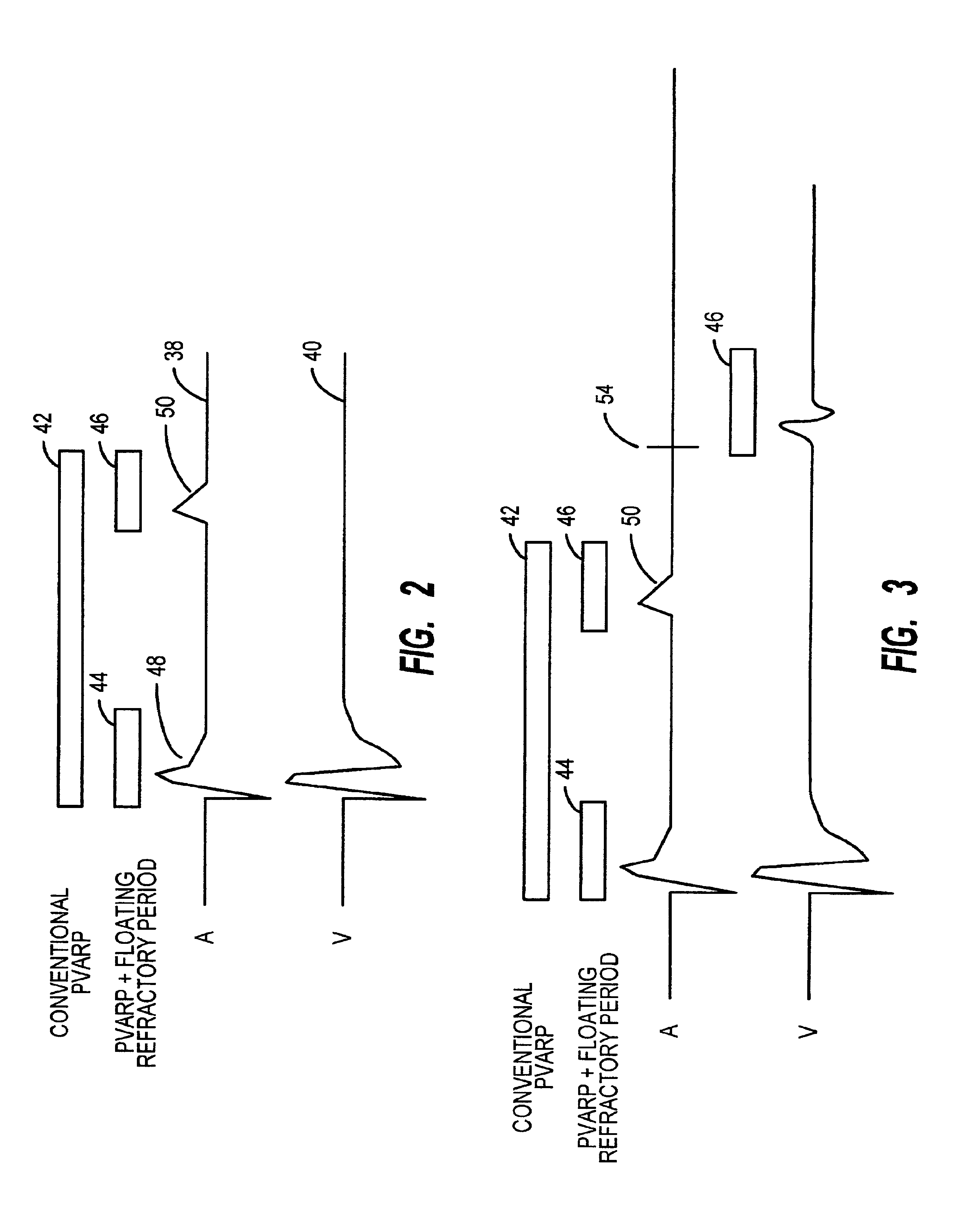
A cardiac rhythm management device that utilizes blanking or refractory periods to avoid misidentification of artifacts and evoked potentials, wherein the refractory periods are discontinuous and may be dependent upon sensed events, expiration of a predefined timing interval, or stimulation events in the same or other chambers of the heart. The discontinuous refractory periods enhance the ability of the device to sense intrinsic events. The present invention includes separate refractory and floating refractory periods incorporated within the sensing protocol for each selected cycle, thereby increasing the time period for normal sensing.
Need to check novelty before this filing date? Find Prior Art

Description

BACKGROUND OF THE INVENTION

[0001] I. Field of the Invention

[0002] This invention relates generally to a cardiac rhythm management device suitable for delivering stimulation pulses to a patient's heart and more particularly relates to a cardiac rhythm management device that utilizes a sensing protocol which avoids misidentification of artifacts and evoked potentials enhancing the ability of the device to sense intrinsic events.

[0003] II. Discussion of the Prior Art

[0004] Over the years, cardiac rhythm management devices have been utilized for supplanting some or all of an abnormal heart's natural pacing functions. These devices have remedied abnormalities including total or partial heart block, arrhythmias, congestive heart failure, congestive heart disorders and other various rhythm disturbances within the heart. Typically, the rhythm management device includes a power supply and pulse generator for generating electrical stimulus pulses delivered to a pre-selected area of the heart. An ...

Examples

Embodiment Construction

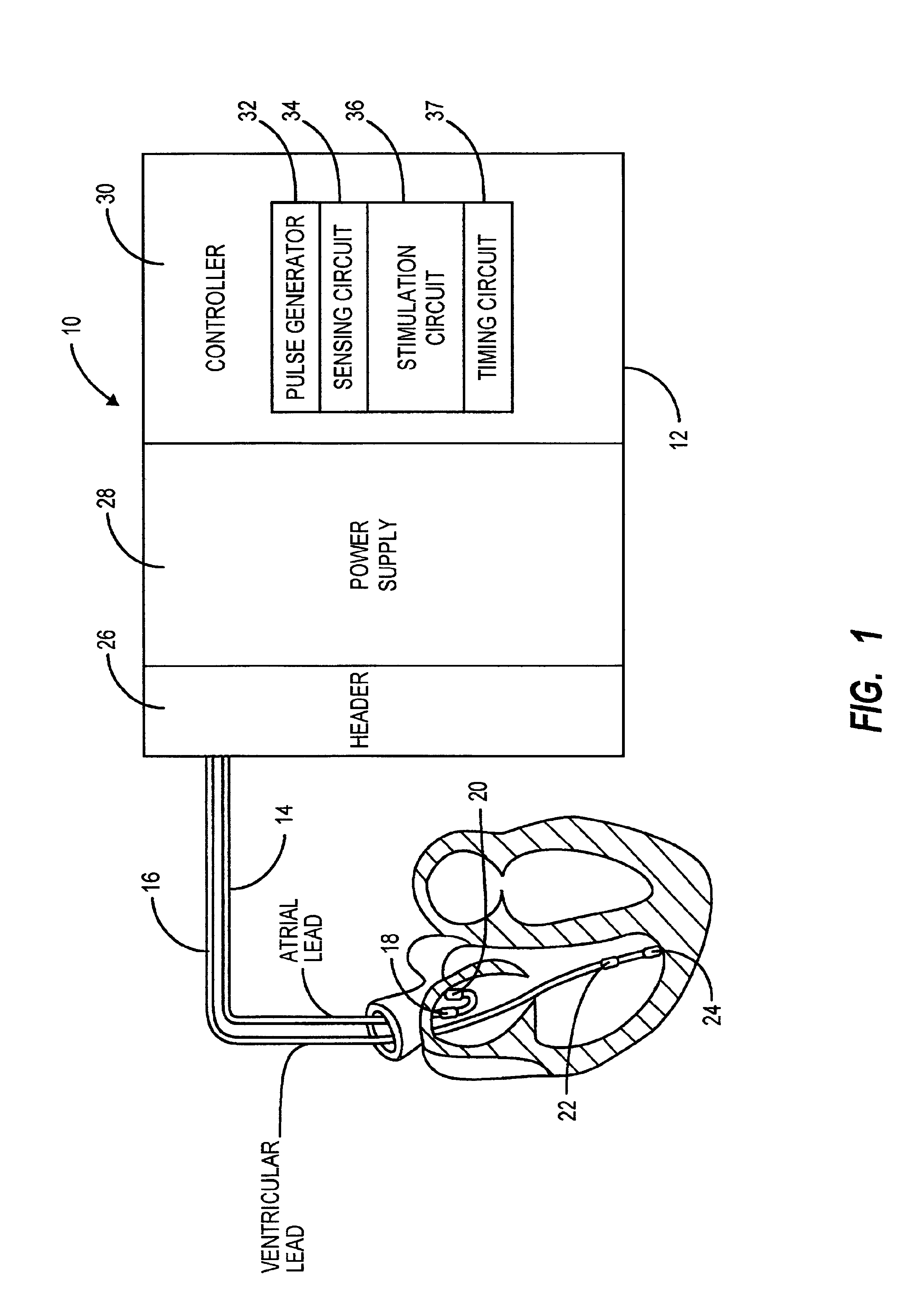
[0026]The present invention represents broadly applicable improvements to the sensing protocol of a cardiac rhythm management device. The embodiments detailed herein are intended to be taken as representative or exemplary of those in which the improvements of the invention may be incorporated and are not intended to be limiting. Referring first to FIG. 1, the cardiac rhythm management device 10 of the present invention is shown including a housing 12, atrial lead 14, and ventricular lead 16. The distal end of the atrial lead shown positioned in the right atrium includes electrodes 18 and 20. The distal end of the ventricular lead 16 shown positioned in the right ventricle includes ventricular electrodes 22 and 24. The atrial lead 14 and ventricular lead 16 are engaged to header 26 affixed to the housing and may be electrically coupled to the power supply 28 and controller 30 contained within the housing 12 in a known fashion. It should be appreciated that other lead configurations o...