

Phase angle control for synchronous machine control
a synchronous machine and phase angle technology, applied in electrical control, hybrid vehicles, electronic commutators, etc., can solve the problems of preventing the possibility of simple control of field strength, requiring a long time, and requiring high production costs
- Summary
- Abstract
- Description
- Claims
- Application Information
AI Technical Summary
Benefits of technology
Problems solved by technology
Method used
Image

Examples
Embodiment Construction
[0045]Certain terminology is used in the following description for convenience only and is not limiting. The words “right,” and “left,”“lower,” and “upper” designate directions in the drawings to which reference is made. The words “inwardly” and “outwardly” refer to directions toward and away from, respectively, the geometric center of the object discussed and designated parts thereof. The terminology includes the words above specifically mentioned, derivatives thereof and words of similar import. Additionally, the word “a” is used in the claims and in the corresponding portions of the Specification, means “at least one.”
I. General Description:
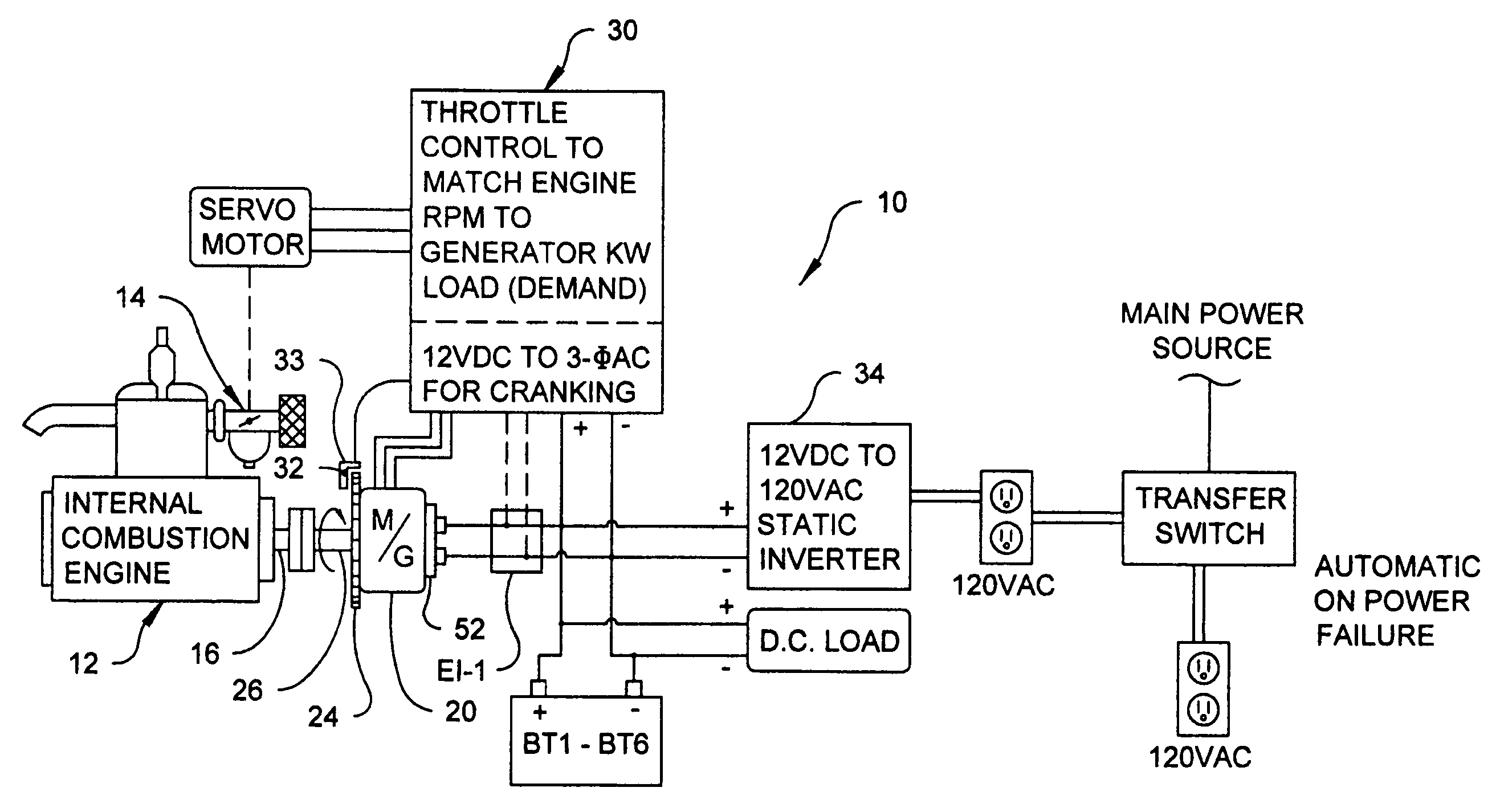
[0046]Referring to the drawings in detail, wherein like reference numerals indicate like elements throughout, there is shown in FIG. 1 a typical internal combustion engine powered generator set 10 which incorporates phase angle control in accordance with the present invention. The internal combustion powered generator set or gen-set 10 include...
PUM
 Login to View More
 Abstract
Description
Claims
Application Information
 Login to View More