[0008]It is therefore an object of this invention to provide a fire-protection glass product having a fire-protection characteristic which is light in weight so as to easily be installed, which is low in material cost, and which has a stable heat shielding characteristic for a long time upon occurrence of fire without losing
visibility.
[0020]In the fire-protection glass product having a heat shielding characteristic according to this invention, the fireproof glass plate preferably comprises a strengthened glass, a
borosilicate glass, or a crystallized glass. In particular, the fireproof glass plate is advantageously made of a heat-resistant transparent crystallized glass having an average
thermal expansion coefficient between −10×10−7 / ° C. and +20×10−7 / ° C. in a temperature range between 30 and 750° C. because a
high heat resistance as well as an excellent fireproof characteristic can be obtained.
[0022]In the fire-protection glass product having a heat shielding characteristic according to this invention, it is preferable that an average reflectance for
infrared rays having a
wavelength between 1500 nm and 2500 nm is 70% or more while an average
transmittance for visible rays having a
wavelength between 400 nm and 700 nm is 60% or more. Under the above-mentioned condition, the fire-protection glass product can sufficiently reflect the heat rays, is superior in heat shielding characteristic, and is excellent in
visibility. Therefore, the fire-protection glass can suitably and advantageously be used as a window member.
[0023]In the fire-protection glass product having a heat shielding characteristic, according to this invention, the heat ray reflection film is preferably made of
indium tin oxide (ITO). In this event, the heat rays having a
wavelength between 1500 nm and 2500 nm can efficiently be reflected because the ITO film includes a large number of carrier electrons which reflect the heat rays. Consequently, the fire-protection glass product is superior in heat shielding function and is difficult to decrease in average
transmittance for the visible rays.
[0030]The intermediate film is preferably made of
metal oxide such as
titanium oxide,
zirconium oxide, and aluminum oxide. In this case, it is possible to enhance the effect of preventing the oxidation prevention film from being peeled off or removed. The intermediate film preferably has a film thickness between 20 Å and 200 Å. If the film thickness is thinner than 20 Å, the effect of preventing the oxidation prevention film from being peeled off is decreased. On the other hand, if the film thickness is thicker than 200 Å, the deposition cost becomes high and the average
transmittance for the visible rays tends to be lowered.
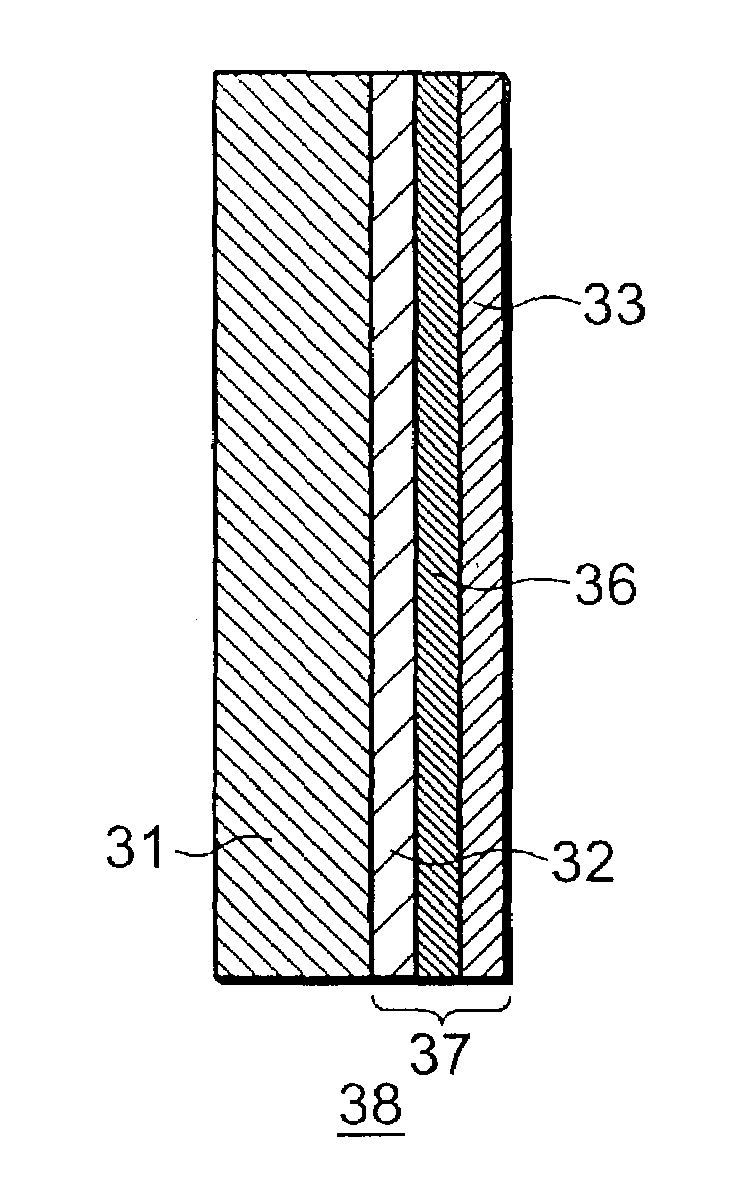
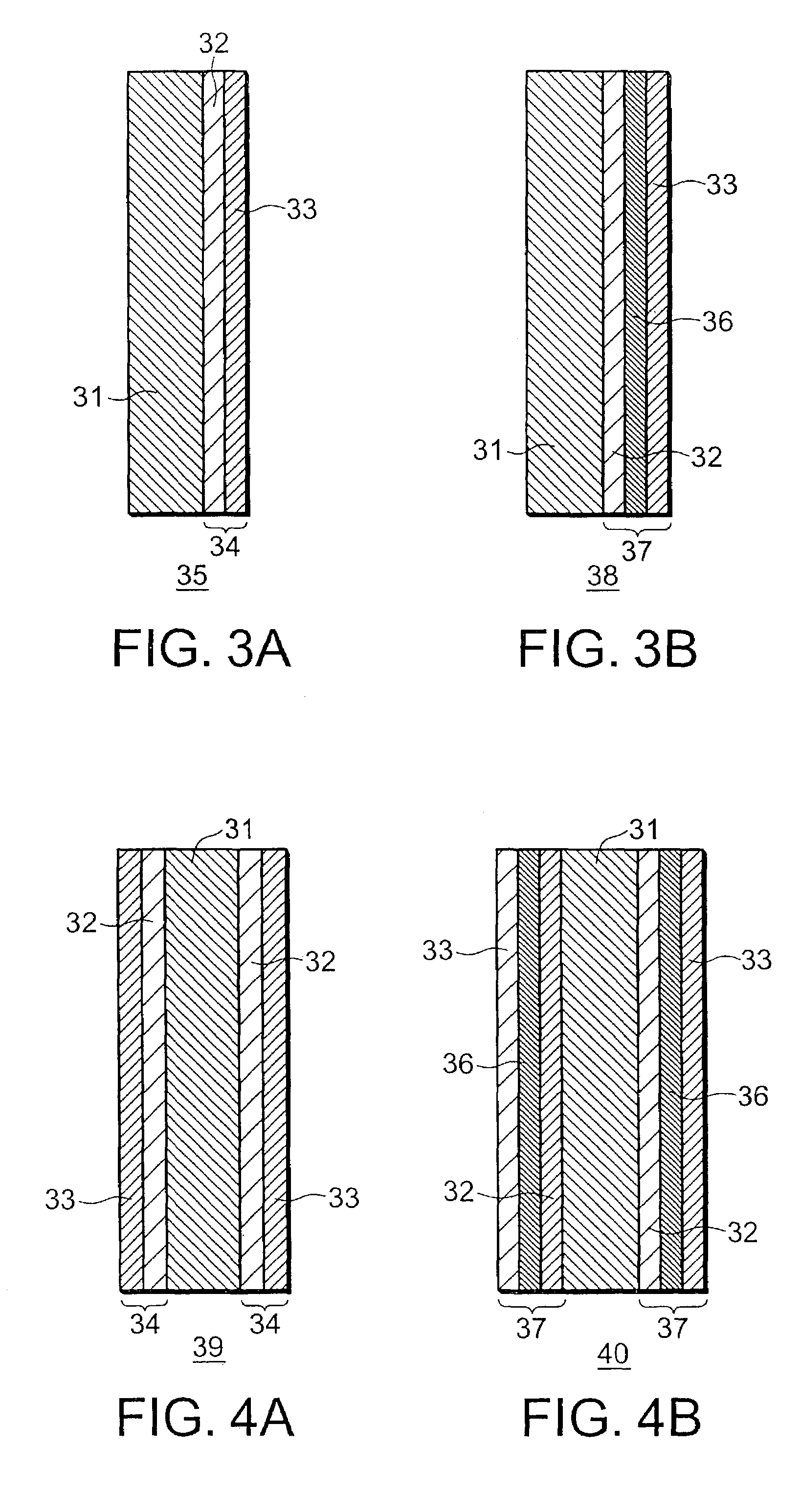
[0031]In the fire-protection glass product having a heat shielding characteristic and having the above-mentioned features according to this invention, the heat ray reflection film is formed on one or both of the opposite surfaces of the fireproof glass plate and the oxidation prevention film is formed on the heat ray reflection film. With this structure, the fire-protection glass product has a fire-protection characteristic, is light in weight so as to easily be installed, is low in material cost, and has a stable heat shielding characteristic for a long time upon occurrence of fire without losing
visibility. Specifically, since the oxidation prevention film is formed on the heat ray reflection film, it is possible to prevent the heat ray reflection film from being oxidized by heating in the air, in other words, to prevent reduction of carrier electrons reflecting
infrared rays. As a result, it is possible to maintain a stable heat shielding characteristic for a long time. More specifically, the fire-protection glass product according to this invention has excellent characteristics as follows. For
infrared rays having a wavelength between 1500 nm and 2500 nm, an average reflectance is 70% or more or an average transmittance is 10% or less. For visible rays having a wavelength between 400 nm and 700 nm, an average transmittance is 60% or more. Further, even if one surface of the glass product is heated for 60 minutes in accordance with the ISO834 standard heat curve, an average reflectance for infrared rays having a wavelength between 1500 nm and 2500 nm can be kept at 35% or more while an average transmittance for visible rays having a wavelength between 400 nm and 700 nm can be kept at 60% or more. Alternatively, even if one surface of the glass product is heated for 30 minutes at 800° C., an average transmittance for infrared rays having a wavelength between 1500 nm and 2500 nm can be kept at 10% or less while an average transmittance for visible rays can be kept at 60% or more.


 Login to View More