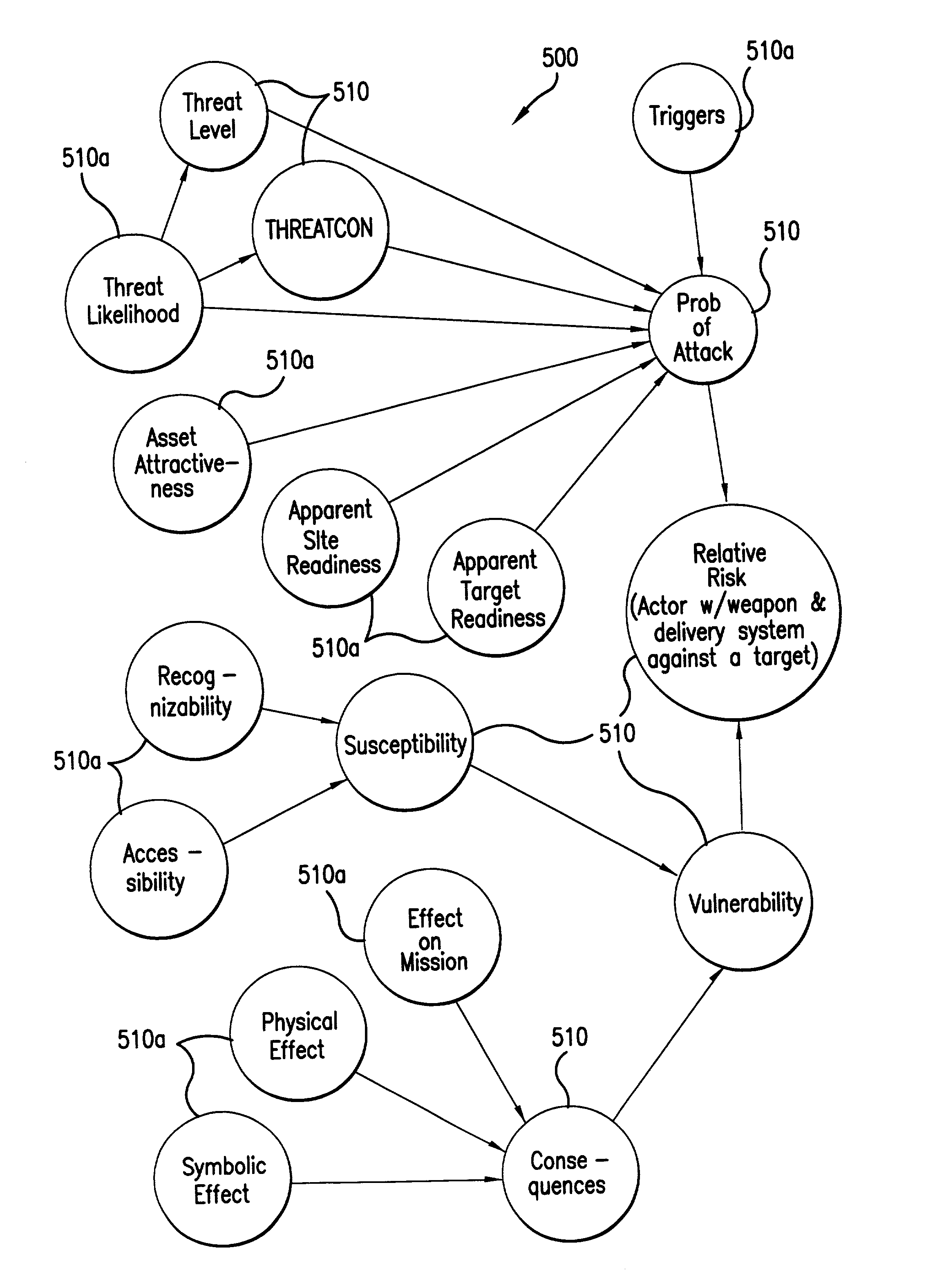
Probability is the probability that an undesirable event will occur.
Homeowners manage risk when deciding whether to purchase a burglar alarm
system.
Terrorism is a world-wide problem.
Unfortunately, many in the United States associate terrorism with certain Arabian and / or Islamic nations and view the
threat of terrorism from this limited framework.
Today, the problem has become far more complex and is rapidly changing.
One problem faced by those with responsibility for assessing the
threat of terrorism and its prevention is the lack of suitable tools to help them perform their tasks.
First, they require detailed information (which can be difficult,
time consuming and expensive to obtain) to construct the model and are often not flexible enough to
handle situations in which the
detailed data is not available.
It is likely that data required to use these tools on the Murrah building in Oklahoma City would still not be collected at this point due to the time and costs associated with collecting such data.
Second, these tools require expertise on the part of the user.
Third, and perhaps most importantly, programs such as these provide no guidance as to the likelihood that the
attack will succeed (the accessability), the likely location of an
attack (e.g., the front or rear of the building, which building, etc., the type of weapon (explosive, chemical, biological or radiological) likely to be used, and how to prevent or at least minimize the occurrence of the
attack in the first place.
These tools also suffer from several serious drawbacks.
While they may tell you that an attack is likely, they provide no guidance as to the nature of the attack and how to prevent it, provide no indication as to whether the attack will be successful, and provide no indication of the consequence of a successful attack.
Another problem faced by those charged with preventing terrorism is the lack of flexibility in adapting anti-terrorism plans.
Updating the plans based on changed circumstances requires the individual security specialists to be recalled, which is expensive and
time consuming.
Furthermore, the plans may not be appropriate for changing circumstances.
By way of example, there may be great differences between a plan for high
threat of terrorist activity on a military installation that was designed to protect mission-critical assets such as a weapons
system and a plan for a high threat of terrorist activity on that same military installation when the high-threat condition is caused by a visit from a head of state or because of threatened attacks on troops rather than the weapons
system.
Furthermore, the source of the threat may also change its nature.
A plan devised to stop a suicide car bomb attack favored by one known terrorist group may not be effective for a
chemical attack favored by another terrorist group.


 Login to View More
  Login to View More