

USB communication transceiver using optical link
a technology of optical link and optical communication, applied in electromagnetic transceivers, close-range type systems, active radio relay systems, etc., can solve problems such as data corruption, complex software control systems, and inability to exchange large quantities of data
- Summary
- Abstract
- Description
- Claims
- Application Information
AI Technical Summary
Benefits of technology
Problems solved by technology
Method used
Image

Examples
Embodiment Construction
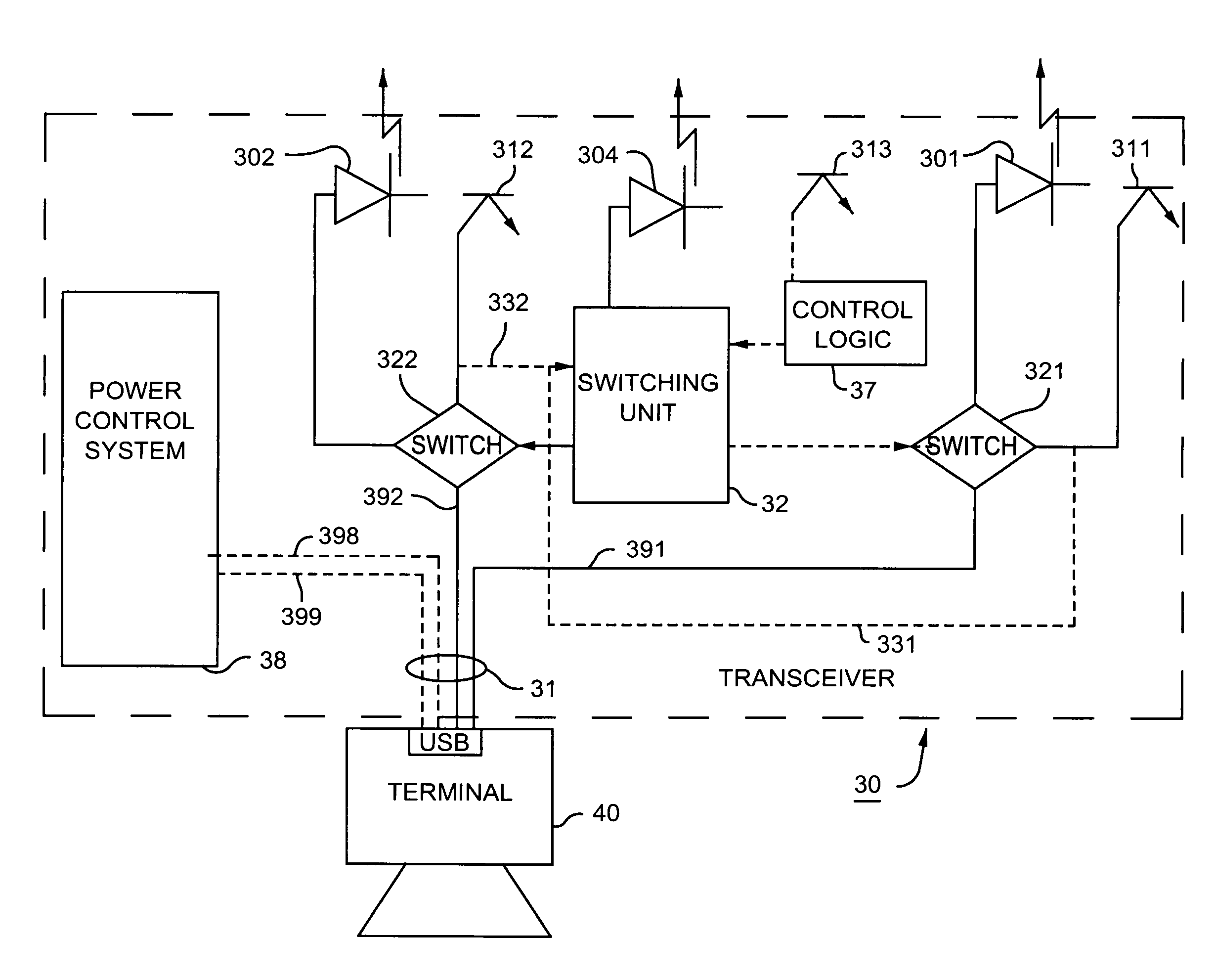
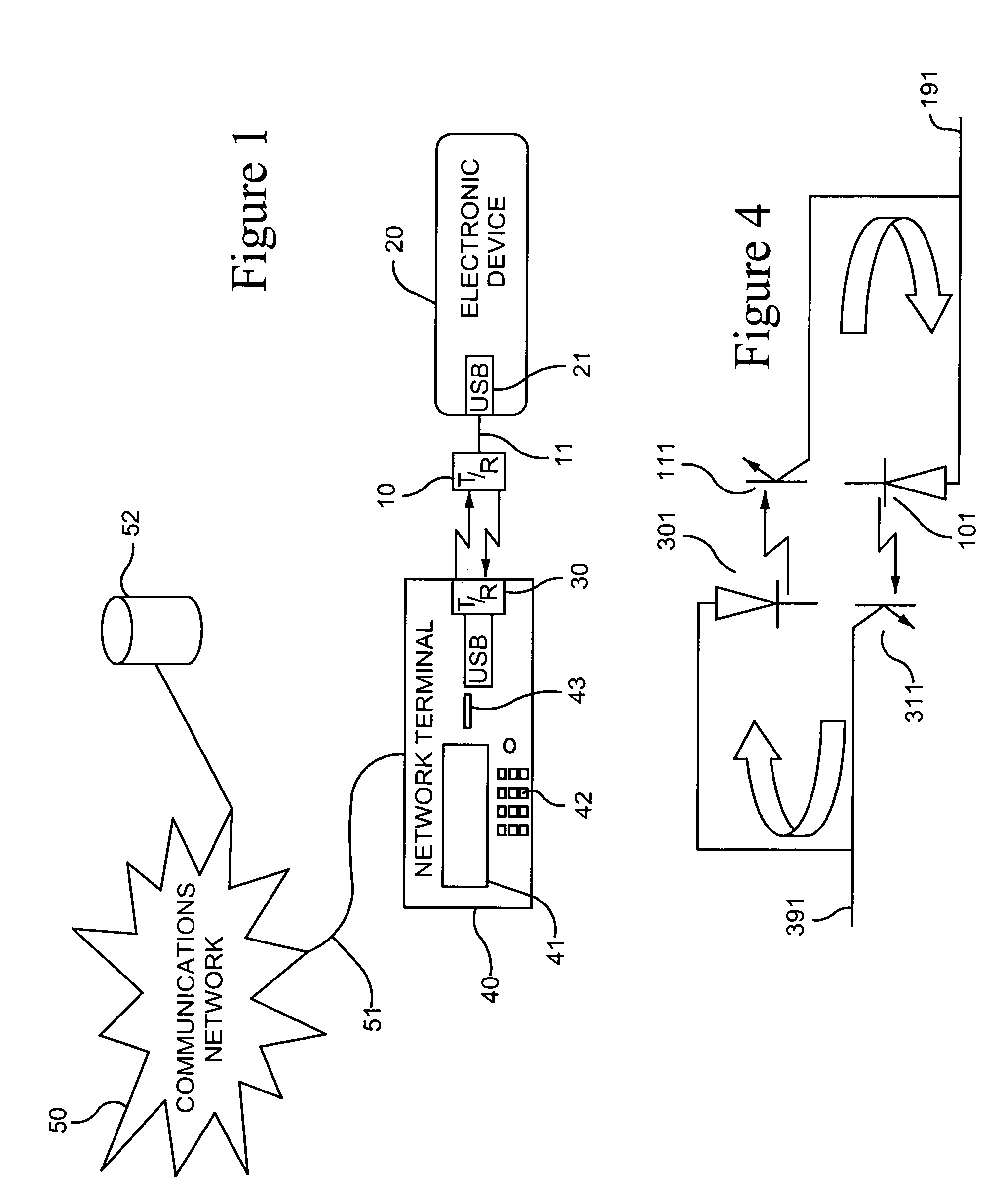
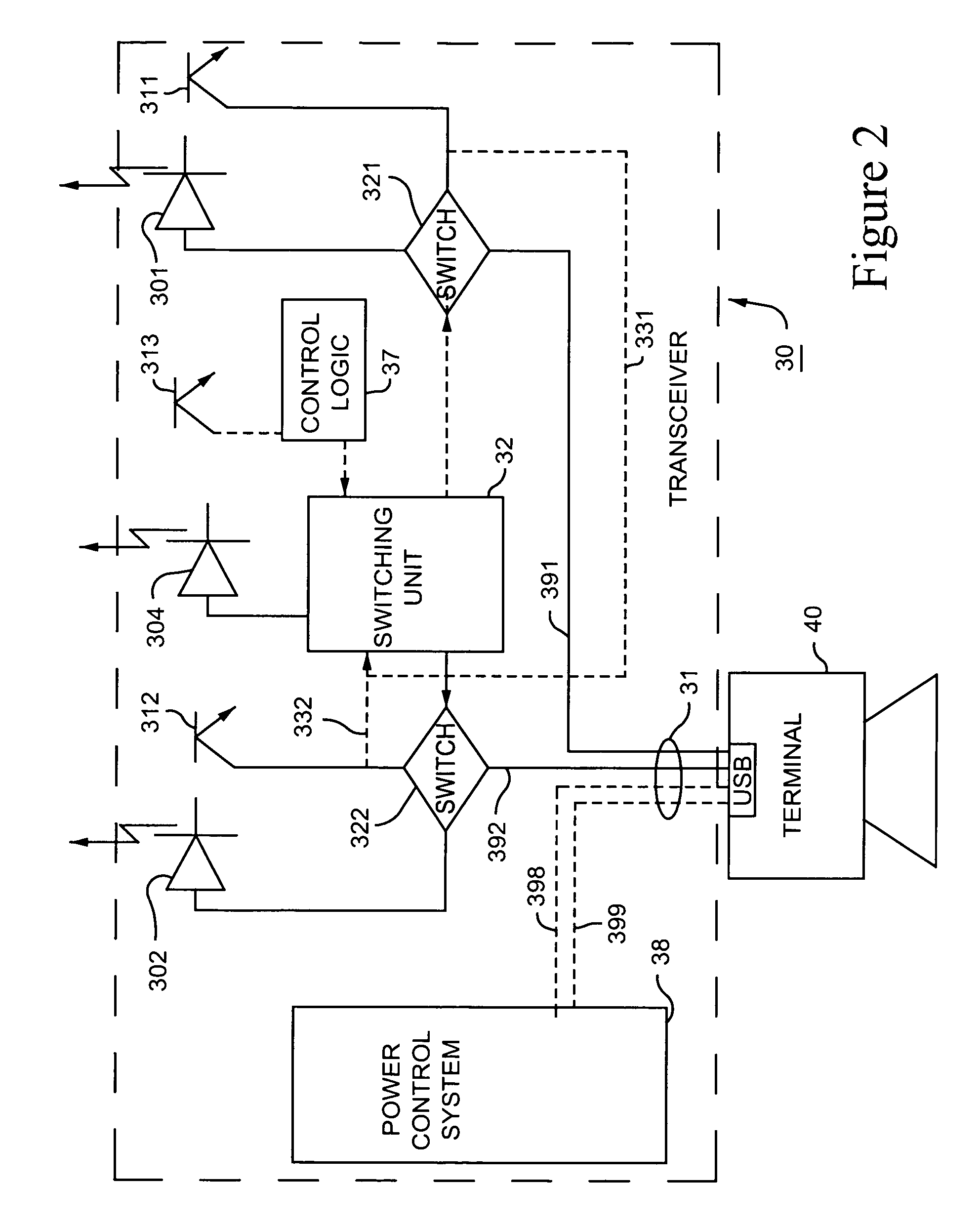
[0024]FIG. 1 shows an arrangement incorporating a device according to an exemplary embodiment of the present invention including an optical transceiver 10 (hereinafter referred to as the peripheral transceiver), an electronic device 20, and a communications network terminal 40 which incorporates a further optical transceiver 30 (hereinafter referred to as the host transceiver), the communications network terminal also being connected to a communications network 50. The optical peripheral transceiver 10 is connected to the electronic device 20 by a cable 11 which connects to a communications port 21 of the electronic device. The communications port 21 and the cable 11 are arranged according to the Universal Serial Bus (USB) communications link. Data transmission rates of up to 12 Mb / s are possible under the USB 1.1 specification, and the USB 2.0 specification envisages data rates of up to 480 Mb / s. USB ports have become ubiquitous in modem PCs, laptops and PDAs and are becoming commo...
PUM
 Login to View More
 Abstract
Description
Claims
Application Information
 Login to View More