[0011]The
computer network file synchronization system and method of the current invention overcomes the restrictions and limitations of the prior art, and enables a new level of both file protection and promotion in file sharing networks (including P2P networks, centralized file servers, internet
bulletin board systems, etc). In short, this invention enables the distribution, replication, and management of a system of files and file sharing servers, which effectively diminish the amount of piracy (and conversely increase the potential for promotion) of desired
media content. While there are an innumerable amount of factors affecting the likelihood that particular
media content will or will not be successfully pirated via file sharing networks, the present invention is targeted at significantly lessening the ease with which copyrighted content files are currently downloaded, and creating an environment where piracy becomes overly burdensome to the file sharing network user. Correspondingly, the present invention also enables significant promotional aspects for desired
digital content by drastically increasing the likelihood that a given file will be download by file sharing network users.
[0014]In another aspect of the
file synchronization system of the current invention, the input file contains a
data identification portion, and a
data content portion. The
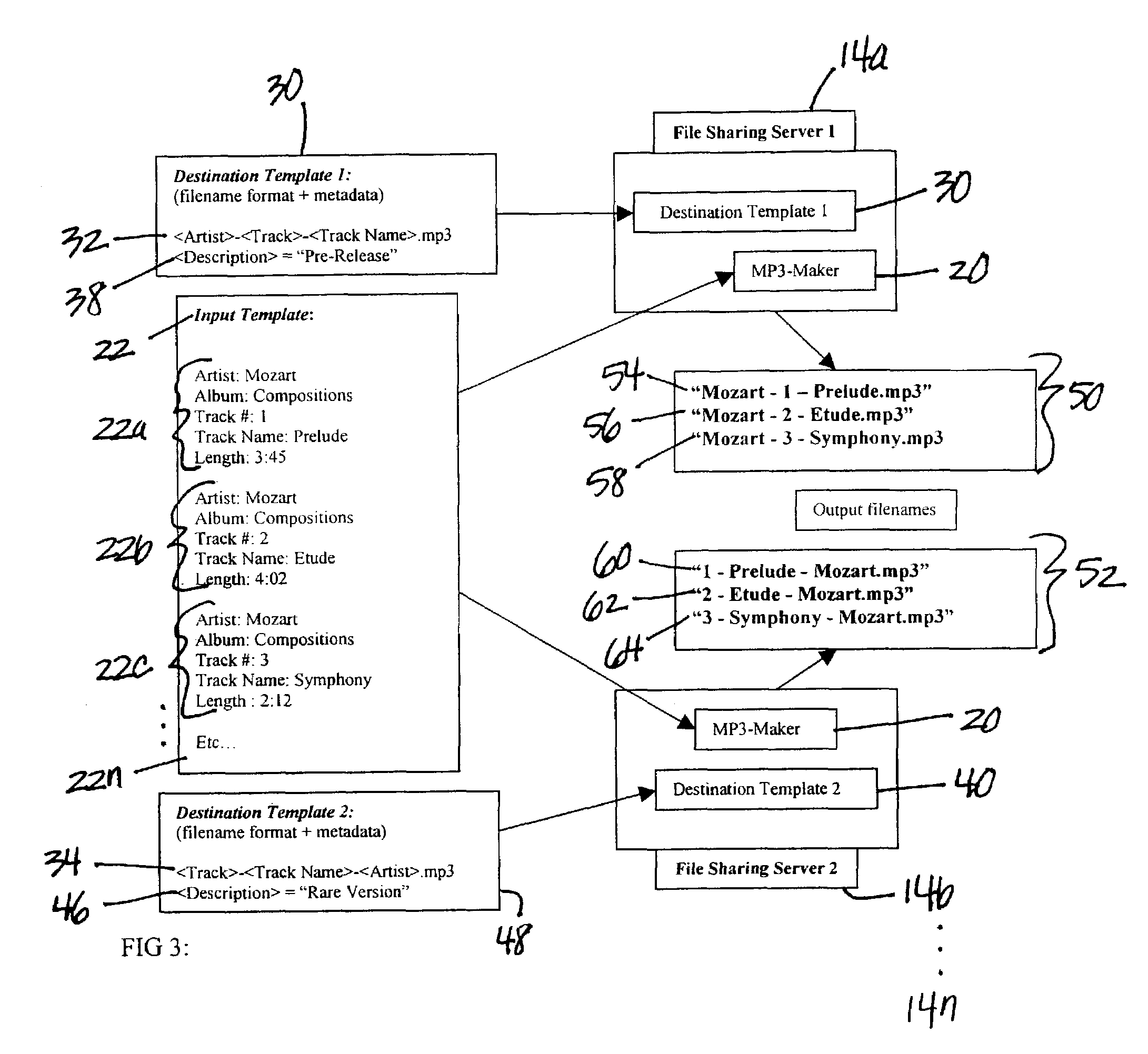
data identification portion may include the file name, and any metadata that may be appended or embedded to the
data content portion of the file, including a data hash value. The
data content portion is the actual data representing the content of the file, whether it be audio, video, program, application, or even empty (blank) data according to the current invention. The file modification means includes the ability to modify input files such that the
resultant output file contains a unique
data identification portion (filename and metadata, and optionally a unique identifying value, such as a data hash value). In one embodiment of the file modification means of the present invention, the modification of the data identifying value is performed to match a target value, such as the discovered data hash value of an infringing content file discovered on a file sharing network. Such manipulation of the data identifying values of files generated by the current invention can function to thwart piracy on file sharing networks by interfering with the integrity of files downloaded via swarm or multisource downloading methods.
[0018]In an alternate embodiment of the
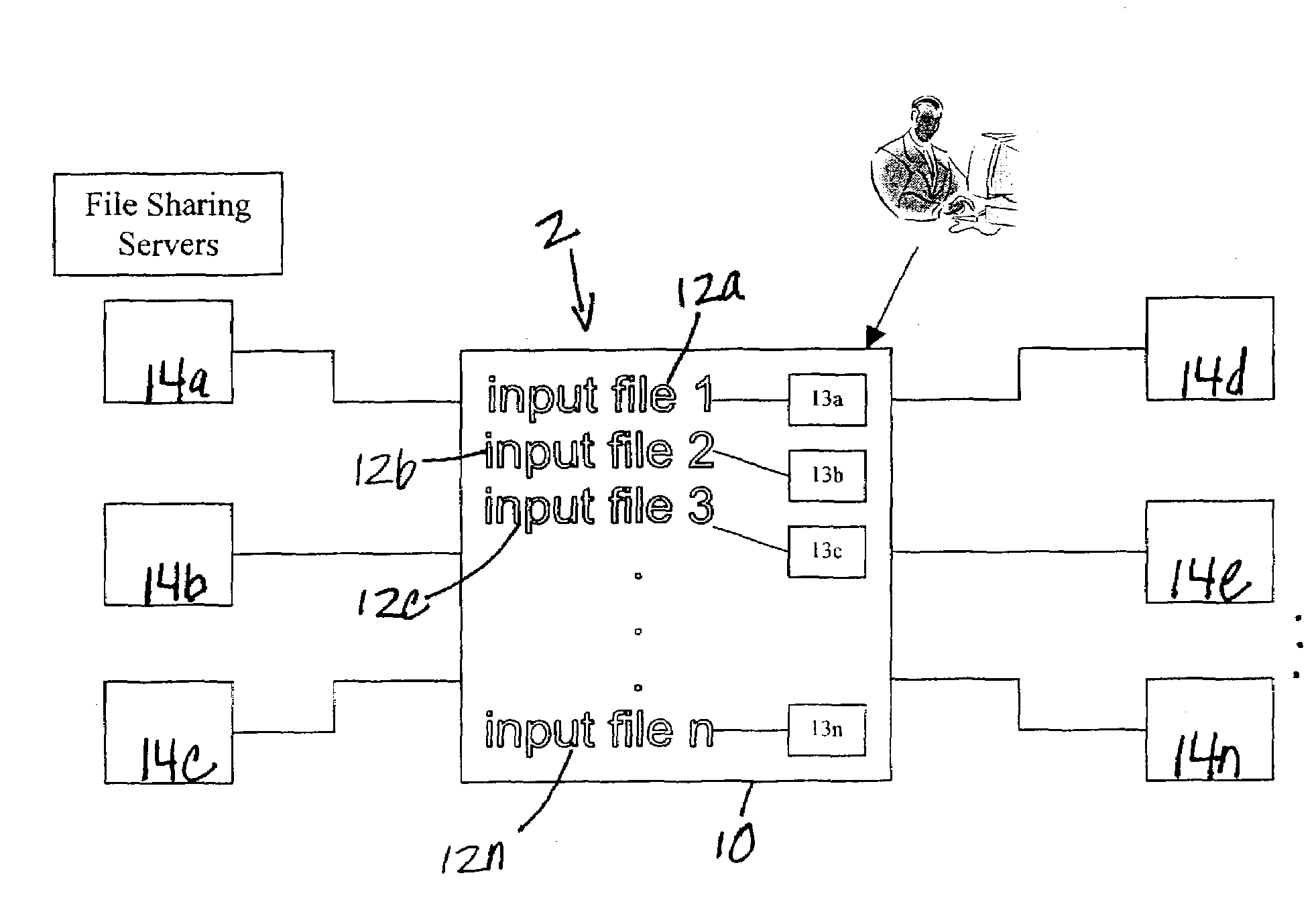
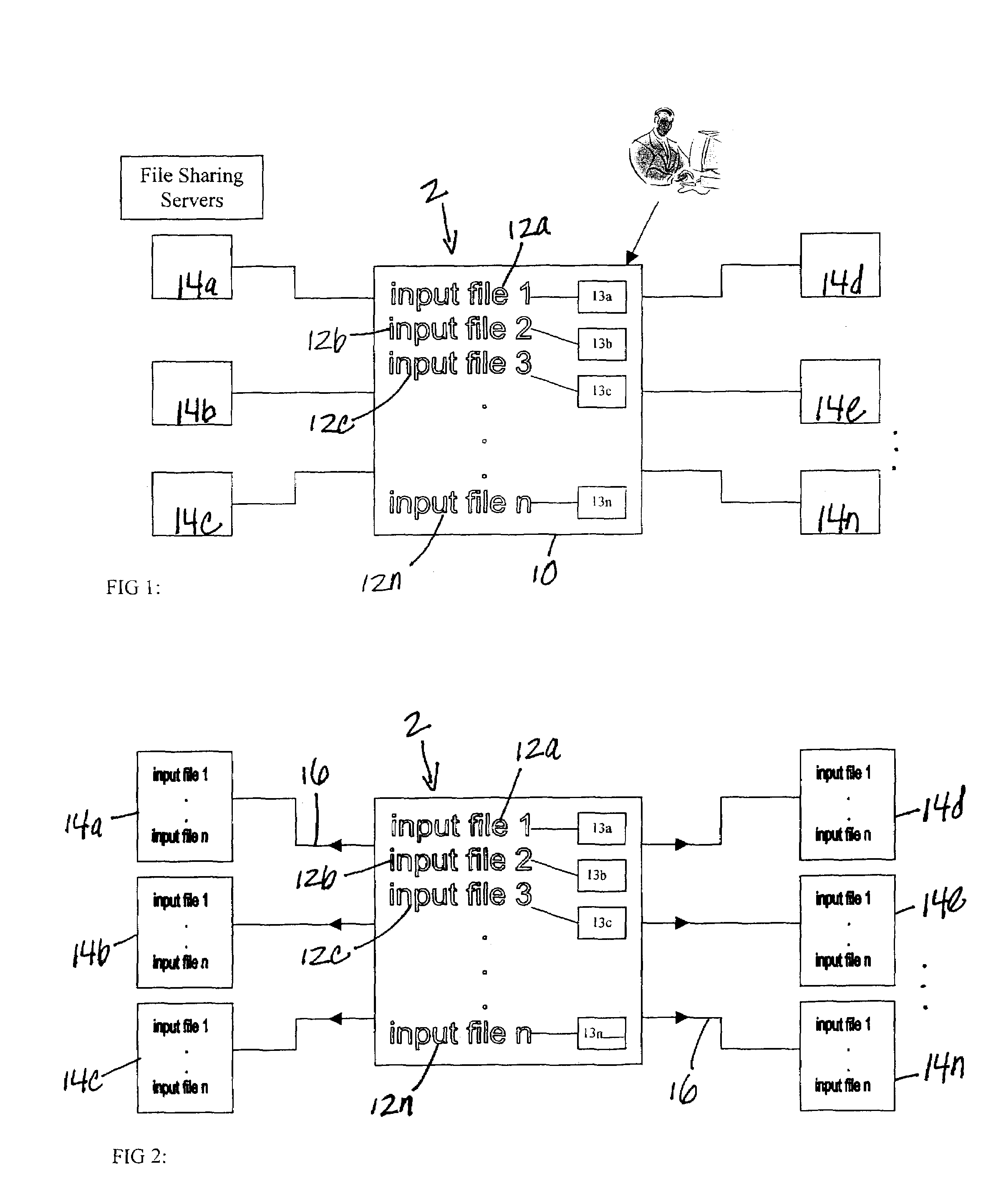
file synchronization system, the synchronization
server and file sharing servers use a P2P or similar file sharing protocol to accomplish file synchronization and
management functions, effectively allowing an unlimited number of computer systems to be used as file sharing servers to accomplish the present invention.
[0021]In a further embodiment of the file
synchronization system, a
user interface is provided for enabling simple operation of the network
synchronization system, as well as a monitoring and reporting means for tracking and providing results and statistics regarding the sharing of generated files, and the health status of each file sharing server. Such monitoring and reporting means may be used to assess the effectiveness of various shared files for their intended purpose, and make appropriate modifications in the system as a result.
[0024]In another embodiment of the file synchronization method of the current invention, a method of managing the files on each file sharing server is presented wherein each file sharing server in the network of file sharing servers monitors the synchronization server for added or deleted media files and updates their respective file contents accordingly. In one aspect of the
file management method, each file sharing server includes a local maps file on which information relating to all present input files and associated output files is located. In the case that a given input file is deleted from the synchronization server, each file sharing server monitoring the synchronization server correspondingly removes the given input file and all associated unique output files generated by the file sharing server using the local maps file. Using such a
file management and synchronization scheme, massive amounts of input files, for both preventative and promotional purposes, may effectively and efficiently managed by inserting or removing particular input files from the synchronization server. In a further embodiment of the method of managing files in the current invention, the input files are removed from each file sharing server following the completion of all file generation operations relating to that particular input file such that
disc space is routinely freed on each file sharing server.


 Login to View More
  Login to View More