

Frequency selective passive component networks for implantable leads of active implantable medical devices utilizing an energy dissipating surface
a passive component and implantable technology, applied in the field of energy induced into implantable leads, can solve the problems of low temperative rise, high electrical fields around instruments, and local tissue heating
- Summary
- Abstract
- Description
- Claims
- Application Information
AI Technical Summary
Benefits of technology
Problems solved by technology
Method used
Image

Examples
Embodiment Construction
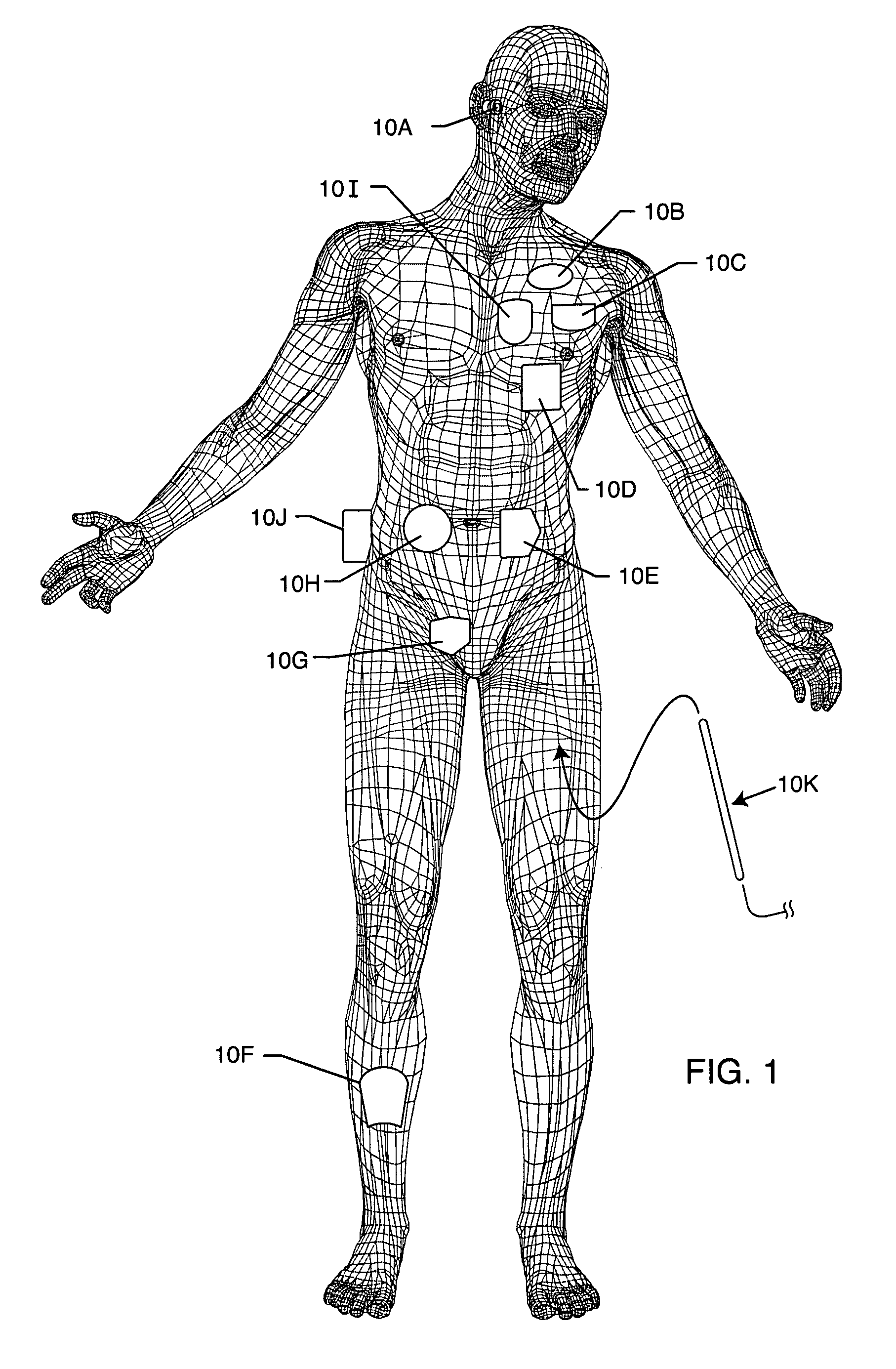
[0119]FIG. 1 illustrates various types of active implantable medical devices referred to generally by the reference numeral 10 that are currently in use. FIG. 1 is a wire formed diagram of a generic human body showing a number of exemplary implanted medical devices. 10A is a family of implantable hearing devices which can include the group of cochlear implants, piezoelectric sound bridge transducers and the like. 10B includes an entire variety of neurostimulators and brain stimulators. Neurostimulators are used to stimulate the Vagus nerve, for example, to treat epilepsy, obesity and depression. Brain stimulators are similar to a pacemaker-like device and include electrodes implanted deep into the brain for sensing the onset of the seizure and also providing electrical stimulation to brain tissue to prevent the seizure from actually happening. 10C shows a cardiac pacemaker which is well-known in the art. 10D includes the family of left ventricular assist devices (LVAD's), and artifi...
PUM
 Login to View More
 Abstract
Description
Claims
Application Information
 Login to View More