

Spatial-temporal regulation method for robust model estimation
a model estimation and spatiotemporal regulation technology, applied in the field of enhanced model estimation and data integrity assurance, can solve the problems of confounding traditional methods of image recognition, inability to accurately detect objects in images, and inability to accurately detect objects, etc., to facilitate human review of data and enhance results
- Summary
- Abstract
- Description
- Claims
- Application Information
AI Technical Summary
Benefits of technology
Problems solved by technology
Method used
Image

Examples
Embodiment Construction
I. Basic Spatial-Temporal Model Estimation
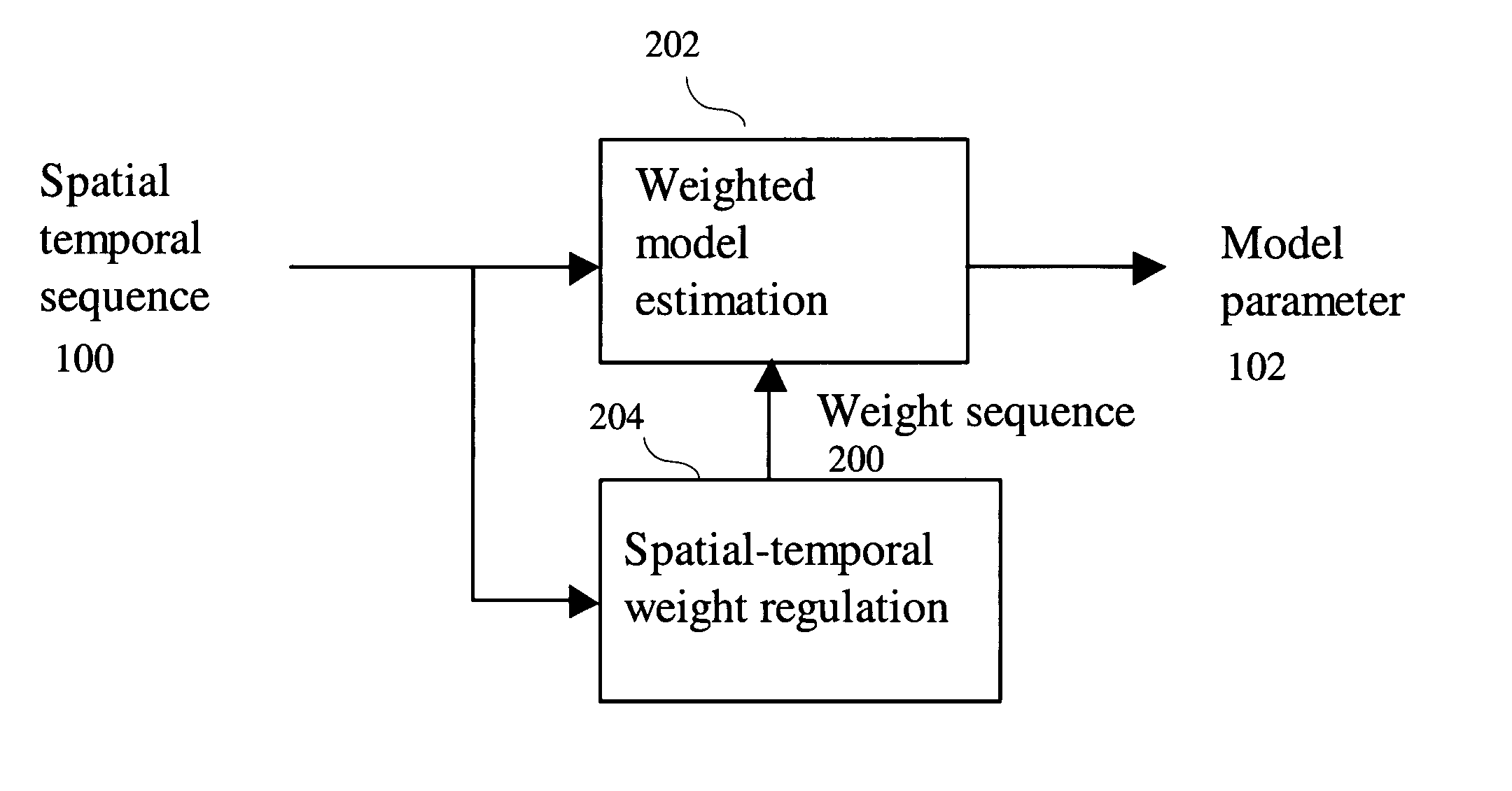
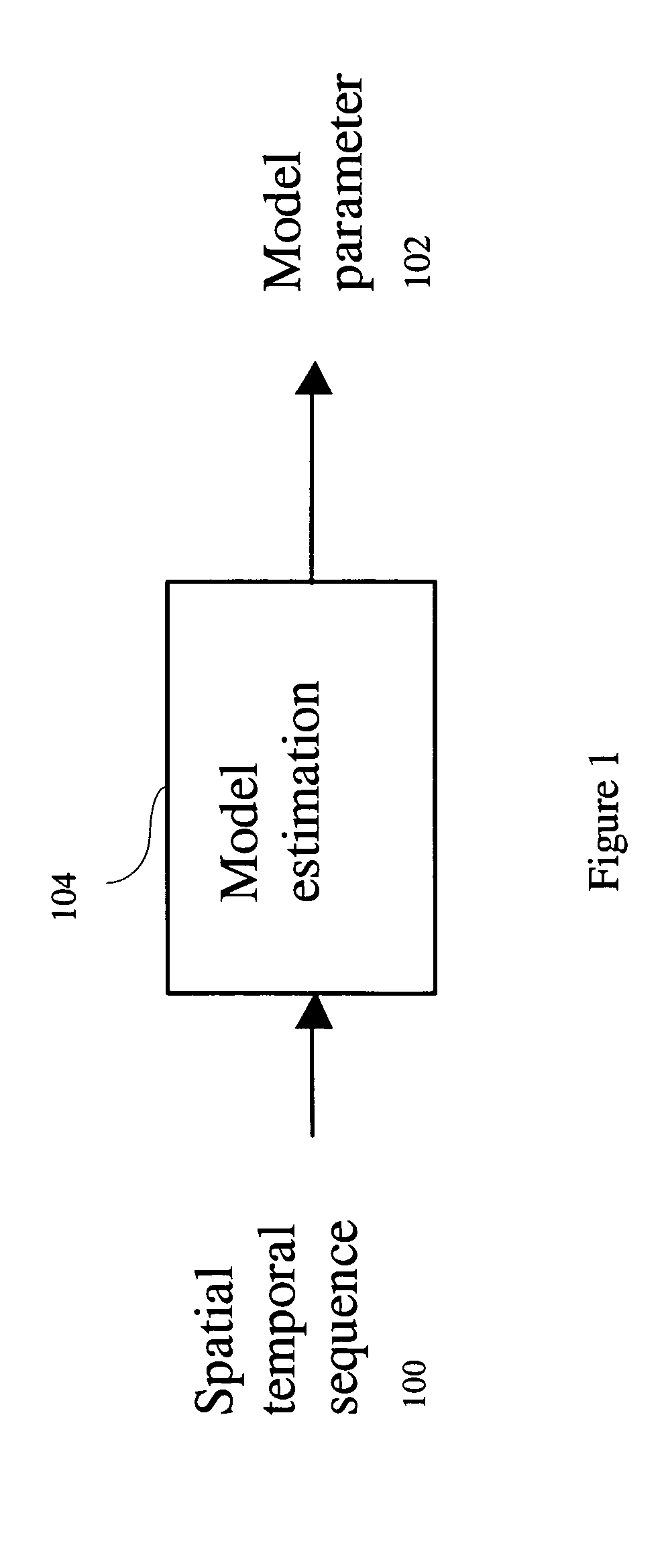
[0022]The basic spatial-temporal model estimation processing flow is shown in FIG. 1. As shown in the figure, a spatial temporal sequence 100 is subjected to a computerized model estimation stage 104 to estimate at least one model parameter 102. In one preferred embodiment of the invention, the model estimation is performed using a nonlinear regression method.
II. Spatial-Temporal Regulation for Model Estimation
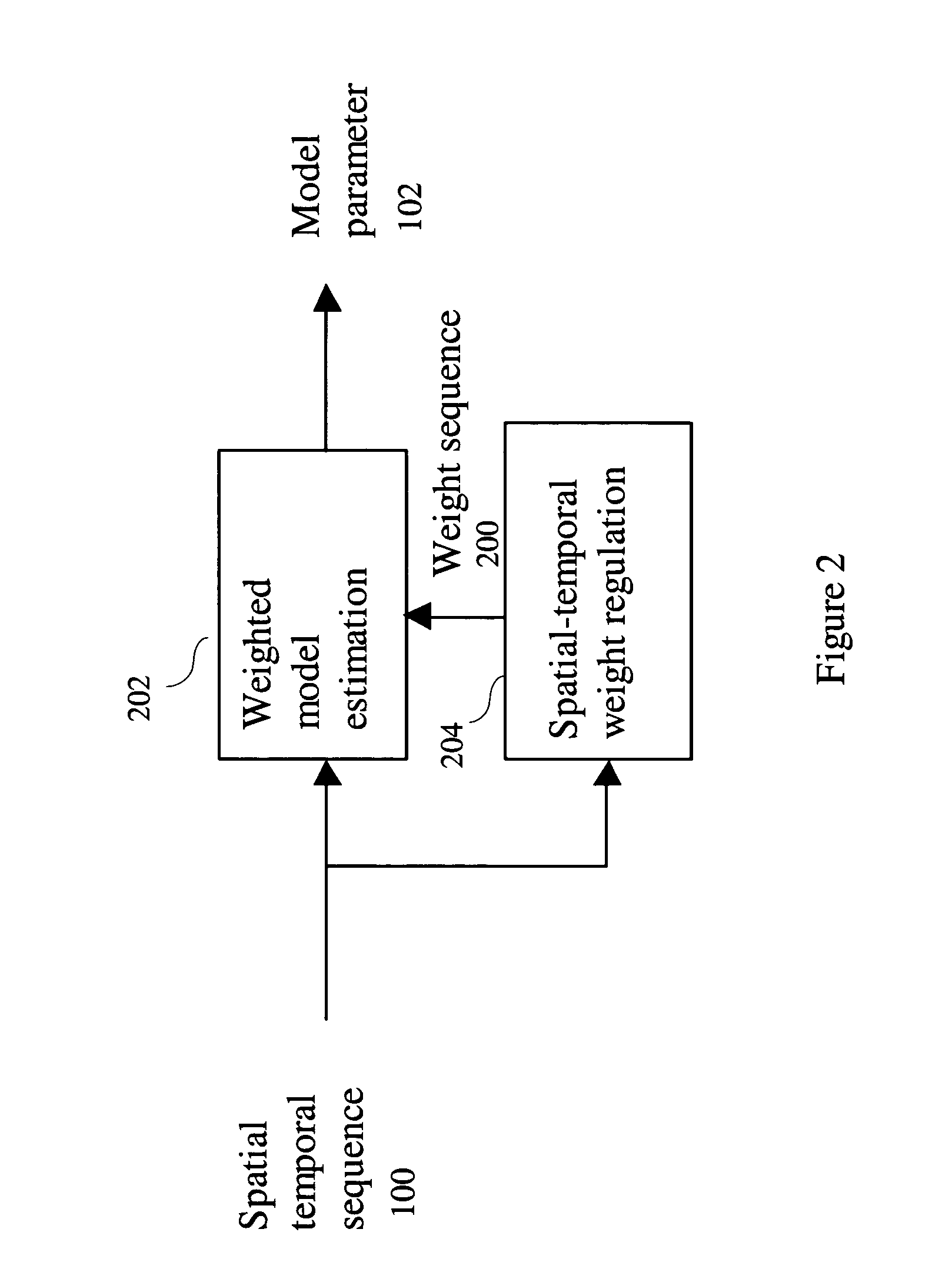
[0023]The Spatial-temporal Model estimation could be improved when using different confidence weights for different time points. In a subcellular assay, it is known that the pixel intensities do not fluctuate rapidly. If the intensity value of the pixel at a time point is significantly different from the pixel intensities of the previous and the next time points, the pixel may be given low confidence for model estimation. Spatial-Temporal Regulation (STR) makes use of the distribution within each object of the adjacent frame temporal i...
PUM
 Login to View More
 Abstract
Description
Claims
Application Information
 Login to View More