

Central nervous system cooling catheter
a cooling catheter and central nervous system technology, applied in the field of central nervous system cooling catheters, can solve the problems of high risk of blood occlusion and infection of catheters placed in the brain or ventricles, and achieve the effect of reducing the risk of infection and reducing the risk of catheter occlusion
- Summary
- Abstract
- Description
- Claims
- Application Information
AI Technical Summary
Benefits of technology
Problems solved by technology
Method used
Image

Examples
Embodiment Construction
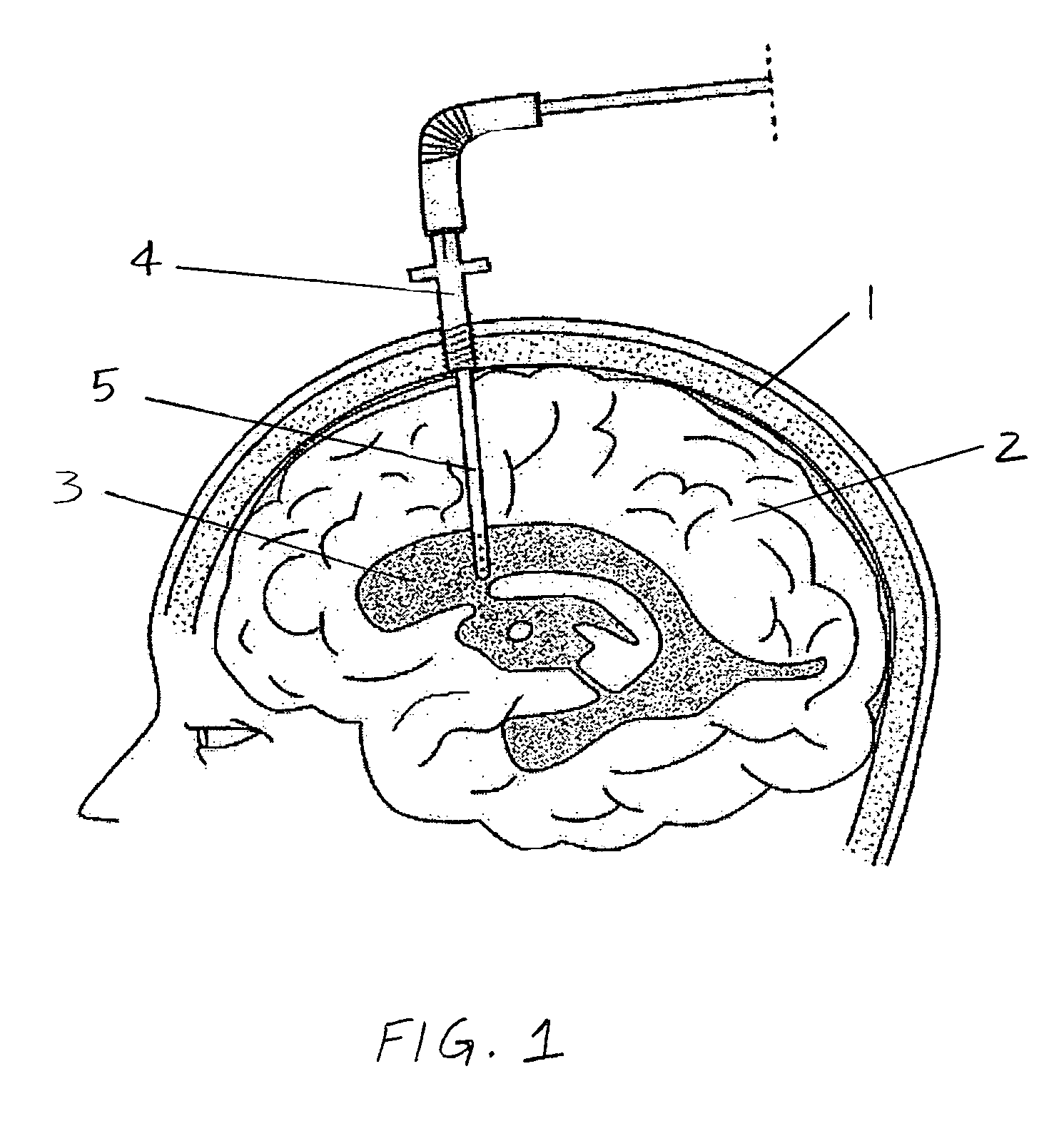
[0078]In one method of selective brain and / or spinal cooling, a catheter as shown in FIG. 1, can be placed into the ventricle of the brain or the subdural space of the spine. This allows for cooling of the cerebrospinal fluid and hence the brain and / or spinal cord selectively. These catheters can be placed in the lateral ventricles using the standard landmarks or can be precisely placed with stereotactic guidance or use of an endoscope. The bolt 4 secures the catheter 5 to the skull 1. The catheter 5 is placed into the cerebrospinal fluid in the ventricle 3.
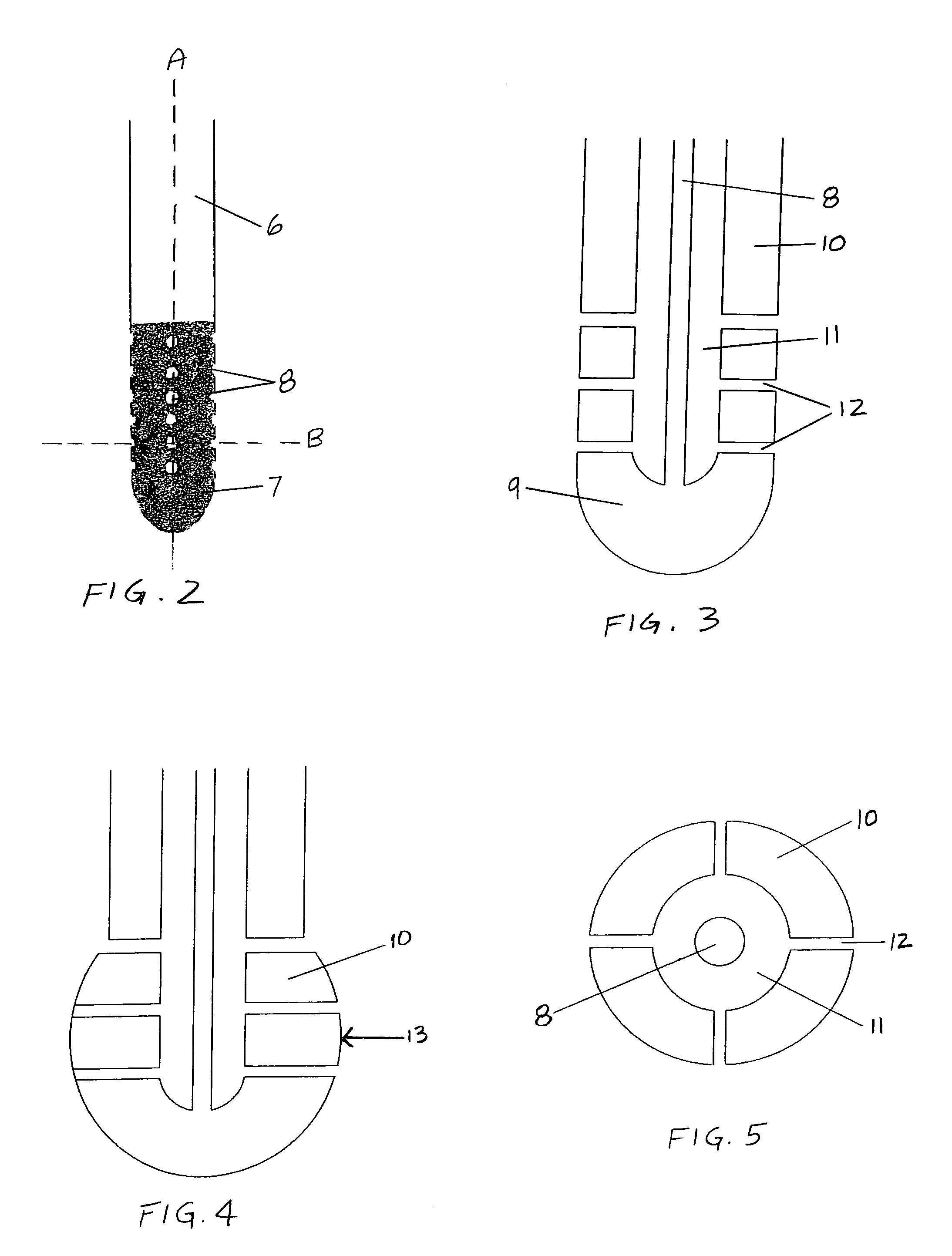
[0079]As illustrated in FIG. 2, the catheter has a proximal portion 6 and a distal heat transfer element 7. The distal heat transfer element 7 has several circumferential holes 8 that allow drainage of cerebrospinal fluid as well as monitoring of intracranial pressure.
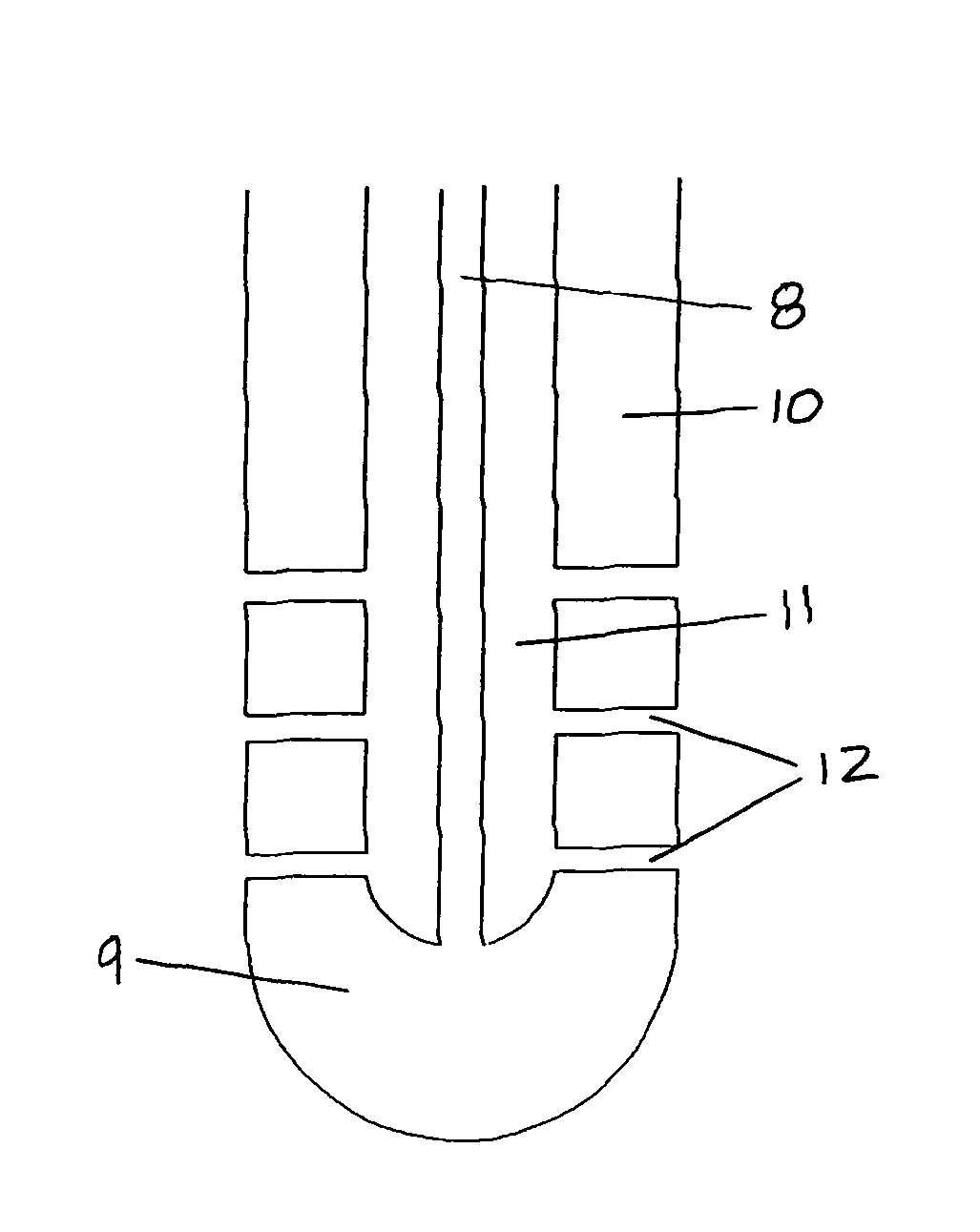
[0080]In one embodiment of the cooling catheter as shown in FIGS. 3-5, the heat exchange fluid or compressed refrigerant enters through the central lumen 8 into the...
PUM
 Login to View More
 Abstract
Description
Claims
Application Information
 Login to View More