
Split brain resistant failover in high availability clusters
a cluster and cluster technology, applied in the field of cluster failure and data loss limitation, can solve the problems of insufficient comparison of failures between systems of fault-tolerant computers and those of fault-tolerant clusters, shared storage resources usually introduce a single point of failure in the cluster, and achieve high-failure cluster operation, the effect of easy deploymen
- Summary
- Abstract
- Description
- Claims
- Application Information
AI Technical Summary
Benefits of technology
Problems solved by technology
Method used
Image

Examples
Embodiment Construction
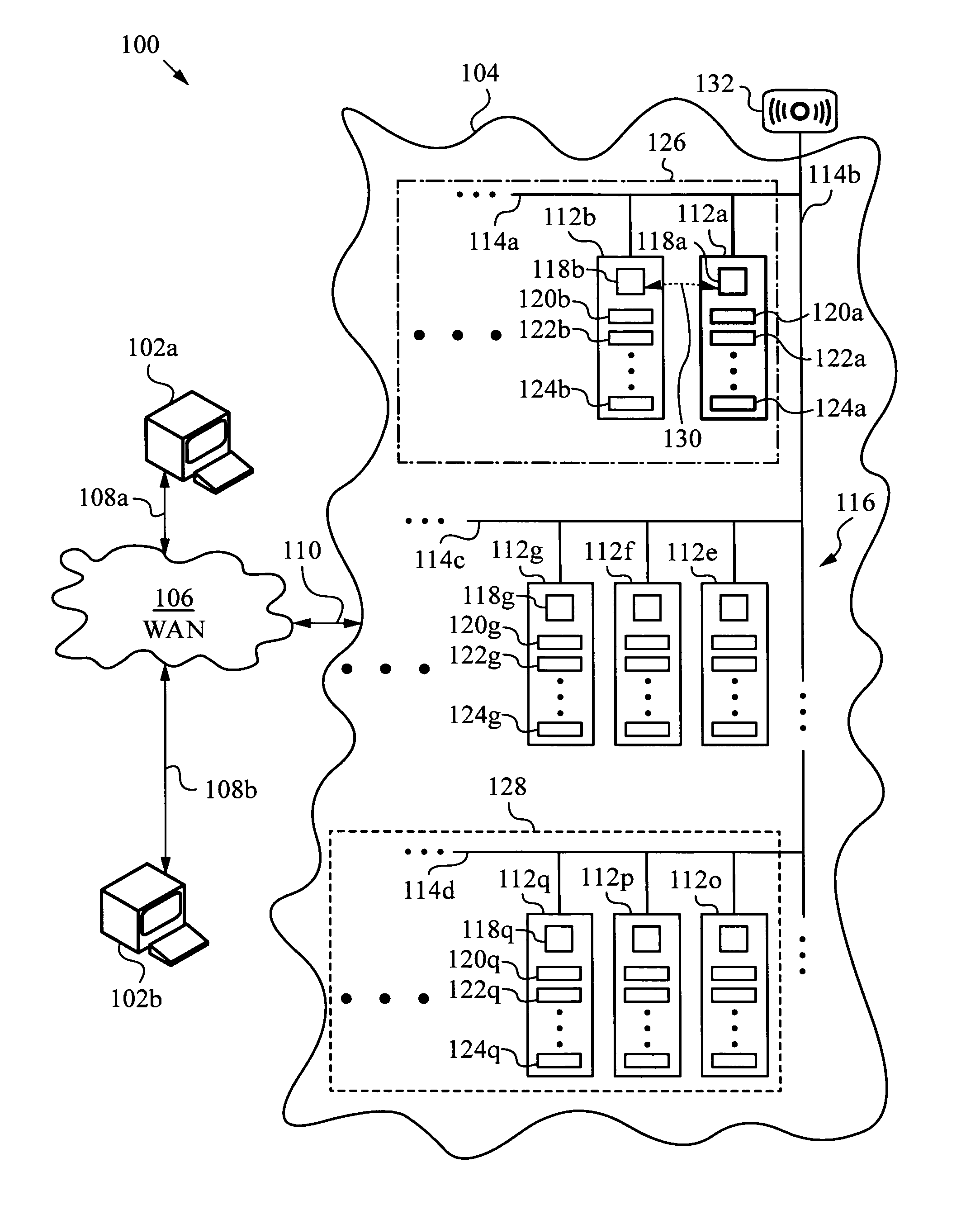
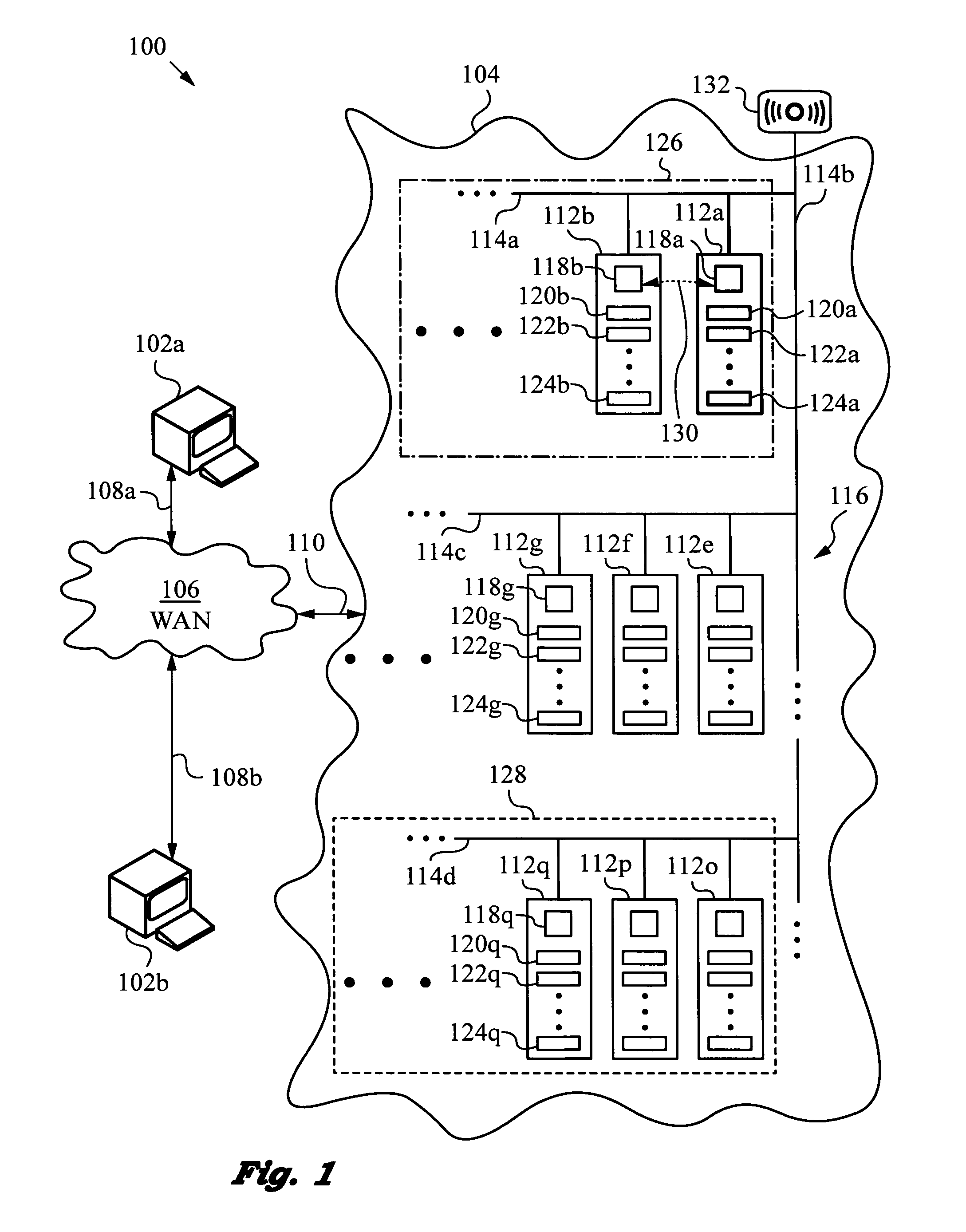
[0040]The present invention will be best understood by initially referring to the high-level diagram of FIG. 1. This diagram shows a networking system 100 in which network clients 102a, 102b are connected to a high availability cluster 104. Only two clients 102a, 102b are shown in FIG. 1 for reasons of clarity. It will be appreciated, however, that cluster 104 typically supports a large number of clients, e.g., on the order of thousands, tens of thousands or even larger.
[0041]Networking system 100 includes a wide area network 106, or WAN, such as the Internet and / or still other single or multiple wide area networks. It is important that WAN 106 be accessible to clients 102a, 102b at locations where services deployed on high availability cluster 104 are provided. Physical connections 108a, 108b between clients 102a, 102b and WAN 106 can be accomplished by any suitable technology including wired, wireless, optical waveguides and the like. WAN 106 is connected to cluster 104 via a netw...
PUM
 Login to View More
 Abstract
Description
Claims
Application Information
 Login to View More