
Method for making a lithographic printer plate precursor
a technology of lithographic printing plate and precursor, which is applied in the field of making lithographic printing plate precursor, can solve the problems of poor roll-up performance of printing plate, poor visual image contrast of printed sheets, and insufficient hydrophobic printing area of printed plates, etc., and achieve the effect of improving roll-up performan
- Summary
- Abstract
- Description
- Claims
- Application Information
AI Technical Summary
Benefits of technology
Problems solved by technology
Method used
Image

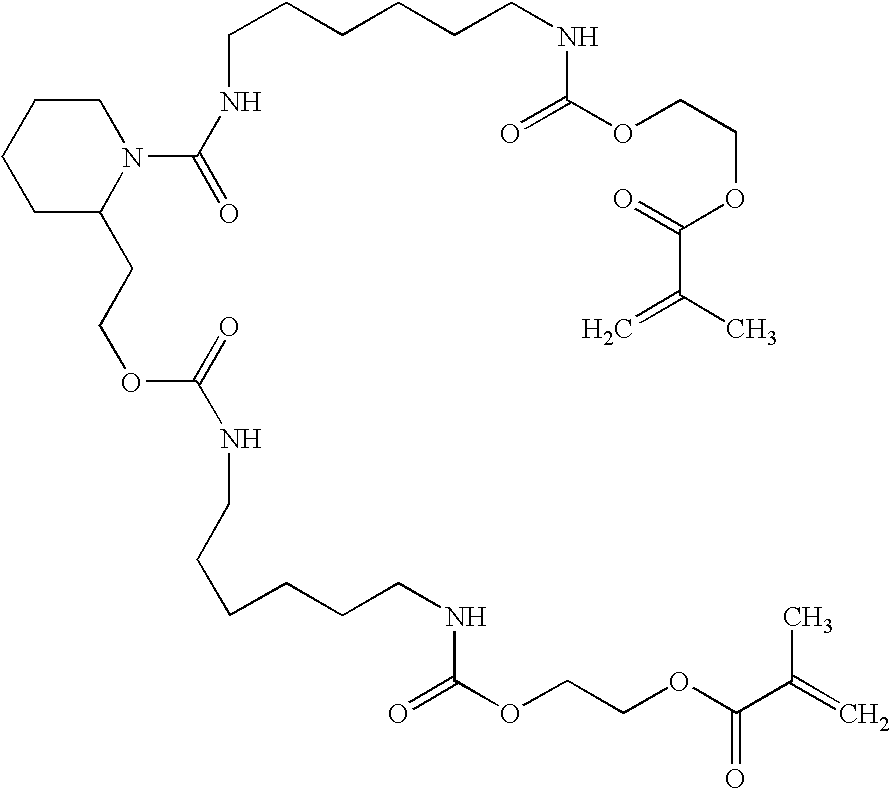
Examples
examples
Preparation of Aluminum Support S-1
[0183]A 0.3 mm thick aluminium foil was degreased by spraying with an aqueous solution containing 26 g / l NaOH at 65° C. for 2 seconds and rinsed with demineralised water for 1.5 seconds. The foil was then electrochemically grained during 10 seconds using an alternating current in an aqueous solution containing 15 g / l HCl, 15 g / l SO42− ions and 5 g / l Al3+ ions at a temperature of 37° C. and a current density of about 80 A / dm2 (charge density of about 800 C / dm2). Afterwards, the aluminium foil was then desmutted by etching with an aqueous solution containing 145 g / l of sulphuric acid at 70° C. for 2 seconds and rinsed with demineralised water for 1 second. The foil was subsequently subjected to anodic oxidation during 15 seconds in an aqueous solution containing 145 g / l of sulfuric acid at a temperature of 50° C. and a current density of 17 A / dm2 (charge density of about 250 C / dm2), then washed with demineralised water for 11 seconds, post-treated fo...
PUM
| Property | Measurement | Unit |
|---|---|---|
| wavelength range | aaaaa | aaaaa |
| wavelength range | aaaaa | aaaaa |
| wavelength range | aaaaa | aaaaa |
Abstract
Description
Claims
Application Information
 Login to View More