
Scalable partitioning in a multilayered data service framework
- Summary
- Abstract
- Description
- Claims
- Application Information
AI Technical Summary
Benefits of technology
Problems solved by technology
Method used
Image

Examples
Embodiment Construction
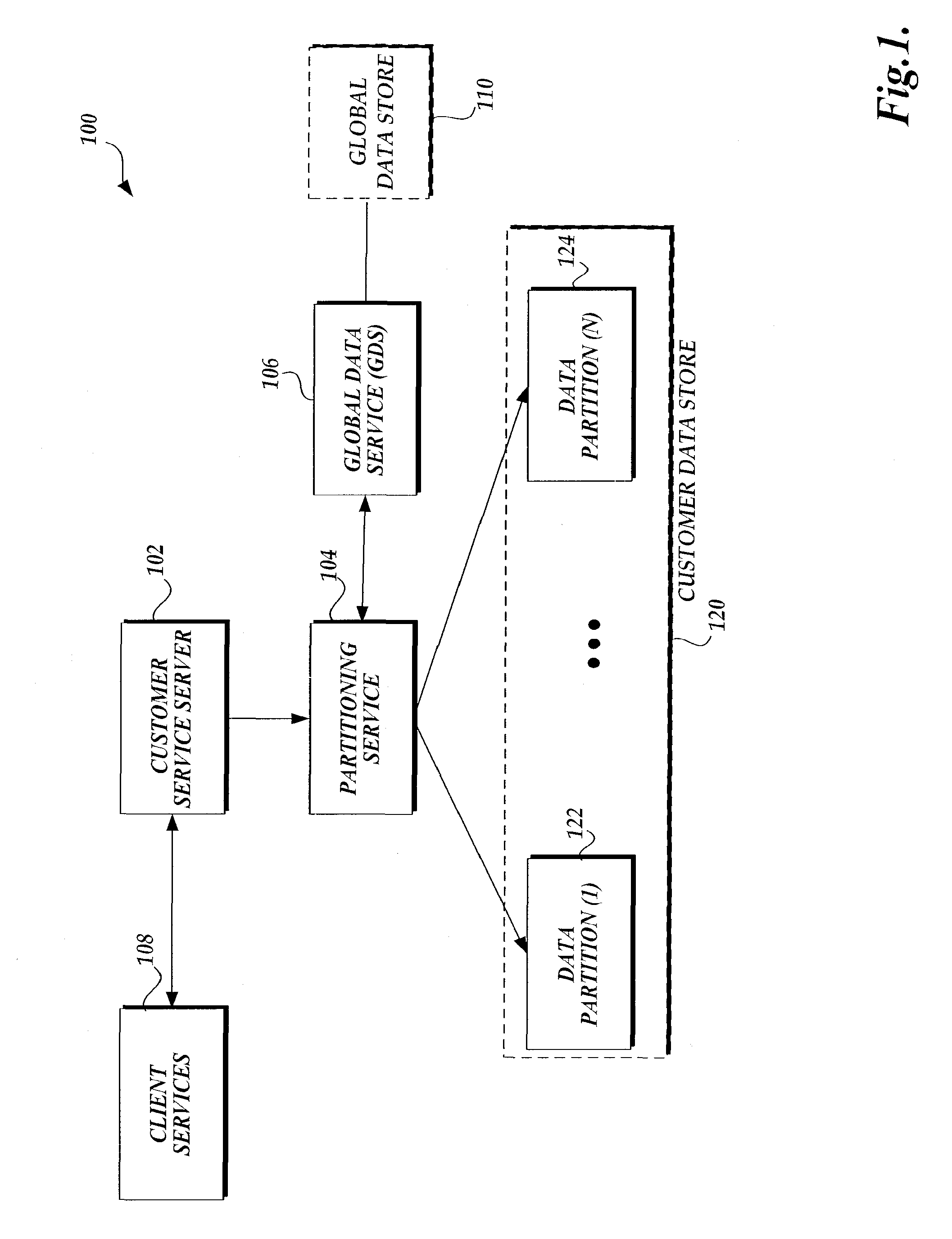
[0021]Generally described, embodiments of the present invention relate to a method and system for maintaining customer data in a data store system utilizing a scalable partitioning framework. More specifically, embodiments of the present invention relate to a method and system for managing a data store of a customer service system that is partitioned (divided) into multiple partitions by a “partitionable key” of customer data so that each partition owns a subset of the customer data and such that the partitions are scalable, as described below. A “partitionable key,” as used herein, is an identifier of customer data within a data store, which can be used to determine a partition corresponding to the customer data. An example of a partitionable key may be a customer identifier that is a unique identifier of customer data within a data store.
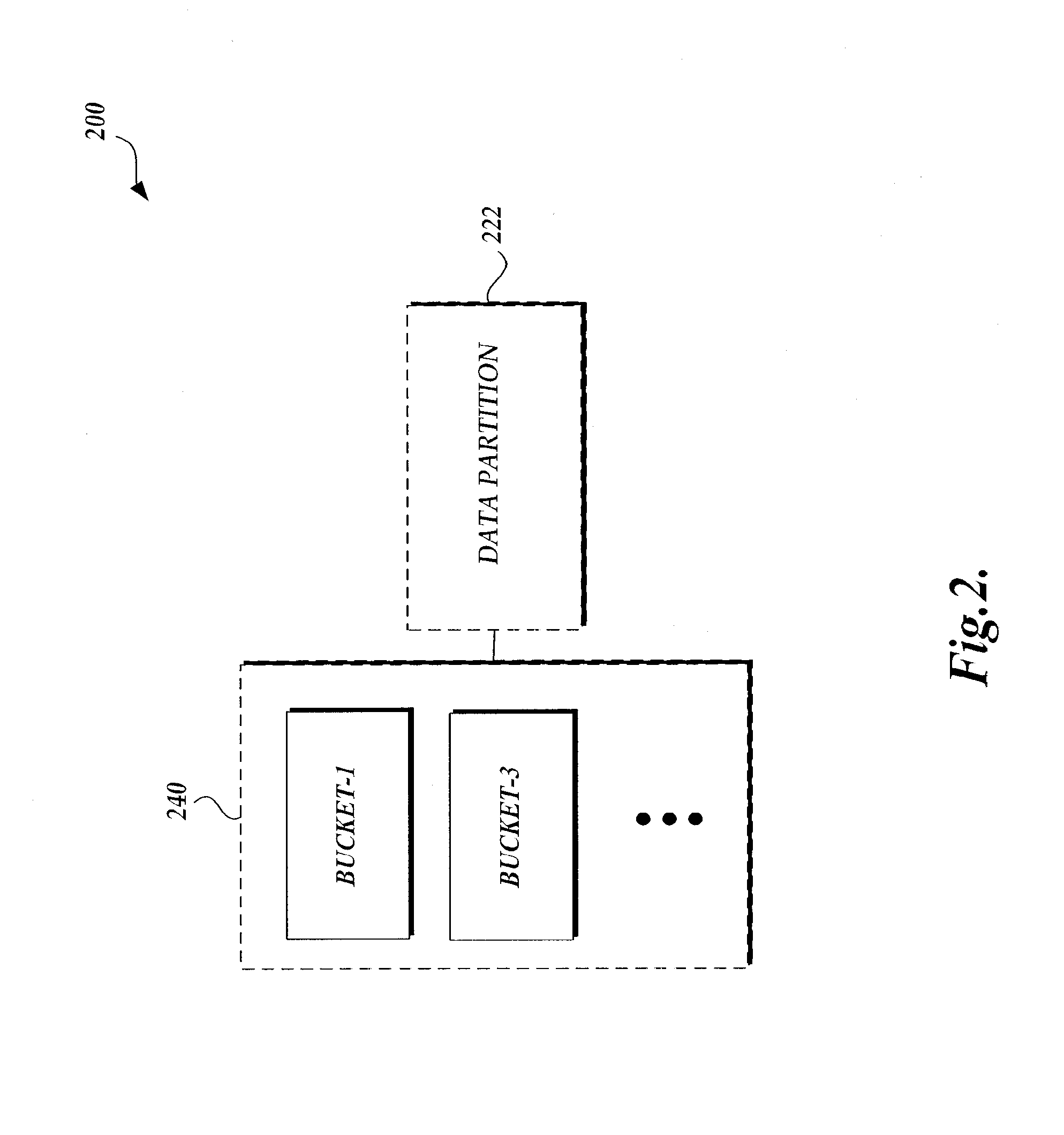
[0022]Each partition is associated with one or more “buckets” in order to eliminate direct dependencies between the partitions and the partitiona...
PUM
 Login to View More
 Abstract
Description
Claims
Application Information
 Login to View More