Vehicle safety belt braid

A technology for seat belts and vehicles, which is applied in the field of vehicle seat belt webbing, which can solve the problems of reducing the overall protection effect of seat belt devices, excessive compression of occupant's chest and abdomen, and reduction of webbing area, so as to avoid damage to ribs and internal organs, The effect of reducing extrusion and facilitating production

CN102729948AInactive Publication Date: 2012-10-17DALIAN UNIV OF TECH
5 Cites 11 Cited by

Patent Information

Authority / Receiving Office
CN · China
Current Assignee / Owner
Publication Date
2012-10-17
Estimated Expiration
Not applicable · inactive patent

Smart Images

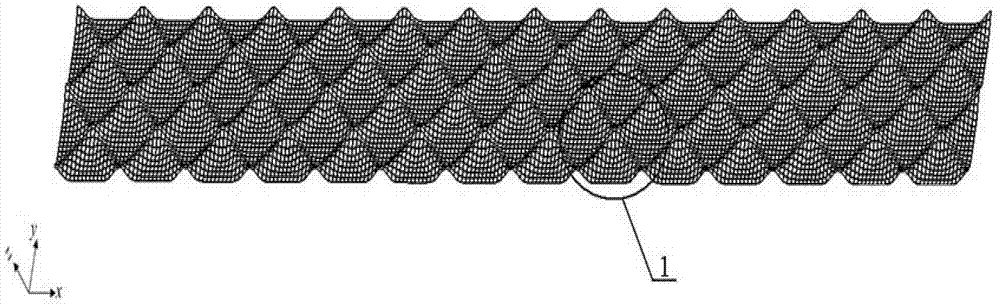
  • Figure 1
    Figure 1
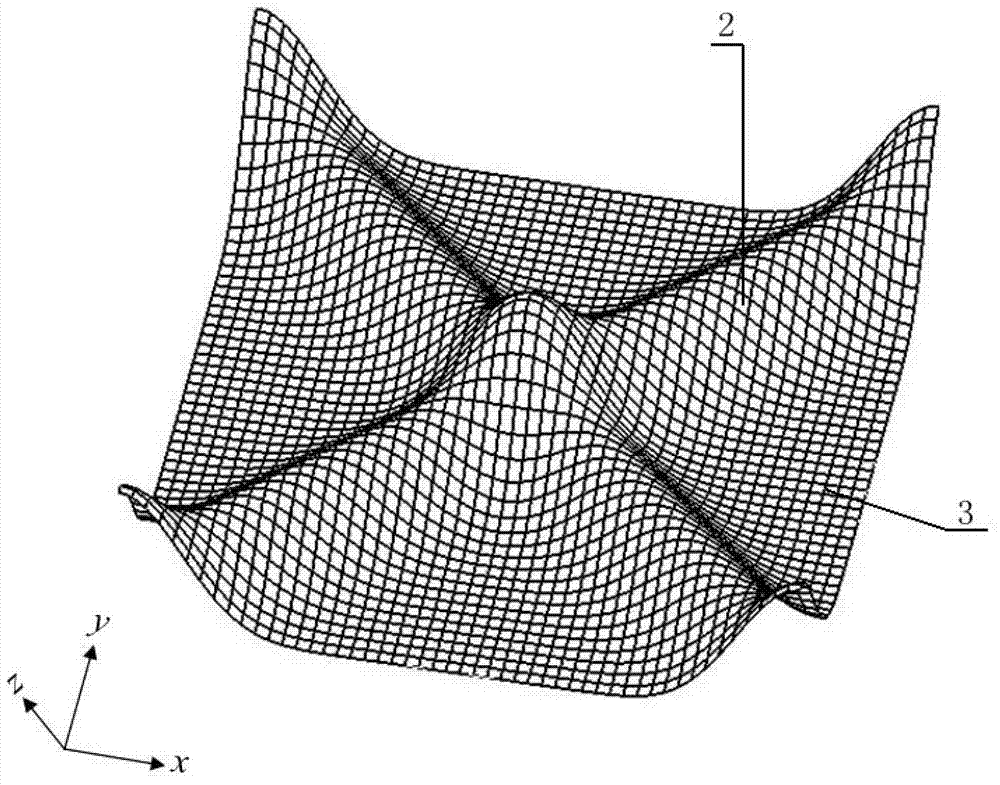
  • Figure 2
    Figure 2
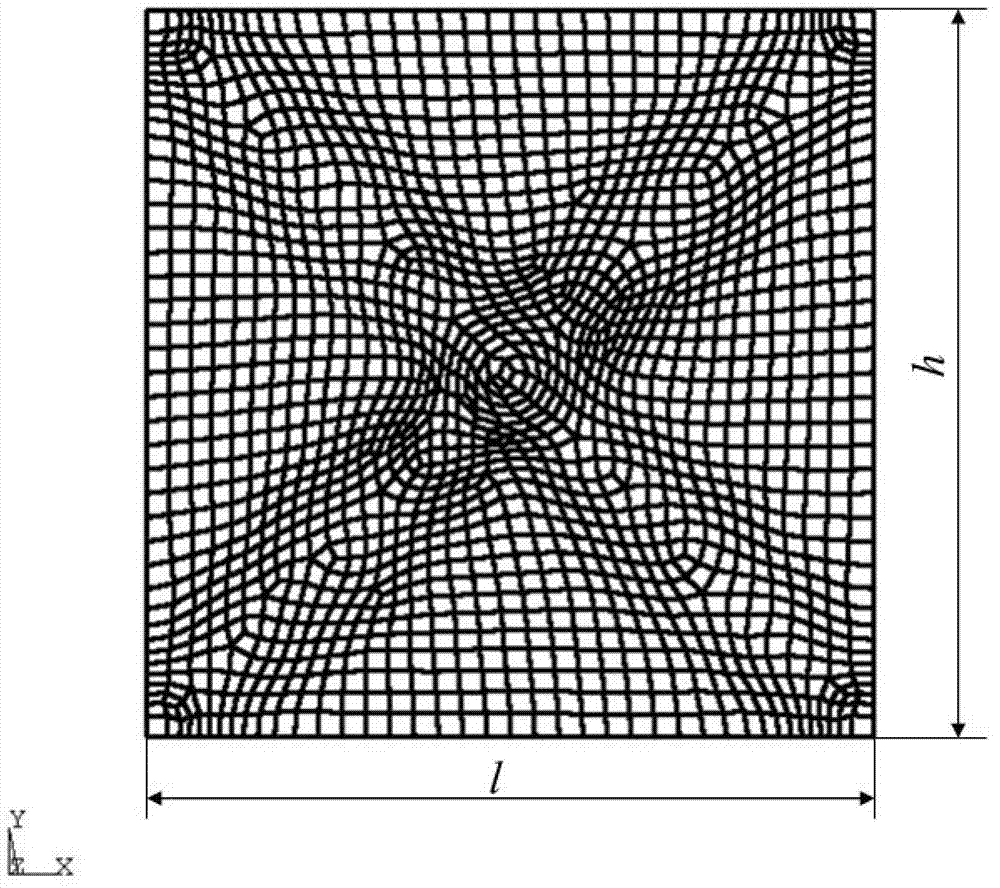
  • Figure 3
    Figure 3
Patent Text Reader

Abstract

The invention discloses a vehicle safety belt braid which is formed by M*N pull expansion units jointed with one another and shown as a continuous belt structure with orthorhombic convexes as a whole, wherein M represents the number of the rows of the pull expansion units included in the braid and N represents the number of the pull expansion units included in a complete row of the braid. The shape of the pull expansion unit is a continuous curved surface with orthorhombic convexes, including four orthorhombic convexes and four subtriangular transitional curved surfaces. When a vehicle has a crash, the braid is impacted by the upper trunk of the human body having acceleration and thereby being stretched longitudinally; and the braid is expanded and deformed transversely due to negative-Poisson ratio pull expansion characteristic, so that the contact area of the braid with the human body is increased. Under the same impact force, the area of force bearing is increased so that pressure on the chest and the stomach of the human body is accordingly reduced; in the way, squeezing to the trunk of a passenger is reduced and damage on the ribs and the viscera is avoided; and secondary harm on the passenger is avoided.
Need to check novelty before this filing date? Find Prior Art

Description

technical field

[0001] The invention relates to a vehicle safety belt, in particular to a vehicle safety belt webbing. Background technique

[0002] At present, passenger cars widely use three-point seat belts to protect occupants. When the car collides, the occupant is "bound" on the seat through the locked seat belt webbing, limiting the forward movement of the occupant, so as to avoid the occupant's secondary collision with the interior of the car or being thrown out of the car. As the main occupant restraint protection device, the seat belt is currently the most effective automotive passive safety device, which has excellent effects in reducing the number of traffic accident deaths and reducing the degree of occupant injury.

[0003] Existing car seat belt webbing is mainly made of nylon or polyester fiber material, with smooth surface, high strength, extensibility and good energy absorption characteristics. However, after the universal safety belt webbing is locked, u...

Examples

Embodiment Construction

[0026] The specific embodiments of the present invention will be further described below in conjunction with the accompanying drawings.

[0027] The negative Poisson's ratio characteristic of the safety belt webbing of the present invention is mainly realized by the auxetic effect of the accumulative auxetic unit 1 . Poisson's ratio (Poisson's ratio) μ is defined as the ratio of the transverse strain to the longitudinal strain when the material is subjected to longitudinal tension or compression, namely:

[0028] μ = - ϵ y ϵ x - - - ( 1 )

[0029] Among them, ε y is the transverse strain of the material, ε x is the longitudinal strain of the material. The so-called negative Poisson's ratio characteristic, that is, the range of Poisson's ratio μ is -1~0. When a negat...