

Preparation method of ATPase (adenosine triphosphatase) inhibitor compound
A technology of inhibitors and synthetic methods, applied in the direction of organic chemistry, etc., can solve problems such as the description of synthetic methods, and achieve the effect of improving the reaction yield
- Summary
- Abstract
- Description
- Claims
- Application Information
AI Technical Summary
Problems solved by technology
Method used
Image

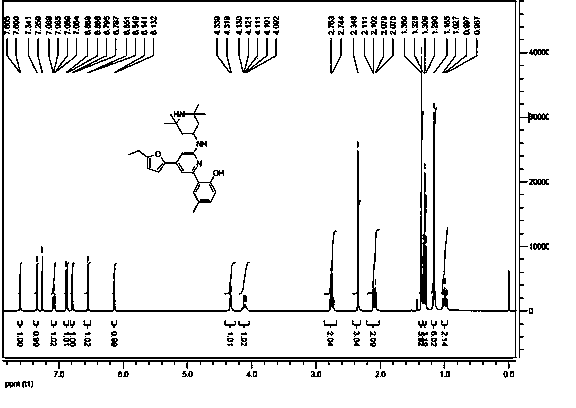
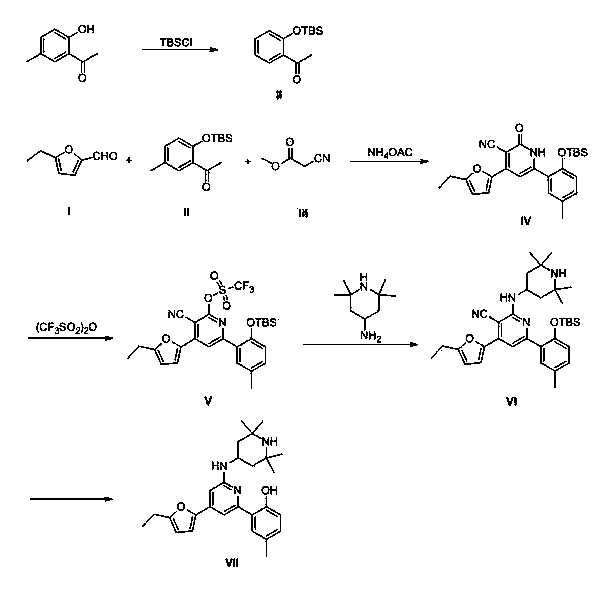
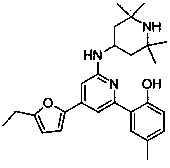
Examples
Embodiment 1
[0027] Step 1: Compound Ⅱ Synthesis
[0028] 2-Hydroxy-5-methyl-acetophenone (15 g, 56.7 mmol) was dissolved in DMF ( N,N -dimethylformamide, 30 mL), add imidazole (7.73 g, 113.4 mmol, 2.0 eq). At room temperature, slowly add a dichloromethane solution of TBSCl (tert-butyldimethylsilyl chloride, 10.3 g, 68.0 mmol, 1.2 eq dissolved in 10 mL of dichloromethane) dropwise, and continue the reaction at room temperature for 5-6 h. The reaction was completed, poured into water (150 mL), extracted with dichloromethane (2 × 50 mL), combined organic phase, saturated NaHCO 3 solution (50 mL), washed with saturated brine (50 mL), anhydrous Na 2 SO 4 dried and concentrated to give the compound Ⅱ , the yield is 90%.
[0029] Step Two: Compound Ⅳ Synthesis
[0030] Add the compounds sequentially to the reaction vial Ⅱ (15.9 g, 60 mmol), compound Ⅰ (8.94 g, 72 mmol, 1.2 eq), compound Ⅲ (7.14 g, 72 mmol, 1.2 eq) and ammonium acetate (18.5 g, 240 mmol, 4.0 eq), adding toluene (100...
PUM
 Login to View More
 Abstract
Description
Claims
Application Information
 Login to View More