
A kind of method utilizing bamboo fiber to prepare flexible transparent nano paper
A technology of bamboo fiber and nano paper, applied in special paper, pulping with inorganic alkali, paper, etc., can solve the problems of uncontrollable film thickness, transparency, difficult peeling of paper, easy cracking of products, etc., and achieve high value-added economy Benefits, ease of implementation, and low production costs
- Summary
- Abstract
- Description
- Claims
- Application Information
AI Technical Summary
Problems solved by technology
Method used
Image

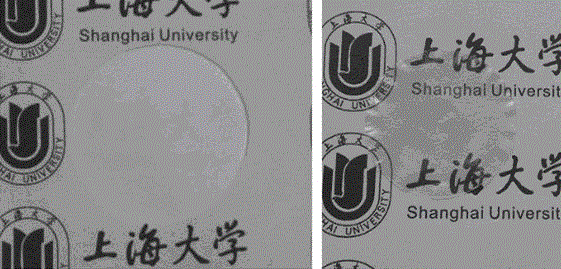
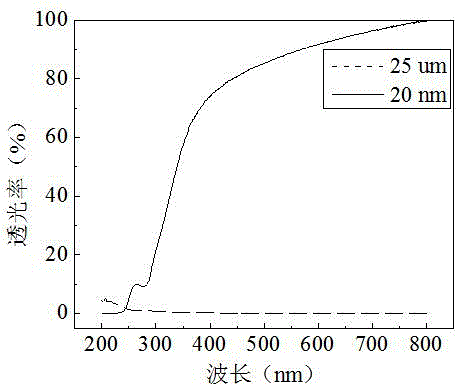
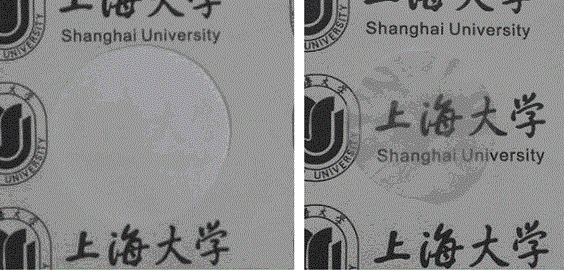
Examples
Embodiment 1
[0024] Embodiment one: Specific steps are as follows:
[0025] (1) Swelling and degumming: put 3g of bamboo fiber into the reaction kettle, add 200g of aqueous solution containing 4g of NaOH, put the reaction kettle in an oil bath with a temperature of 120°C, stir and cook for 3h, filter and wash until neutral, and take the filter residue; (2) Delignification: Add the filter residue obtained in the above steps to 300 mL of a mixed solution containing acetic acid and sulfuric acid, wherein the volume fraction of acetic acid is 88%, and the volume fraction of sulfuric acid is 0.3%, and stir at 90°C for 4 hours to remove lignin. Suction filtration and washing until neutral, take the filter residue; (3) Bleaching: bleach the filter residue obtained in the above steps, add 1.5% NaClO 2 solution 200mL with CH 3 Adjust the pH to 3~4 with COOH, bleach at 80°C for 4 hours in an oil bath, filter and wash until neutral, and take the filter residue; (4) Fibrillation: Dilute the sample ...
Embodiment 2
[0027] Embodiment two: Specific steps are as follows:
[0028] (1) Swelling and degumming: put 3g of bamboo fiber into the reaction kettle, add 200g of aqueous solution containing 6g of NaOH, put the reaction kettle in an oil bath with a temperature of 140°C, stir and cook for 4h, filter and wash until neutral, and take the filter residue; (2) Delignification: Add the filter residue obtained in the above steps to 300 mL of a mixed solution containing acetic acid and sulfuric acid, wherein the volume fraction of acetic acid is 88%, and the volume fraction of sulfuric acid is 0.3%, and stir at 90°C for 6 hours to remove lignin. Suction filtration and washing until neutral, take the filter residue; (3) Bleaching: bleach the filter residue obtained in the above steps, add 1.5% NaClO 2 solution 300mL with CH 3 Adjust the pH to 3~4 with COOH, bleach at 80°C for 6 hours in an oil bath, filter and wash until neutral, and take the filter residue; (4) Fibrillation: Dilute the sample ...
PUM
| Property | Measurement | Unit |
|---|---|---|
| diameter | aaaaa | aaaaa |
| specific surface area | aaaaa | aaaaa |
| diameter | aaaaa | aaaaa |
Abstract
Description
Claims
Application Information
 Login to View More