

Disinfectant wet tissue
A technology of wet wipes and disinfectant, applied in the field of disinfectant wipes and its preparation, can solve the problems of environmental secondary pollution, irritation, corrosion, etc., and achieve the effect of portability
- Summary
- Abstract
- Description
- Claims
- Application Information
AI Technical Summary
Problems solved by technology
Method used
Image

Examples
Embodiment 1
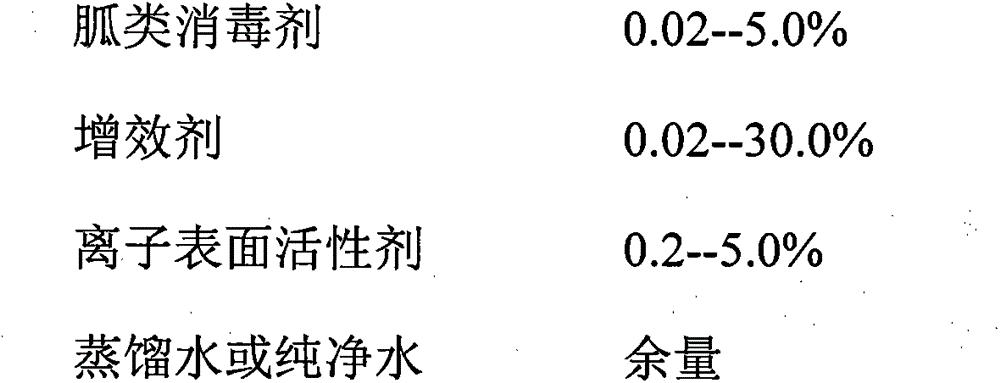
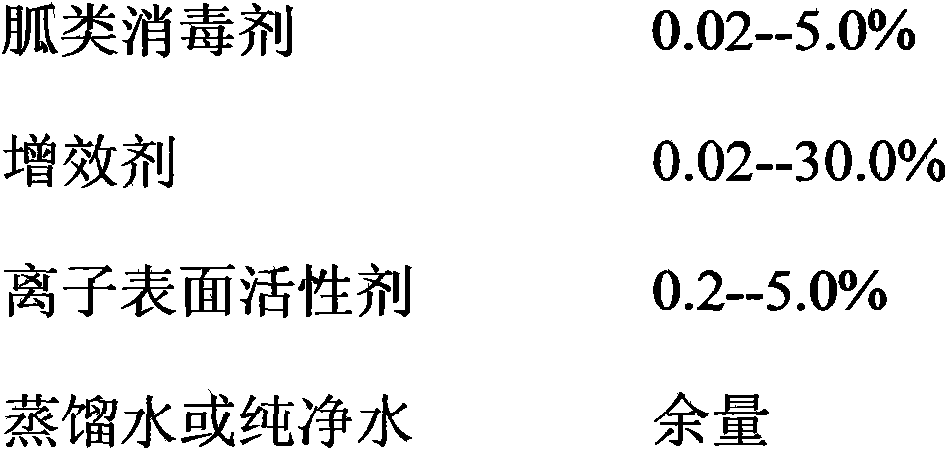
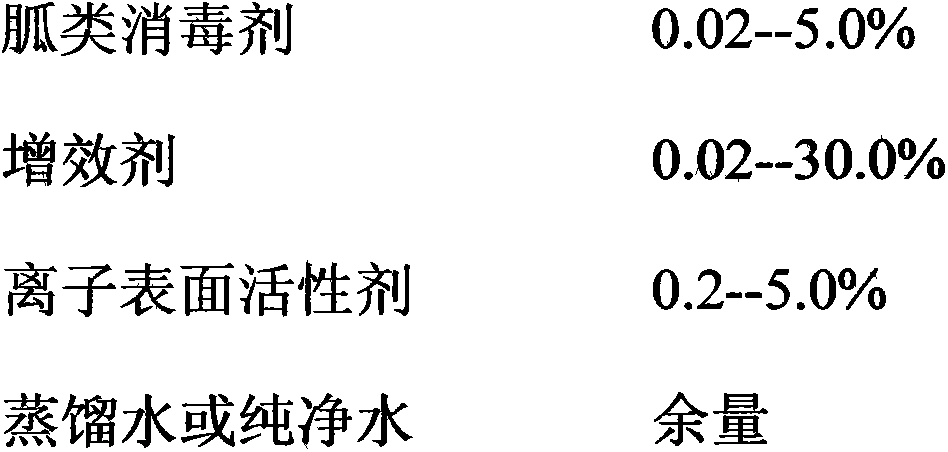
[0019] Take 0.5 g of chlorhexidine gluconate, 2.5 g of benzalkonium bromide, 100 ml of ethanol, 5 g of fatty alcohol polyoxyethylene (9) ether, add purified water or deionized water to 1000 ml to obtain a disinfectant solution. According to the weight ratio of disinfectant to wood pulp paper towel or non-woven fabric of 2-7:1, soak or spray the obtained disinfectant wet wipe.
Embodiment 2
[0021] Take 0.5 polyhexamethylene biguanide, 1.5 grams of chlorhexidine hydrochloride, 1.5 grams of benzalkonium bromide, 100 milliliters of ethanol, 5 grams of fatty alcohol polyoxyethylene (9) ether, add purified water or deionized water to 1000 milliliters disinfectant. According to the weight ratio of disinfectant to wood pulp paper towel or non-woven fabric of 2-7:1, soak or spray the obtained disinfectant wet wipe.
Embodiment 3
[0023] Take 1.0 g of polyhexamethylene biguanide hydrochloride, 50 ml of ethanol, 1.5 g of benzalkonium bromide, 5 g of fatty alcohol polyoxyethylene (9) ether, add purified water or deionized water to 1000 ml to obtain a disinfectant solution. According to the weight ratio of disinfectant to wood pulp paper towel or non-woven fabric of 2-7:1, soak or spray the obtained disinfectant wet wipe.
PUM
 Login to View More
 Abstract
Description
Claims
Application Information
 Login to View More