
A method and system for separating hydrogen from catalytic cracking dry gas
A catalytic cracking and separation method technology, applied in the field of hydrogen separation in catalytic cracking dry gas, can solve the problem that hydrogen is not widely used, reduce the requirements of operating space and operating procedures, reduce energy consumption, and save investment. Effect
- Summary
- Abstract
- Description
- Claims
- Application Information
AI Technical Summary
Problems solved by technology
Method used
Image

Examples
Embodiment 1
[0039] Hydrate working fluid is tetrabutylammonium bromide (English abbreviation: TBAB), and its concentration is 10wt%;
[0040] The composition of catalytic cracking dry gas is shown in Table 1 below:
[0041] Table 1 Composition of catalytic cracking dry gas
[0042] composition
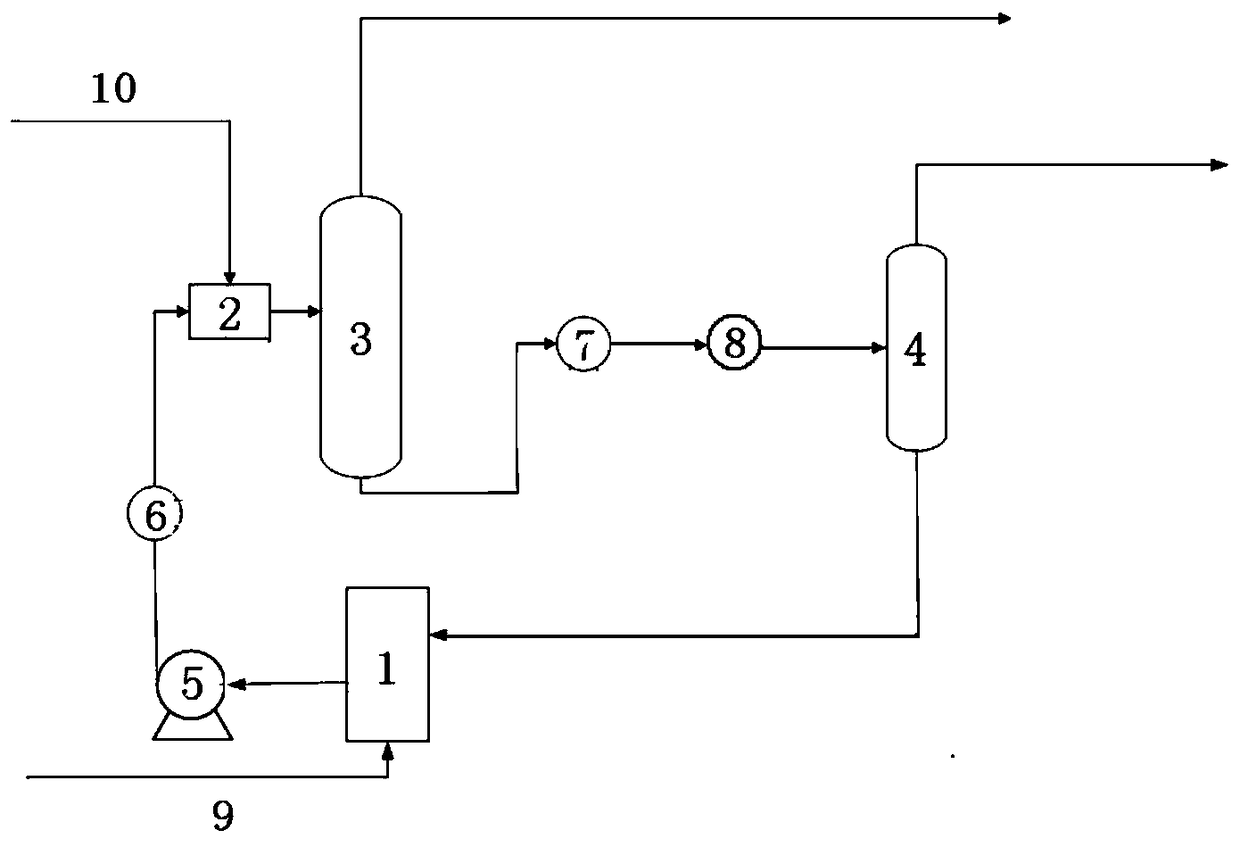
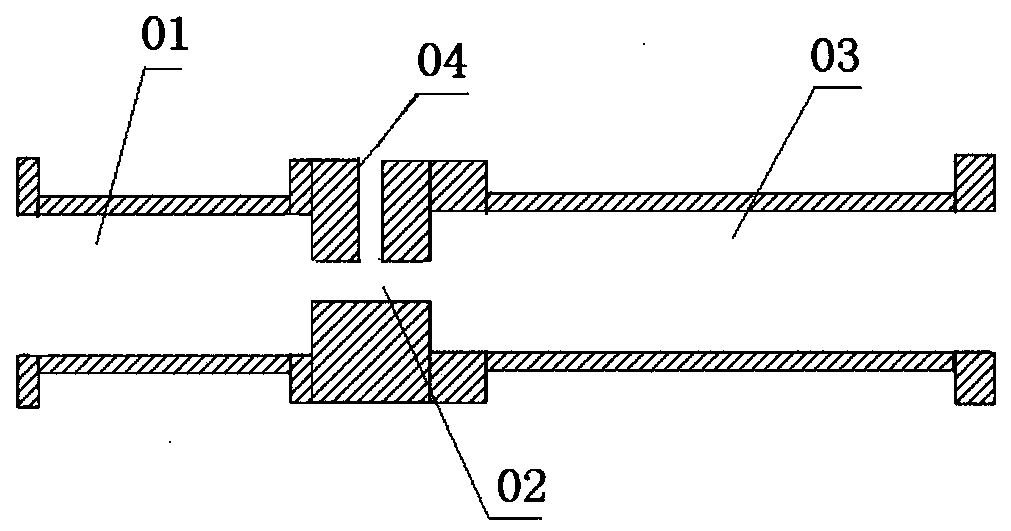
[0043] use as figure 1 The process flow and figure 2 For the specific process, please refer to the description of the above separation method, and the process parameters involved are as follows:
[0044] 1) The pressure of catalytic cracking dry gas is 1.6MPa.
[0045] 2) When the hydrate working fluid enters the hydration reactor, the temperature is 8°C and the pressure is 5MPa.
[0046] 3) The pressure of the hydrate working fluid passing through the throat section of the hydration reactor is 1.2MPa.
[0047] 4) The fluid formed by the hydrate working liquid and the hydrogen in the catalytic cracking dry gas has a pressure of 4.5 MPa in the stable section of the hydration reactor...
PUM
 Login to View More
 Abstract
Description
Claims
Application Information
 Login to View More