
A kind of hemostatic spray adhesive and preparation method thereof
A technology of adhesives and adhesive fluids, applied in surgical adhesives, pharmaceutical formulations, applications, etc., can solve the problems of low adhesive bonding strength, inconvenient use, and poor diffusivity, and achieve increased surface area, effective hemostasis, and granular and particle size excellent effect
- Summary
- Abstract
- Description
- Claims
- Application Information
AI Technical Summary
Problems solved by technology
Method used
Image

Examples
Embodiment 1
[0039] A preparation method of a hemostatic spraying adhesive, characterized in that the method comprises the following steps:
[0040] Step 1. Preparation of adhesive solution
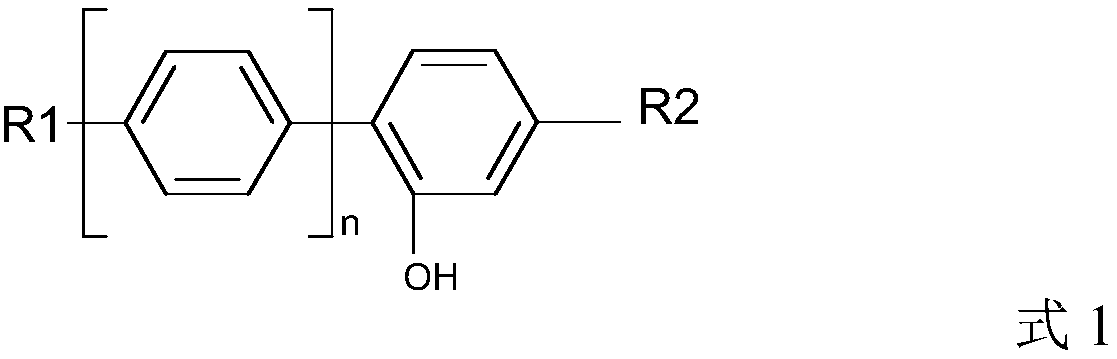
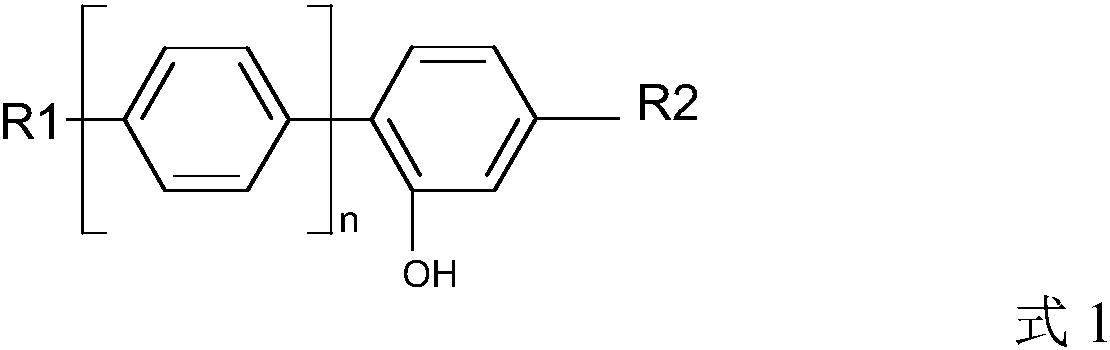
[0041] Add phenol derivatives to medical ethanol, heat to 40°C and reflux until completely dissolved, then raise the temperature to 45°C, add a mixture of polyethylene glycol and maleic anhydride, stir for 5-8 hours, wash with saturated NaCl solution for 3-6 hours Second, stand still 30-60min, filter the supernatant of upper layer, use the light yellow transparent adhesive liquid of lower floor, the mass ratio of the derivative of described phenol, medical alcohol, Polyethylene Glycol and maleic anhydride is 3-5: 20-30:1-2:1-2;
[0042] Step 2, the preparation of nanoparticles:
[0043] Place the matrix in the first solution, pass nitrogen at the same time at 45°C, stir for 15-20min, then cool down to room temperature, add acid solution, keep the pH of the system at 5-8, preferably 5.5-6.5, stir for...
Embodiment 2
[0066] A hemostatic spray adhesive, characterized in that the compound has n-octyl α-cyanoacrylate compound and n-butyl α-cyanoacrylate, the structural formula of the n-octyl cyanoacrylate compound is shown in formula 3
[0067]
[0068] The mass ratio of the α-n-octyl cyanoacrylate compound to n-butyl α-cyanoacrylate is 4.5:5.5, and the hemostatic spray adhesive containing α-alkoxy cyanoacrylate is suitable for In the internal and external operations of the human body, it includes: general hepatobiliary, pancreas, spleen, gastrointestinal, cardiothoracic, urological, neurological, tumor, obstetrics, burns and plastic surgery, bone, oral, ENT and other operations for hemostasis, bonding, covering, Leakage plugging, hard tissue fixation, etc.
[0069] 1. Prevention and treatment of cerebrospinal fluid leakage
[0070] 1) Open craniocerebral injury:
[0071] The local galeal aponeurosis is broken, the damaged part is covered with sarcolemma, and the surrounding area is clos...
PUM
| Property | Measurement | Unit |
|---|---|---|
| pore size | aaaaa | aaaaa |
| particle size | aaaaa | aaaaa |
| specific surface area | aaaaa | aaaaa |
Abstract
Description
Claims
Application Information
 Login to View More