
A Dynamic Power Allocation Method for Multi-Relay System Based on Nonlinear Energy Harvesting Model
A technology of nonlinear energy and distribution method, which is applied in the field of dynamic power distribution of multi-relay systems based on nonlinear energy collection model, can solve problems such as waste of relay resources, reduce power consumption, improve application value, and improve interrupt performance Effect
- Summary
- Abstract
- Description
- Claims
- Application Information
AI Technical Summary
Problems solved by technology
Method used
Image

Examples
Embodiment
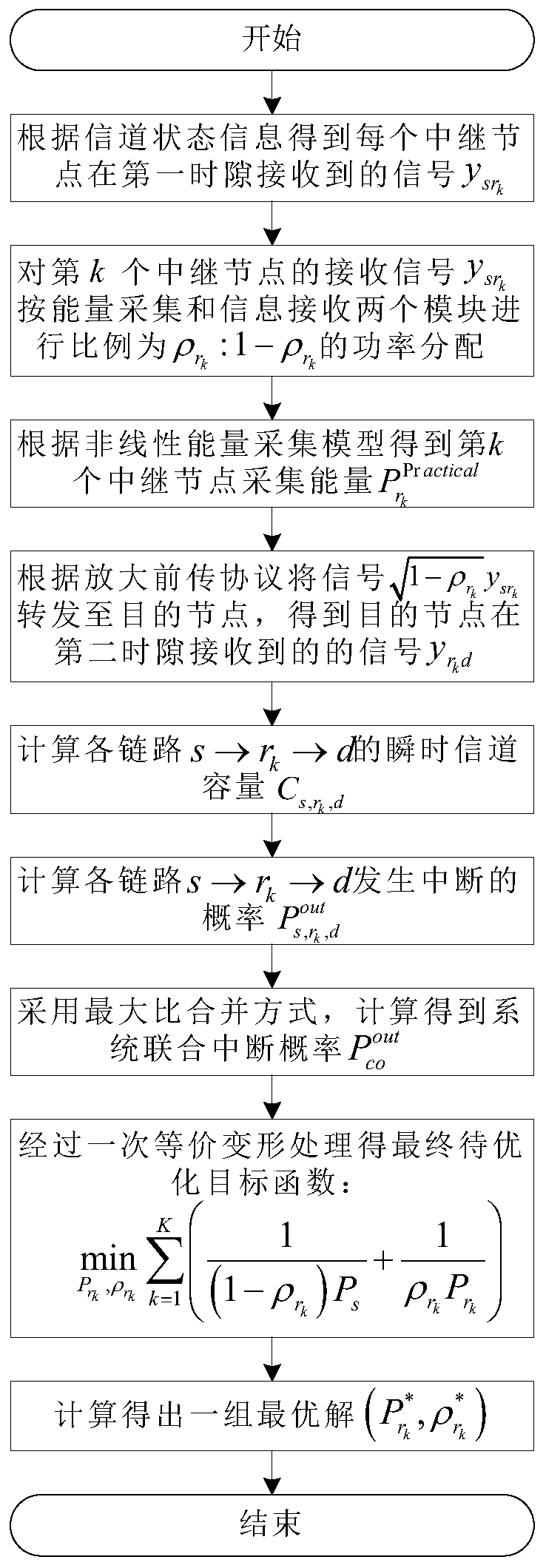
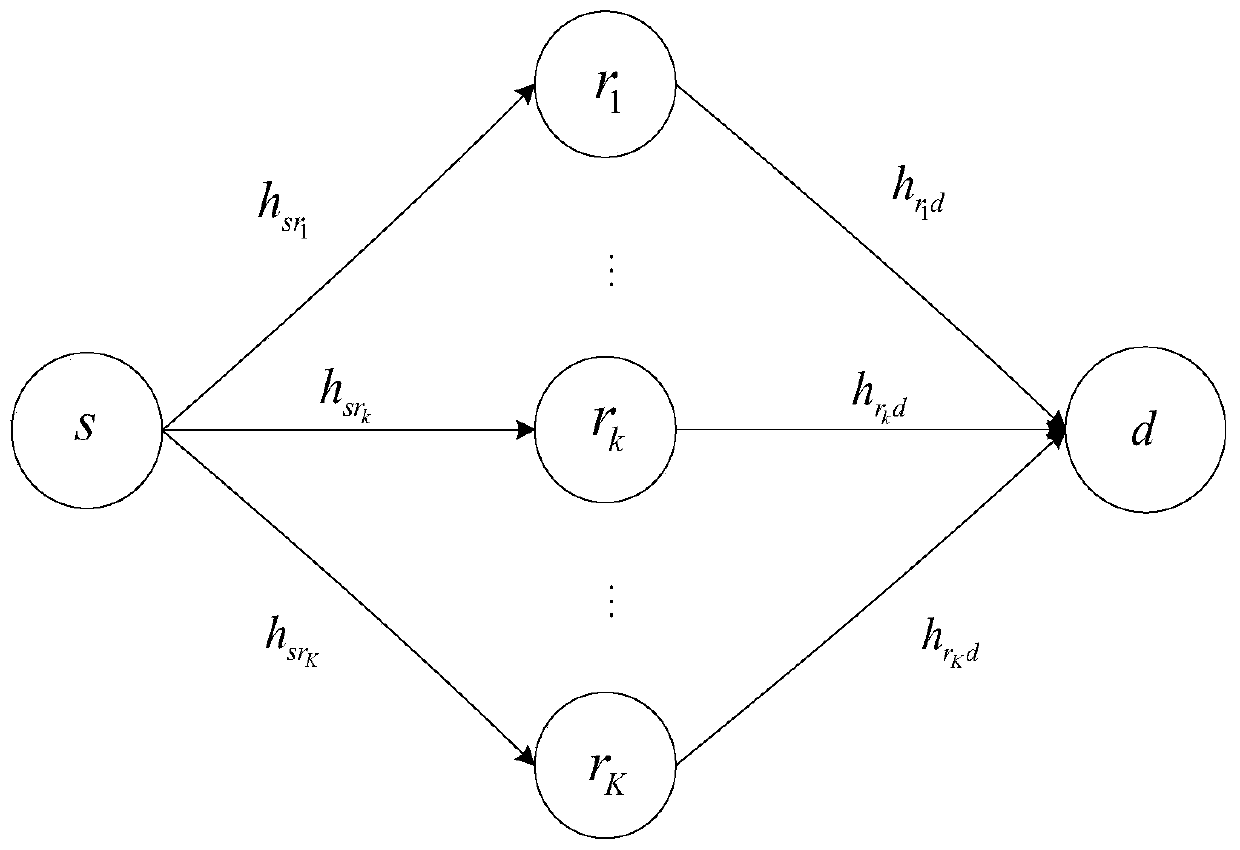
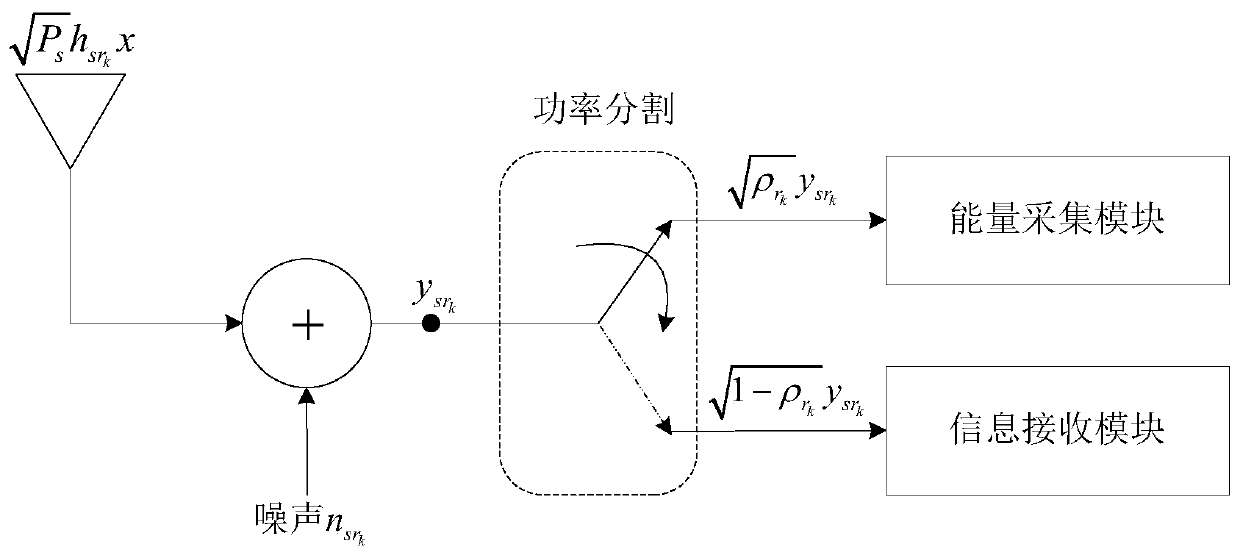
[0030] For the specific calculation logic flow of the multi-relay system dynamic power allocation method based on the nonlinear energy harvesting model disclosed in the present invention, see figure 1 , see the network model figure 2 , the power allocation method used see image 3 .
[0031] In this embodiment, the specific parameters are set as follows:
[0032] Set the number of relays K=2, that is, the two-hop multi-relay wireless cooperative network model in the present invention is composed of 1 source node, 2 relay nodes and 1 destination node, denoted as s, r respectively k (1≤k≤2) and d. The transmit power of the source node s is set to the rated value P s (i.e. P s =48dBm). and represent source node s and relay node r respectively k between and the relay node r k The channel coefficient between the destination node d, this embodiment considers the situation that the channel experiences both small-scale Rayleigh fading and large-scale path loss, namely wh...
PUM
 Login to View More
 Abstract
Description
Claims
Application Information
 Login to View More