
SlbHLH59 gene capable of regulating ascorbic acid content in tomato fruit and application method of SlbHLH59 gene
A technology of ascorbic acid and its application method, which is applied in the fields of application, genetic engineering, plant genetic improvement, etc., can solve problems such as difficulty, and achieve the effect of enhancing resistance and positioning quickly and effectively
- Summary
- Abstract
- Description
- Claims
- Application Information
AI Technical Summary
Problems solved by technology
Method used
Image

Examples
Embodiment 1
[0125] Determination of Ascorbic Acid in Tomato Fruit
[0126] The determination of ascorbic acid includes the determination of reduced ascorbic acid and total ascorbic acid, wherein the total ascorbic acid includes reduced ascorbic acid and oxidized ascorbic acid. Specific steps are as follows:
[0127]Step 1: Sample preparation: select a fresh sample to be tested, freeze it with liquid nitrogen, grind it into a powder, weigh about 0.2g of leaf powder or about 0.4g of fruit powder in a 2mL centrifuge tube pre-cooled with liquid nitrogen, and add 1mL 6% TCA solution pre-cooled on ice, fully mixed, extracted on ice in the dark for 15 minutes, centrifuged at 12000r / min at 4°C for 15 minutes; sample processing and ascorbic acid determination;
[0128] Step 2: Determination of total ascorbic acid: Take 20 μL of sample supernatant to a clean microplate, add 20 μL of DTT solution with a concentration of 5 mmol / L, centrifuge and mix in a plate centrifuge, and incubate at 37°C for 20...
Embodiment 2
[0135] Analysis of gene expression in tomato material fruit
[0136] The fruit RNA of related materials was extracted, and the RNA was reverse transcribed into cDNA with a reverse transcription kit. Using LightCycler480SYBR Green I Master Kit, fluorescent quantitative PCR (qRT-PCR) was performed according to the kit steps to detect the relative expression of ascorbic acid anabolic genes. The qRT-PCR primers used in the experiment are shown in Table 1:
[0137] Table 2 qRT-PCR primers used in experiments
[0138]
[0139]
Embodiment 3
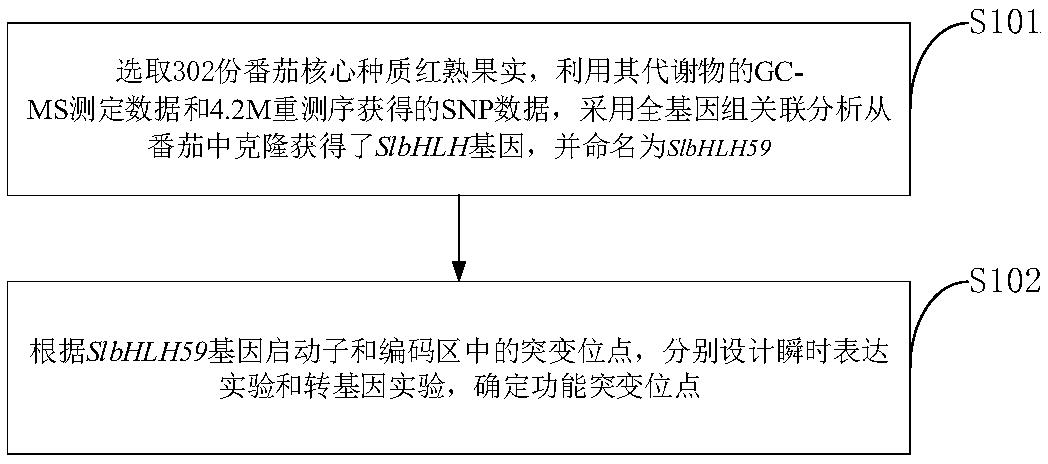
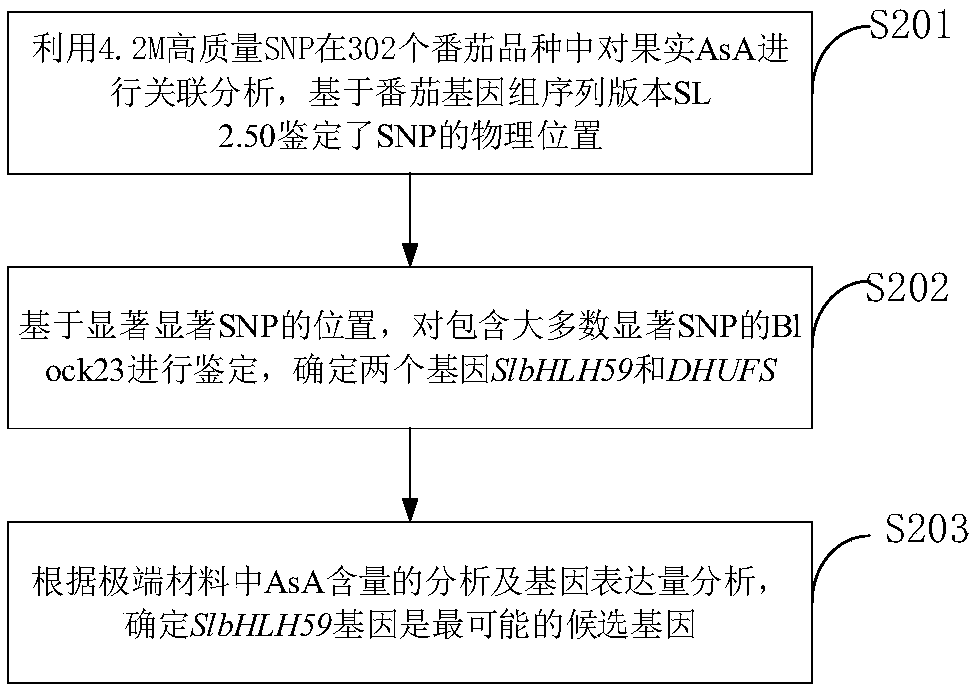
[0141] Sequence Analysis of SlbHLH59 Gene
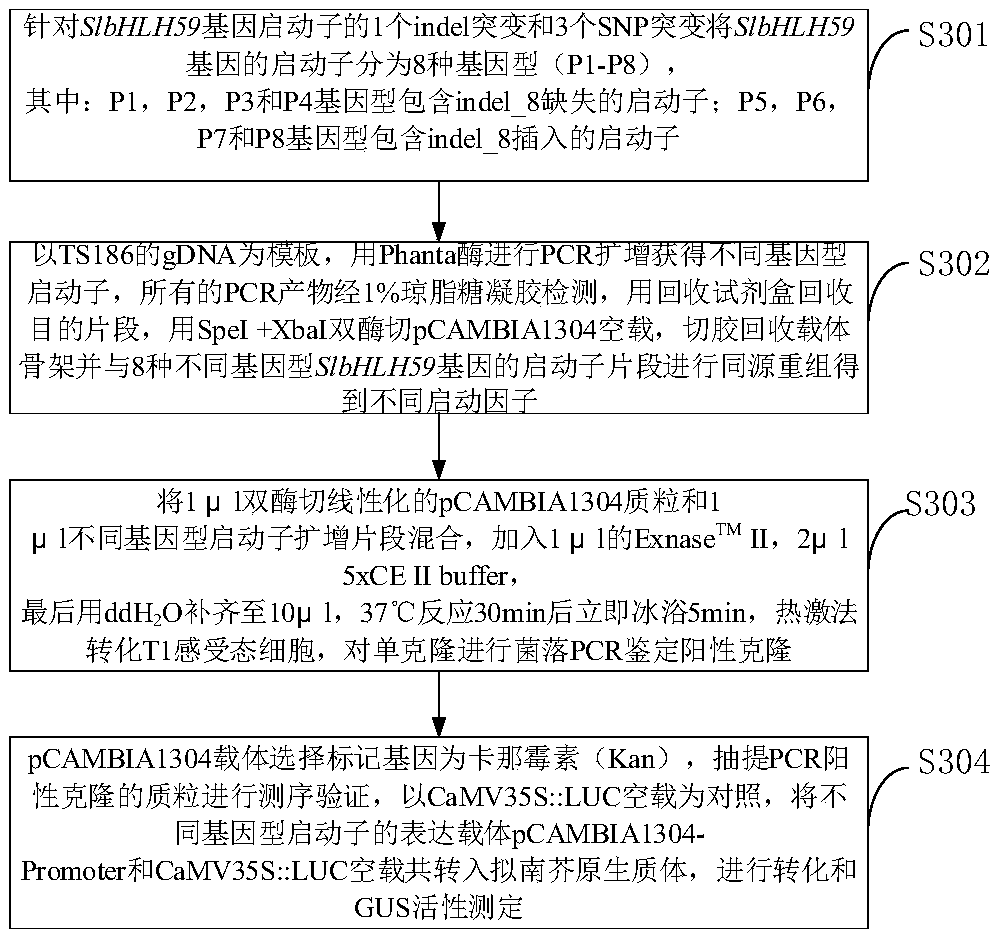
[0142] According to the sequence analysis of candidate gene SlbHLH59 (Solyc09g065820) in NCBI, PCR primers including SlbHLH59 promoter and coding region were designed: promoter primer (forward primer: 5'TGCAAAAACCTTACATATTTTCCTC 3', reverse primer: 5'AGGTCCCTCAGAAGGGTTGT 3 '); coding region primers (forward primer: 5'AACAGCTCCGATCCAAGAAA 3', reverse primer: 5'AGGAACCATCCACTGCAAGA 3'). Using tomato leaf gDNA as a template, PCR amplification was carried out with Phanta enzyme. All PCR products were detected by gel electrophoresis: PCR products were electrophoresed with 1% agarose added with EB (ethidium bromide) for 30 min under the voltage condition of 100-120V, and the final results were displayed on the gel imaging system.
[0143] The present invention retrieves the sequence of the SlbHLH59 gene in the resequencing data, and further uses the MUSCEL Alignment in the Geneious software to analyze the sequence variation of the SlbHLH5...
PUM
 Login to View More
 Abstract
Description
Claims
Application Information
 Login to View More