Anhydrous Dyeing Method for Dyeing and Fixing Cotton Fabrics Step by Step
A technology for anhydrous dyeing, cotton fabrics, applied in the field of printing and dyeing, can solve problems such as emissions
- Summary
- Abstract
- Description
- Claims
- Application Information
AI Technical Summary
Problems solved by technology
Method used
Image

Examples
Embodiment 1
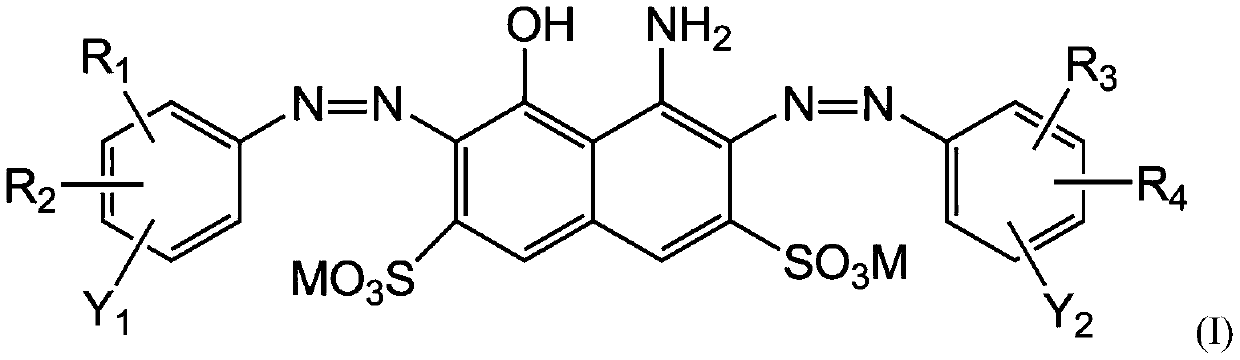
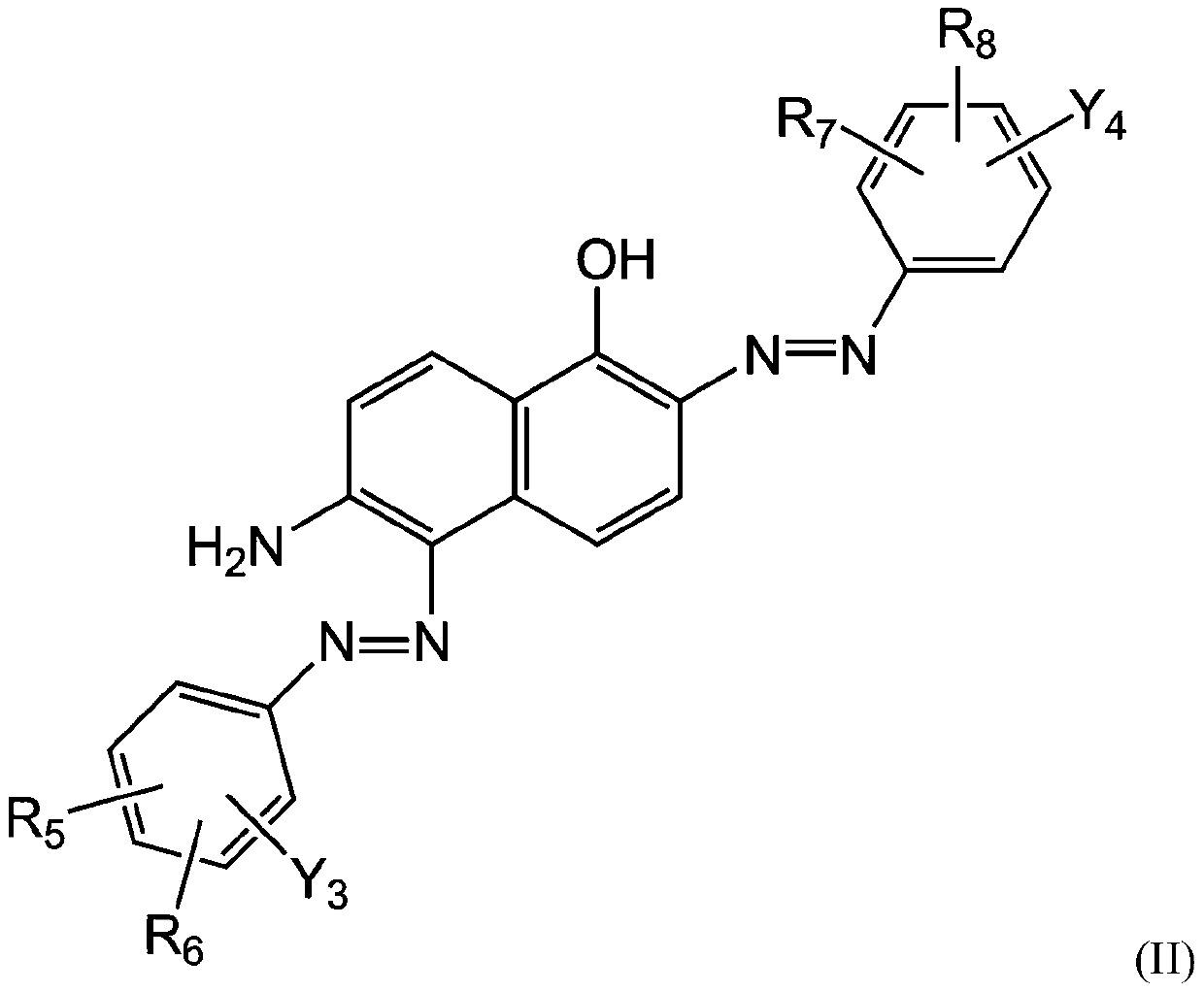
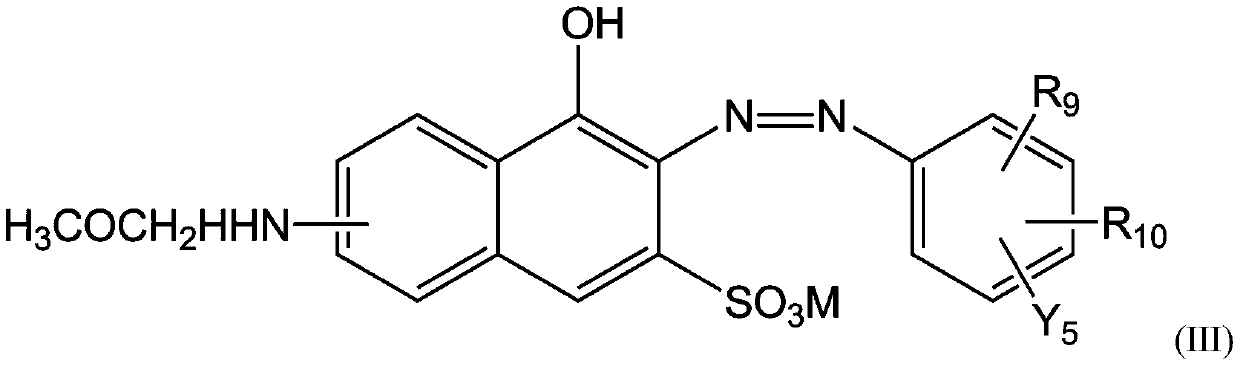
[0186] Reactive black dye composition is formed by mixing 65% of the dye compound represented by the formula (I-1), 25% of the dye compound represented by the formula (II-1), and 10% of the dye compound represented by the formula (III-1) . The reactive black dye composition was dissolved in an anhydrous solvent of ethylene glycol monomethyl ether acetate and dimethyl sulfoxide at a volume ratio of 70:30 to obtain a dyeing bath. Then add the mixture of triethylenediamine and tetramethylguanidine to the anhydrous dye bath, the weight ratio of the two is 1.6:1; the amount of organic base added is 6g / L. Sonication yields a homogeneous anhydrous dye bath. A cotton fabric previously swollen with dimethyl sulfoxide with a swelling degree of 22% was placed in an anhydrous dyeing bath. The bath ratio of cotton fabric to anhydrous dyeing bath is 1:16g / mL. The dye dosage is 4o.w.f%. Heat up at a rate of 3°C / min, keep warm after reaching the target temperature of 85°C, and dye for 5 h...
Embodiment 2
[0188] Reactive black dye composition is formed by mixing the dye compound shown in 70% formula (I-1), 22% dye compound shown in formula (II-1), and 8% dye compound shown in formula (III-1) . The reactive black dye composition was dissolved in an anhydrous solvent of ethylene glycol monomethyl ether acetate and dimethyl sulfoxide at a volume ratio of 65:35 to obtain a dyeing bath. Then add the mixture of triethylenediamine and tetramethylguanidine to the anhydrous dye bath, the weight ratio of the two is 1.8:1; the amount of organic base added is 8g / L. Sonication yields a homogeneous anhydrous dye bath. A cotton fabric previously swollen with dimethyl sulfoxide with a swelling degree of 22% was placed in an anhydrous dyeing bath. The bath ratio of cotton fabric to anhydrous dyeing bath is 1:18g / mL. The dye dosage is 4o.w.f%. Heat up at a rate of 3°C / min, keep warm after reaching the target temperature of 90°C, and dye for 4 hours; cool to room temperature after dyeing, use...
Embodiment 3
[0190] Reactive black dye composition is formed by mixing the dye compound shown in 60% formula (I-1), 28% dye compound shown in formula (II-1), and 12% dye compound shown in formula (III-1) . The reactive black dye composition was dissolved in an anhydrous solvent of ethylene glycol monomethyl ether acetate and dimethyl sulfoxide at a volume ratio of 75:25 to obtain a dyeing bath. Then add the mixture of triethylenediamine and tetramethylguanidine to the anhydrous dye bath, the weight ratio of the two is 1.5:1; the amount of organic base added is 5g / L. Sonication yields a homogeneous anhydrous dye bath. A cotton fabric previously swollen with dimethyl sulfoxide with a swelling degree of 22% was placed in an anhydrous dyeing bath. The bath ratio of cotton fabric to anhydrous dyeing bath is 1:14g / mL. The dye dosage is 4o.w.f%. Heat up at a rate of 3°C / min, keep warm after reaching the target temperature of 80°C, and dye for 6 hours; cool to room temperature after dyeing, us...
PUM
| Property | Measurement | Unit |
|---|---|---|
| particle diameter | aaaaa | aaaaa |
| boiling point | aaaaa | aaaaa |
Abstract
Description
Claims
Application Information
 Login to View More
 - R&D
- Intellectual Property
- Life Sciences
- Materials
- Tech Scout
- Unparalleled Data Quality
- Higher Quality Content
- 60% Fewer Hallucinations
Browse by: Latest US Patents, China's latest patents, Technical Efficacy Thesaurus, Application Domain, Technology Topic, Popular Technical Reports.
© 2025 PatSnap. All rights reserved.Legal|Privacy policy|Modern Slavery Act Transparency Statement|Sitemap|About US| Contact US: help@patsnap.com