

Method for cooperatively converting bean dregs by virtue of Hermetia illucens and microorganisms
A technology of bright spot flat-horned soldier flies and microorganisms, which is applied in the field of biotechnology to achieve the effects of improving efficiency, improving material reduction rate, and improving biotransformation rate
- Summary
- Abstract
- Description
- Claims
- Application Information
AI Technical Summary
Problems solved by technology
Method used
Image

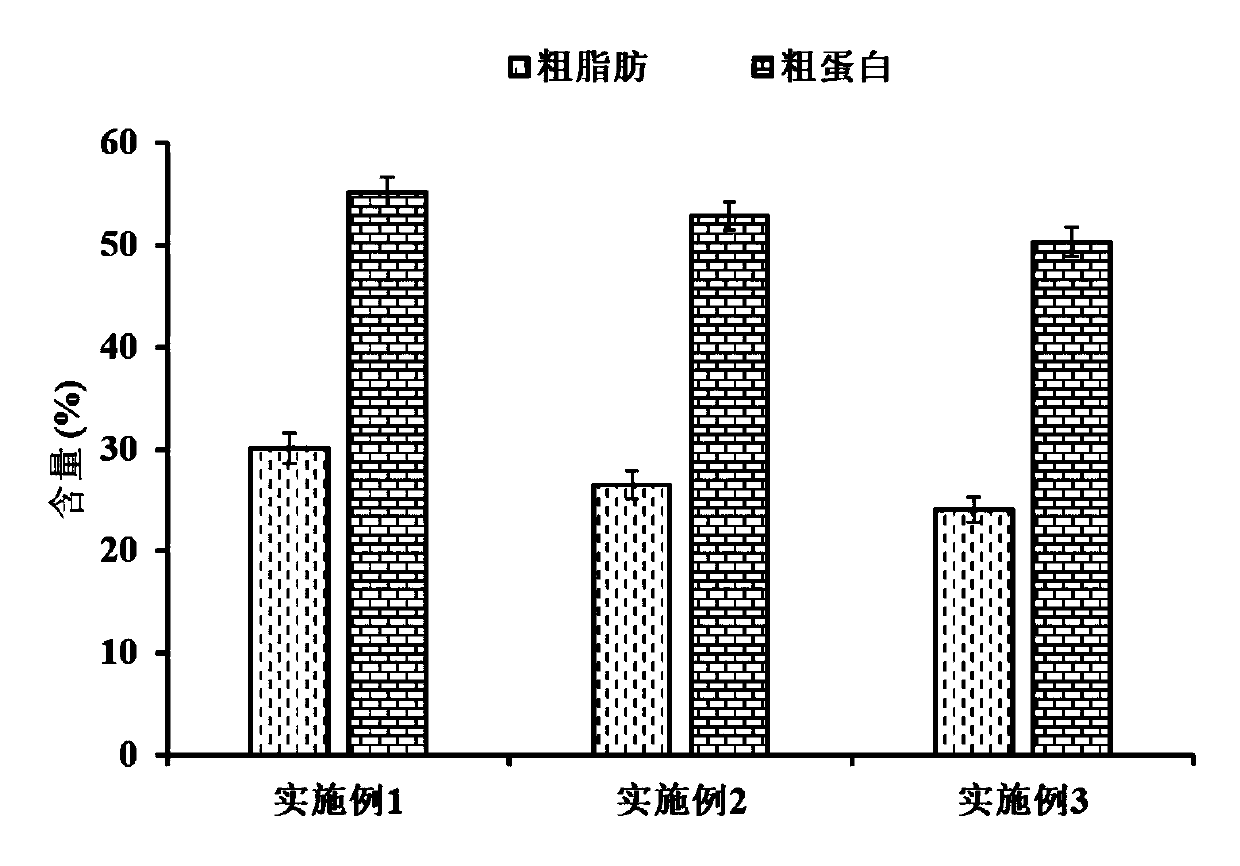
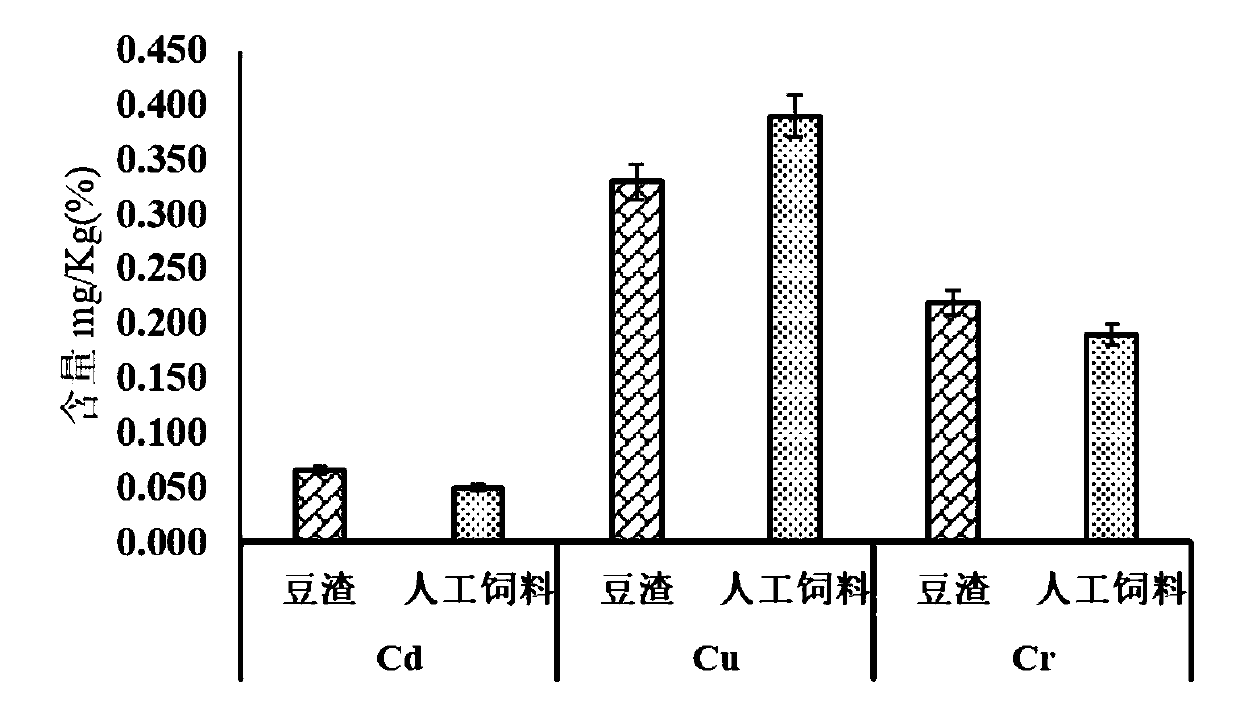
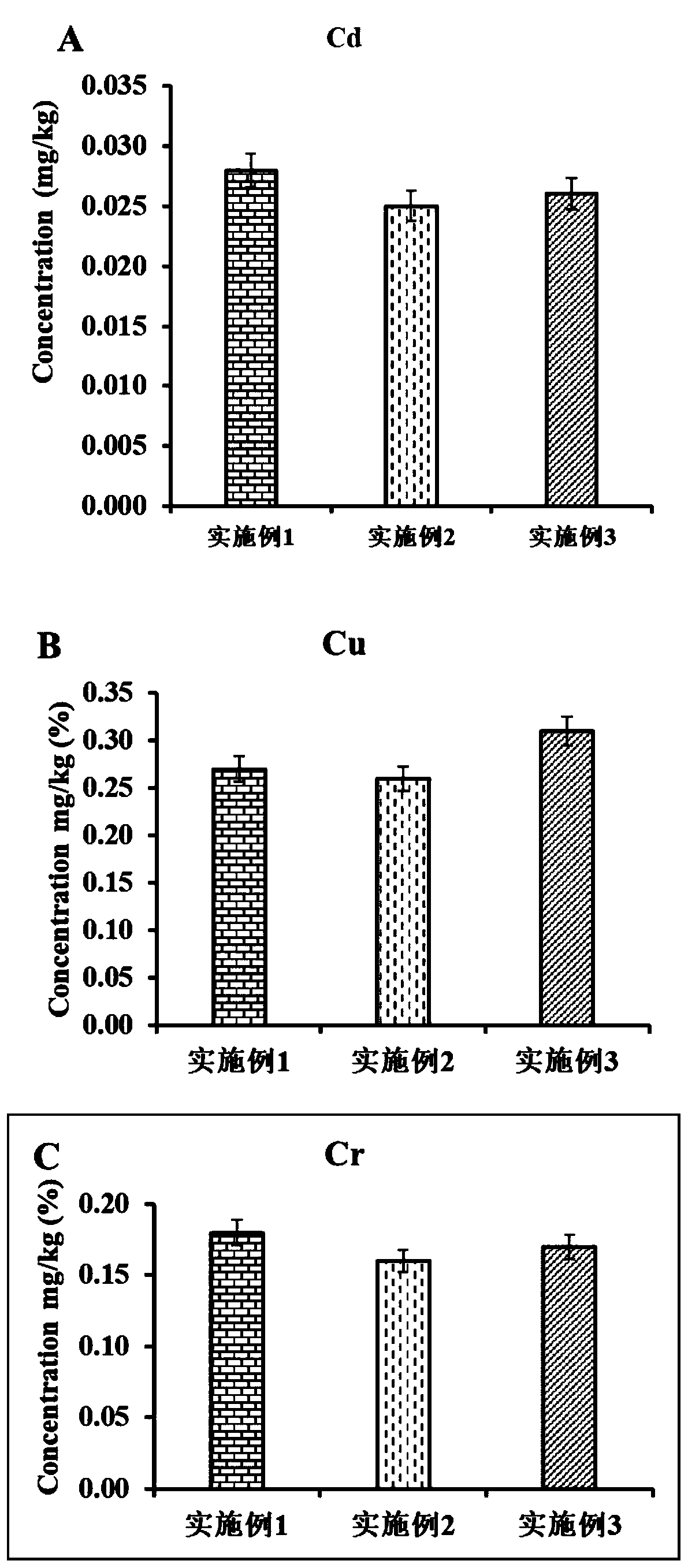
Examples
Embodiment 1-3
[0023] The 6-day-old larvae are the Wuhan strain of the bright-spotted flat-horned soldier fly, (Fen Zhou, Jeffery K.Tomberlin, Longyu Zheng, Ziniu Yu, and Jibin Zhang, Developmental and Waste Reduction Plasticity of Three Black Soldier Fly Strains (Diptera: Stratiomyidae) Raised on Different Livestock Manures.Journal of Medical Entomology, 2013,50(6):1224-1230.), about 3.2mg / head;
[0024] The okara is purchased from the market and is a by-product of tofu and soymilk production, with a water content of 81.3% and a pH of 6.1.
[0025] The experiment was carried out in a soldier fly transformation container (28cm×28cm×12cm), and the temperature of the greenhouse was controlled at 27°C and the relative humidity of the environment was 70%;
[0026] In the present invention, whether it is to inoculate bacterial strains or inoculate larvae, it is calculated based on the wet weight of the material.
Embodiment 1
[0028] A method for jointly transforming bean dregs with light-spotted soldier flies and microorganisms, comprising the steps of:
[0029] Inoculate 1% (v / w) Lactobacillus Brucella bacterium liquid in bean dregs, then inoculate soldier fly larvae (2000 heads / kg bean dregs) raised to 6 days old with artificial feed into the mixture, and let them freely Feed, and treat that 1% of the larvae begin to pre-pupa, and the worm material is separated, and the effective bacterial concentration of the described Lactobacillus Brucella is 10 8 cfu / g.
[0030] The said Lactobacillus buchneri was screened from the fermented wormwood, Gram-positive rod-shaped non-spores, and the contact enzyme negative and paper chromatography test showed that it produces lactic acid. This strain was sent to China Typical Preserved by the Culture Collection Center, classification name: Lactobacillus buchneri L3-9, deposit number: CCTCC NO: M2018511, address: Wuhan University, Wuhan, China. The said Lactobac...
Embodiment 4
[0041] Each parameter analysis and comparison result in embodiment 1-3.
[0042] Table 1 Comparison of larval survival rate, transformation time and biomass
[0043]
[0044] Note: Mean ± standard deviation, n=3, different letters in the same row of data indicate significant differences (P0.05), the same as the following table.
[0045] The larval survival rate (98.0±0.3%) of embodiment 1 is significantly higher than that of embodiment 2 (95.4±0.5%) and implementation 3 (94.02±0.3%), but there is no significant difference between embodiment 2 and embodiment 3. The conversion time of Example 1 (16.1±0.1d) was significantly shorter than that of Example 2 (17.7±0.2d) and Example 3 (18.33±0.1d). The larval biomass of embodiment 1 (146.36 ± 1.79g fresh worm and 34.70 ± 0.92g dry worm) is significantly higher than embodiment 2 (126.3 ± 1.1g fresh worm and 25.2 ± 0.5g dry worm) and embodiment 3 (118.51 ± 0.92g dry worm) 1.23g fresh worms and 19.74 ± 0.81g dry worms, embodiment 2...
PUM
 Login to View More
 Abstract
Description
Claims
Application Information
 Login to View More