
Technology for quickly producing yellow wine
A yellow rice wine and rapid technology, which is applied to the technological field of rapid production of yellow rice wine, can solve the problems of affecting the processing quality, unbalanced cooling, complicated process points, etc., and achieve the effects of simplifying the production process, improving the efficiency, and improving the brewing efficiency.
- Summary
- Abstract
- Description
- Claims
- Application Information
AI Technical Summary
Problems solved by technology
Method used
Image

Examples
example 1
[0038] 1) Soaking rice: In mid-October, soak japonica rice for 18 hours according to the weather; winemaking can be carried out in autumn, breaking the restriction that wine must be brewed in winter, choose high-quality japonica rice for japonica rice, and determine the immersion time for japonica rice according to the temperature, generally 18-18 hours in autumn 20h, compared with the traditional process, the rice soaking time is reduced and the efficiency is improved, and the temperature in autumn is high, so the rice soaking time can be shortened as needed;
[0039] 2) Steam rice and cool it down: After the rice is steamed by the rice steamer, the blower cools it down to 60-65°C, and the steam is used to steam the rice. The rice steamer 16 is placed on the rice steamer, and the rice steamer 16 is described according to the fan described below. set area to design;
[0040] Refer to attached Figure 1-2 As shown, in order to improve the efficiency and quality of the whole ri...
example 2
[0052] 1) Soaking rice: In late October, soak japonica rice for 20 hours according to the weather;
[0053] 2) Steam rice and cool it down: After the rice steamer steams the rice, the blower cools it down to 60-65°C; the cooling operation is the same as in Example 1;
[0054] 3) Falling into vats: take the vat as a unit, add 290 jin of water and 250 jin of round-grained rice into each vat, add 0.04% sweet wine koji and 12% wheat koji and stir evenly, then cover with straw mat to keep warm;
[0055] 4) Pre-fermentation: When the product temperature in the tank rises to 35°C-37°C, start raking, and then start raking once according to the product temperature for 3-5 hours until the product temperature drops to room temperature;
[0056] 5) post-fermentation: transfer the fermented glutinous rice that the pre-fermentation has finished to the post-fermentation container and post-fermentation for 20 days;
[0057] 6) Squeeze, blend and decoct the wine: after the end of the post-fer...
example 3
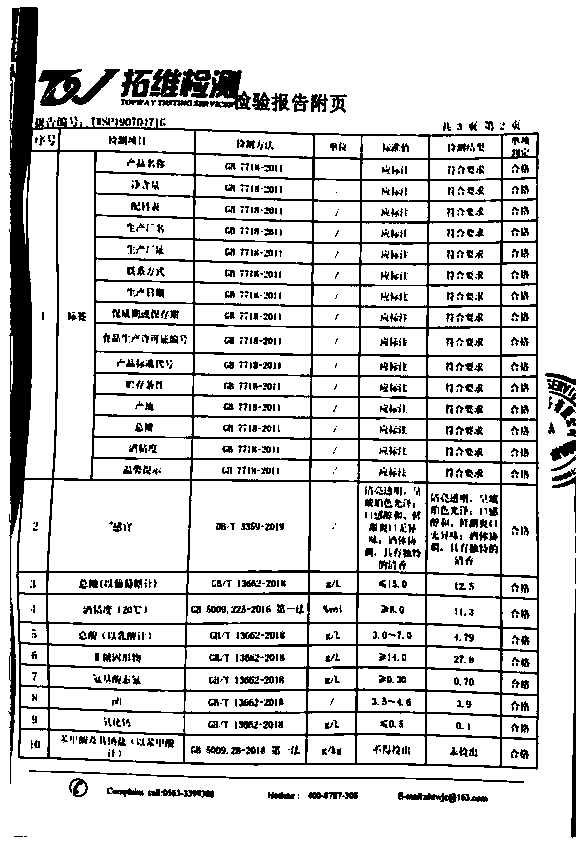
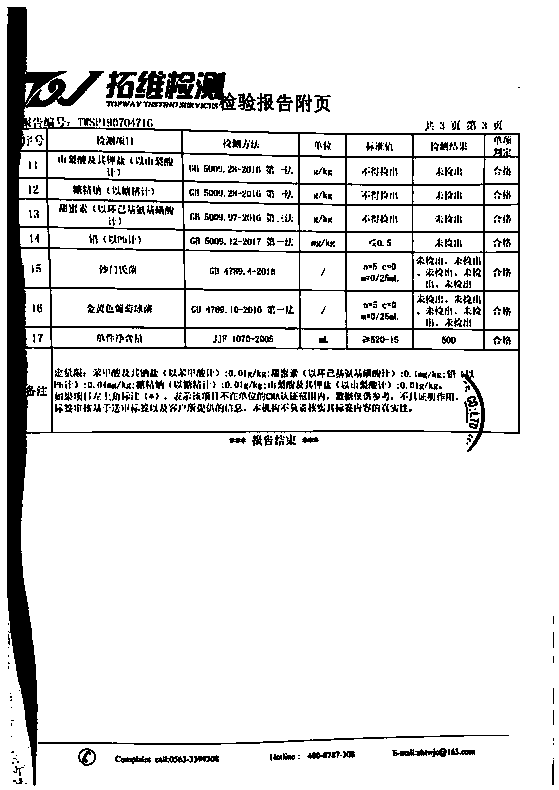
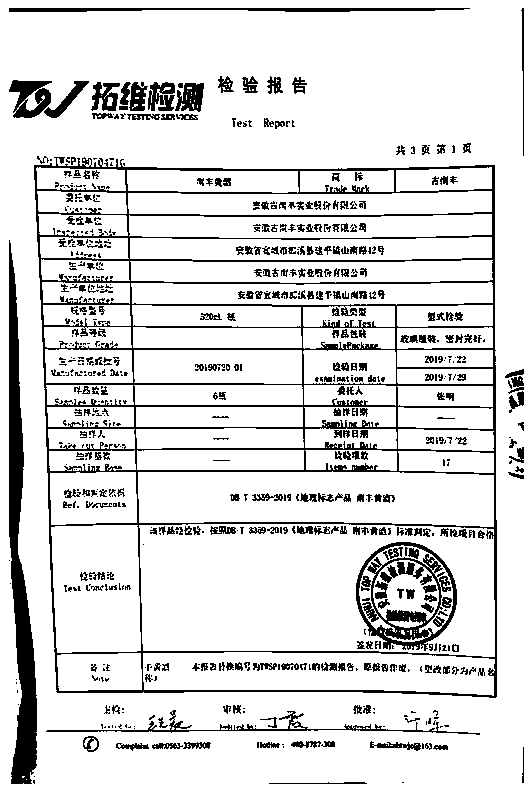
[0060] Physical and chemical indicators of finished rice wine testing:
[0061]
[0062] The physical and chemical indicators of the finished wine all meet the requirements of national standards, and the wine is mellow and full-bodied. The test report is attached Figure 3-5 , indicators are in line with national standards.
PUM
 Login to View More
 Abstract
Description
Claims
Application Information
 Login to View More