A Reinforced Automatic Bonding Method

A reinforcement and automatic technology, applied in the direction of bendable/stretchable parts of the circuit, printed circuit parts, printed circuits, etc., can solve the problems of consumption of PET auxiliary materials, low efficiency, and scrapping when the reinforcement is expired. Reduce processing costs, reduce waste discharge processes, and avoid the effect of shortening the validity period

A reinforcement and automatic technology, applied in the direction of bendable/stretchable parts of the circuit, printed circuit parts, printed circuits, etc., can solve the problems of consumption of PET auxiliary materials, low efficiency, and scrapping when the reinforcement is expired. Reduce processing costs, reduce waste discharge processes, and avoid the effect of shortening the validity period

CN110958763BActive Publication Date: 2021-09-21MFLEX YANCHENG CO LTD

Image

Smart Image Click on the blue labels to locate them in the text.
Viewing Examples
Smart Image
  • A Reinforced Automatic Bonding Method
  • A Reinforced Automatic Bonding Method

Examples

Experimental program
Comparison scheme
Effect test

Embodiment 1

[0022] The thermosetting glue used in this embodiment is pure glue, and the release film is a PET film.

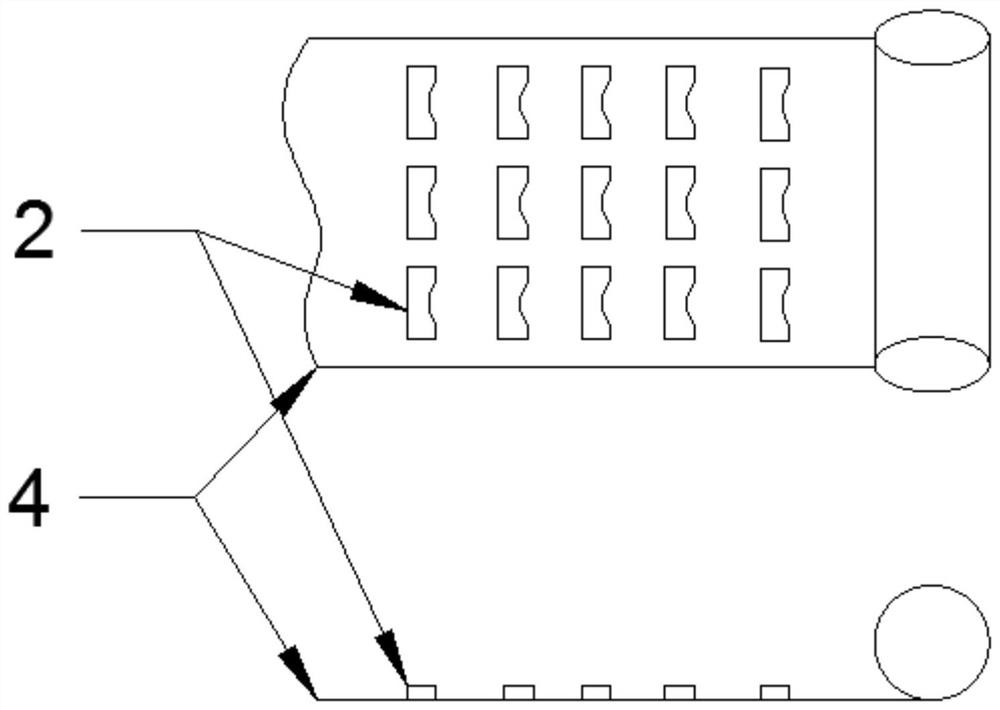
[0023] The steps of making pure rubber roll material: After removing the double-sided backing paper of pure rubber, cut it into the shape of the reinforced bonding surface to obtain pure rubber particles. The cutting method is die-cutting; cut the pure rubber particles according to Place them in the same direction and at equal intervals on the PET film to make a thermosetting film.

[0024] The steps of attaching the pure rubber particles to the FPC: place the FPC on the heating platform, the temperature of the platform is 40°C, the suction nozzle 1 absorbs the pure rubber particles from the pure rubber roll material and place them on the FPC bonding position, and the temperature of the suction nozzle 1 is 60°C ℃, use the temperature of the platform and the nozzle to attach the pure rubber particles to the FPC;

[0025] The steps of attaching the reinforcement to the FPC:...

Embodiment 2

[0027] The thermosetting glue used in this embodiment is pure glue, and the release film is a PET film.

[0028] The steps of making pure rubber roll material: After removing the double-sided backing paper of pure rubber, cut it into the shape of the reinforced bonding surface to obtain pure rubber particles. The cutting method is die-cutting; cut the pure rubber particles according to Place them in the same direction and at equal intervals on the PET film to make a thermosetting film.

[0029] The steps of attaching the pure rubber particles to the FPC: place the FPC on the heating platform, the temperature of the platform is 80°C, the suction nozzle 1 sucks the pure rubber particles from the pure rubber roll material and place them on the FPC bonding position, the temperature of the suction nozzle 1 is 100°C ℃, use the temperature of the platform and the nozzle to attach the pure rubber particles to the FPC;

[0030] The steps of attaching the reinforcement to the FPC: the ...

the structure of the environmentally friendly knitted fabric provided by the present invention; figure 2 Flow chart of the yarn wrapping machine for environmentally friendly knitted fabrics and storage devices; image 3 Is the parameter map of the yarn covering machine
Login to View More

PUM

No PUM Login to View More

Abstract

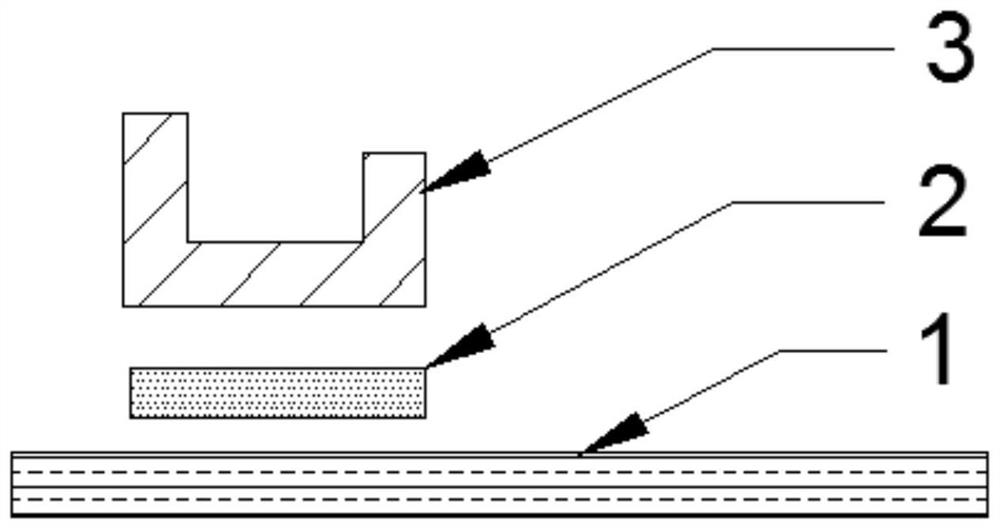
The material of FPC (flexible circuit board) is relatively soft, and it is usually connected and reinforced by thermosetting glue to support components or enhance the insertion strength. Usually, the glue and reinforcement are falsely pasted first, and then processed into adhesive reinforcement, and then the adhesive reinforcement is falsely pasted on the FPC flexible board, and then the reinforcement is combined with the flexible board by quick-pressing the baking board or laminating together. This processing method is complicated and inefficient, and consumes PET auxiliary materials many times, resulting in high cost. The invention utilizes the principle that the thermosetting adhesive is non-sticky at normal temperature, removes the double-sided backing paper of the thermosetting adhesive, die-cuts and makes a thermosetting adhesive roll material, and then automatically absorbs the thermosetting adhesive by the machine and sticks it on the flexible circuit board. The reinforcement is then attached to the thermosetting adhesive. The invention simplifies the process of reinforcing a single piece of glue, and also reduces the waste discharge process of peeling off the backing paper after lamination, thereby reducing the processing cost.

Description

technical field [0001] The invention relates to the field of FPC production, in particular to a reinforcement automatic bonding method. Background technique [0002] The material of FPC (flexible circuit board) is relatively soft, and it is usually connected and reinforced by thermosetting glue to support components or enhance the insertion strength. Usually, the glue and reinforcement are faked first, then processed into glued reinforcement, and then the glued reinforcement is falsely pasted with the FPC flexible board, and then the reinforcement and the flexible board are combined by quick-pressing baking board or lamination. boards together. [0003] This processing method has complicated procedures, and the processing process often requires multiple PET (polyester resin) reposting, which is inefficient and consumes PET auxiliary materials multiple times, which is costly and does not take advantage of environmental protection requirements. Moreover, after the glue and r...

Claims

the structure of the environmentally friendly knitted fabric provided by the present invention; figure 2 Flow chart of the yarn wrapping machine for environmentally friendly knitted fabrics and storage devices; image 3 Is the parameter map of the yarn covering machine
Login to View More

Application Information

Patent Timeline
21 Sep 2021
Publication
CN110958763B
IPC
H05K1/02; H05K3/00
CPC
H05K1/0281; H05K3/0011
Inventors
郭小春; 许美龙