
Method for controlling a wave power system by means of a control obtained by minimizing an objective function weighted and discretized by the trapezoidal rule
a control method and wave power technology, applied in the direction of sea energy generation, mechanical equipment, machines/engines, etc., can solve the problems of not optimal, unable to achieve optimal control which maximizes recovered energy, and methods that do not account for energy losses, so as to maximize the average power recovered, maximize the energy generated, and improve the operation of the wave energy system
- Summary
- Abstract
- Description
- Claims
- Application Information
AI Technical Summary
Benefits of technology
Problems solved by technology
Method used
Image

Examples
application example
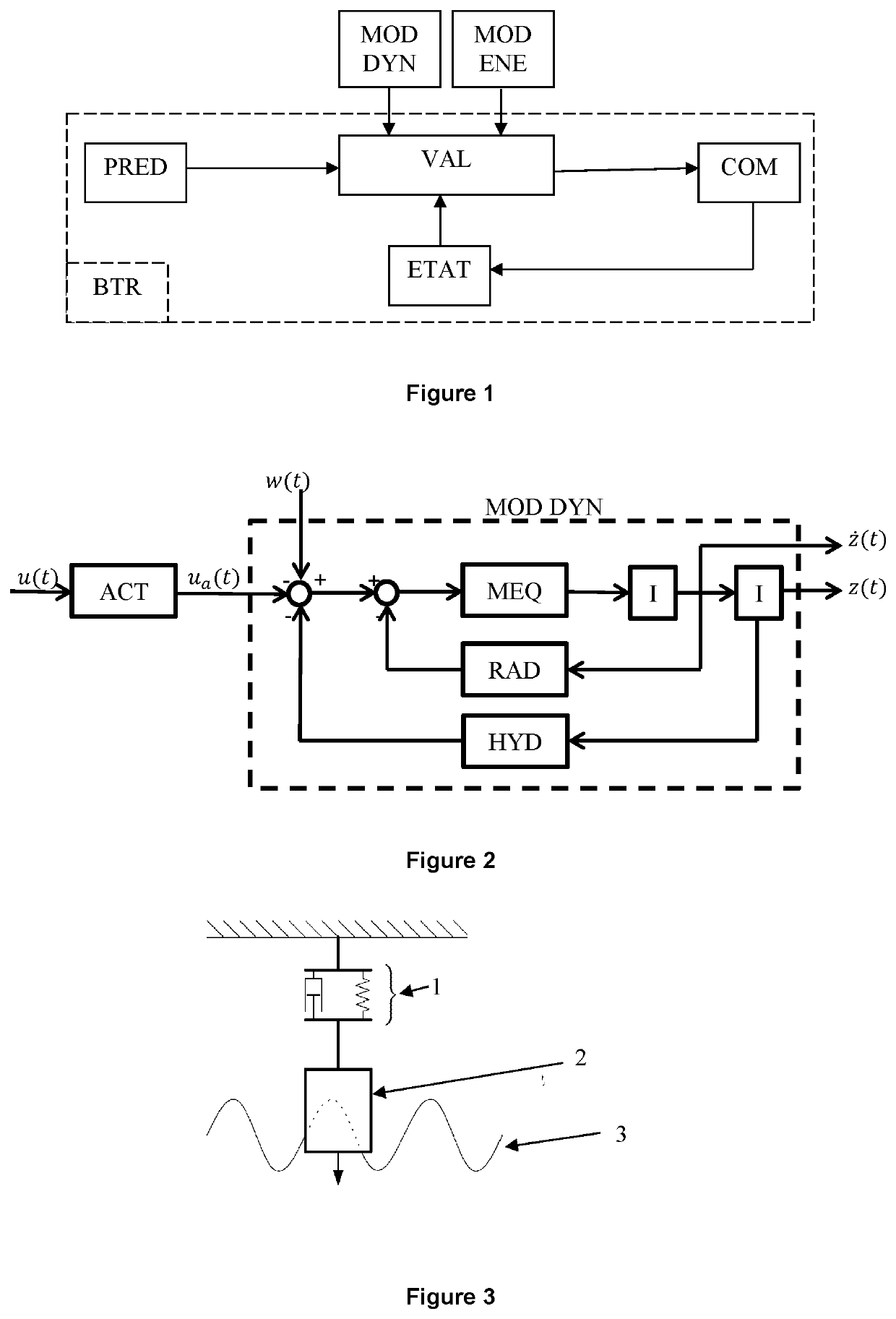
[0231]A non-limiting example of a wave energy system is an oscillating buoy as shown in FIG. 3. This wave energy system comprises a buoy 2 as the mobile device of mass m, a converter machine 1 of damping d and elasticity k that is stationary. The buoy is subjected to an oscillating motion through waves 3 and to hydraulic forces.
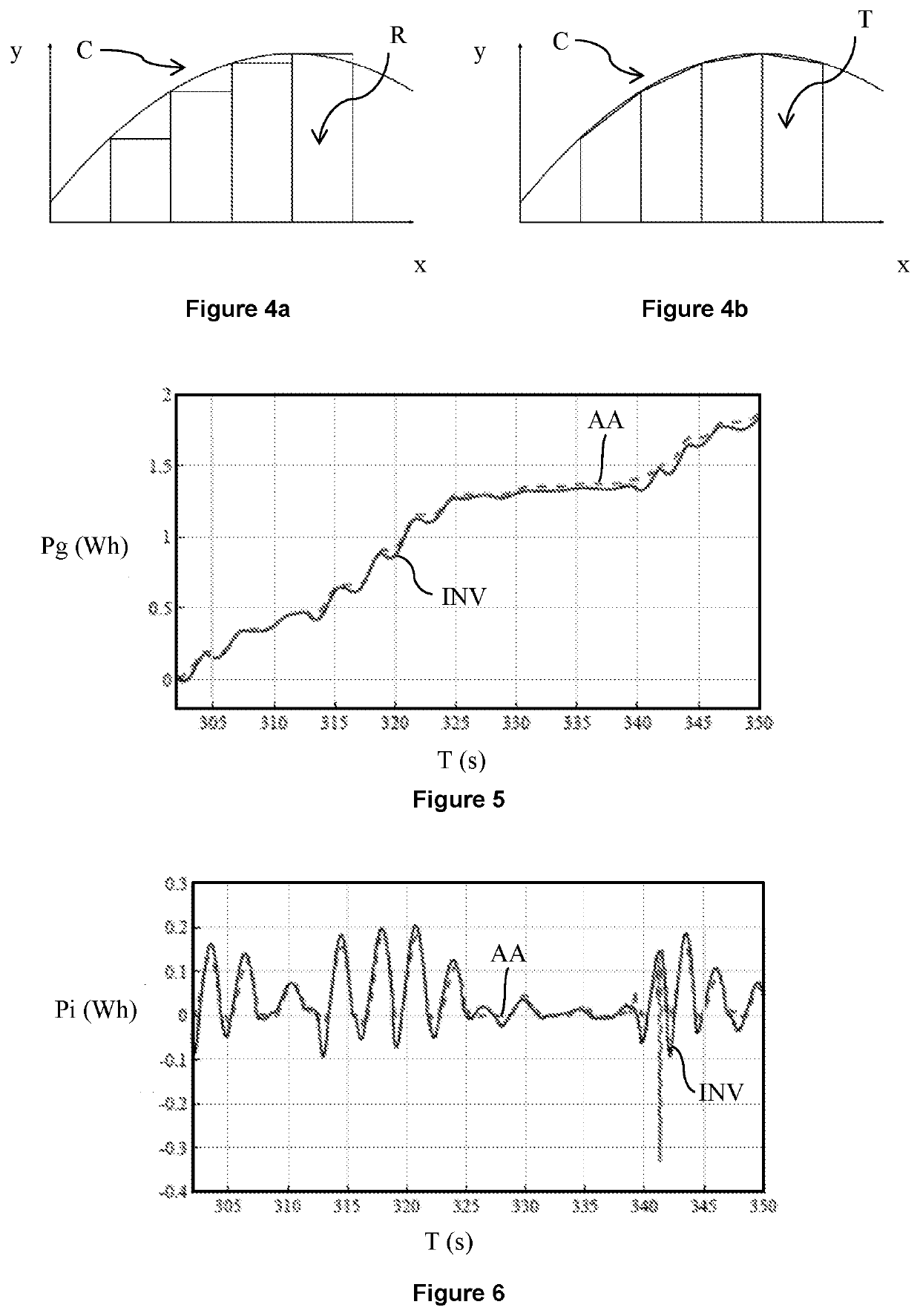
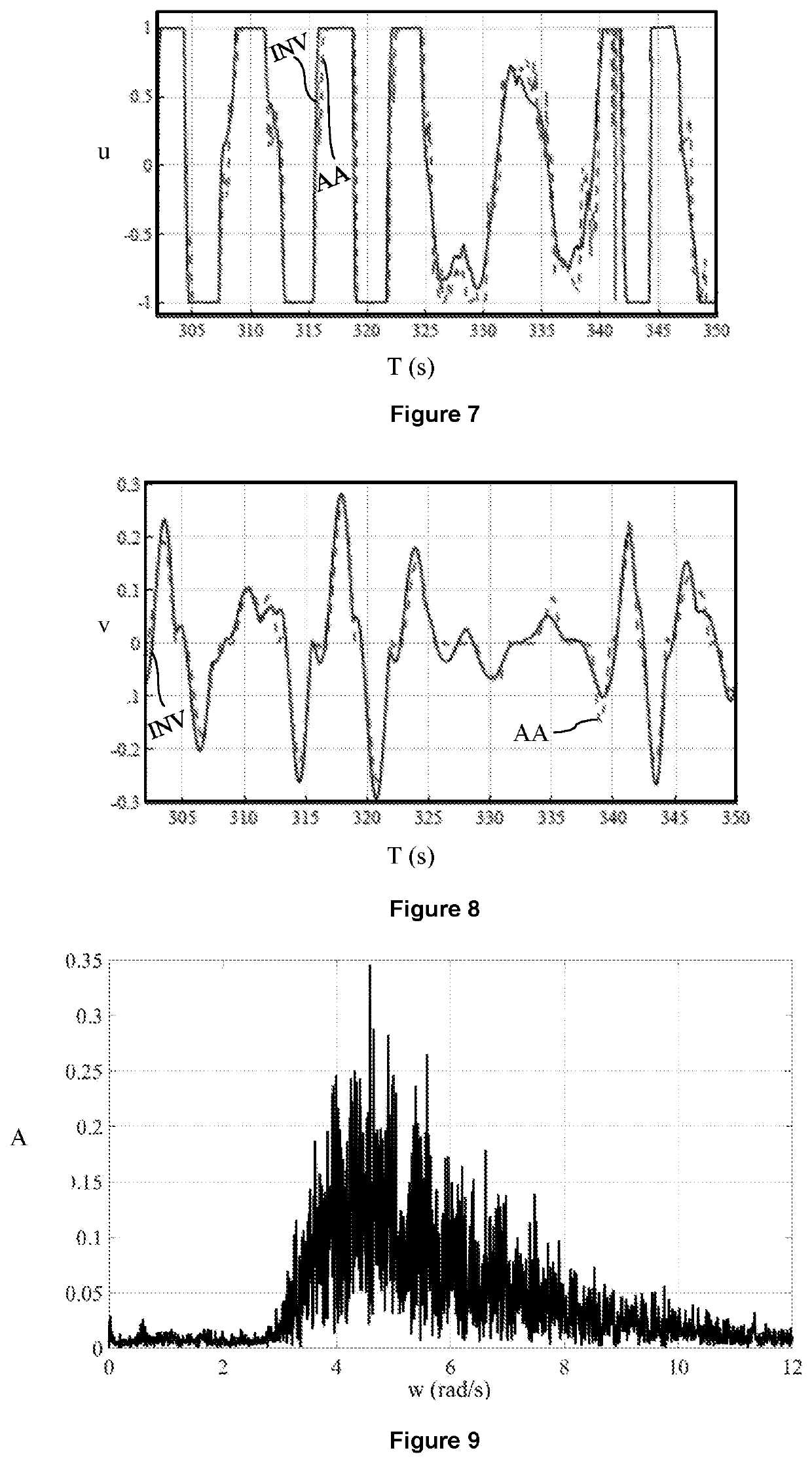
[0232]The control method according to the invention is compared with the control method described in French patent application FR-2,973,448 (WO-2012 / 131,186), by studying the responses obtained with these two methods. This comparative example was implemented on a wave energy system corresponding to the diagram of FIG. 3. FIGS. 5 to 8 are curves of the values obtained with the two methods. For this example, the spectral density of the waves being considered is in accordance with the curve in FIG. 9 of amplitude A as a function of frequency w (rad / s). In curves 5 to 8, the results obtained by the control method according to the invention are denoted by INV and ...
PUM
 Login to View More
 Abstract
Description
Claims
Application Information
 Login to View More