
Accelerated scan circuitry and method for reducing scan test data volume and execution time
a scan circuit and scan test technology, applied in the field of digital logic testing, can solve the problems of limiting the effectiveness of scan test, the total number of serial bits that have to be scanned in and out in serial fashion, and the limitation of most ic's, so as to achieve less data volume
- Summary
- Abstract
- Description
- Claims
- Application Information
AI Technical Summary
Benefits of technology
Problems solved by technology
Method used
Image

Examples
Embodiment Construction
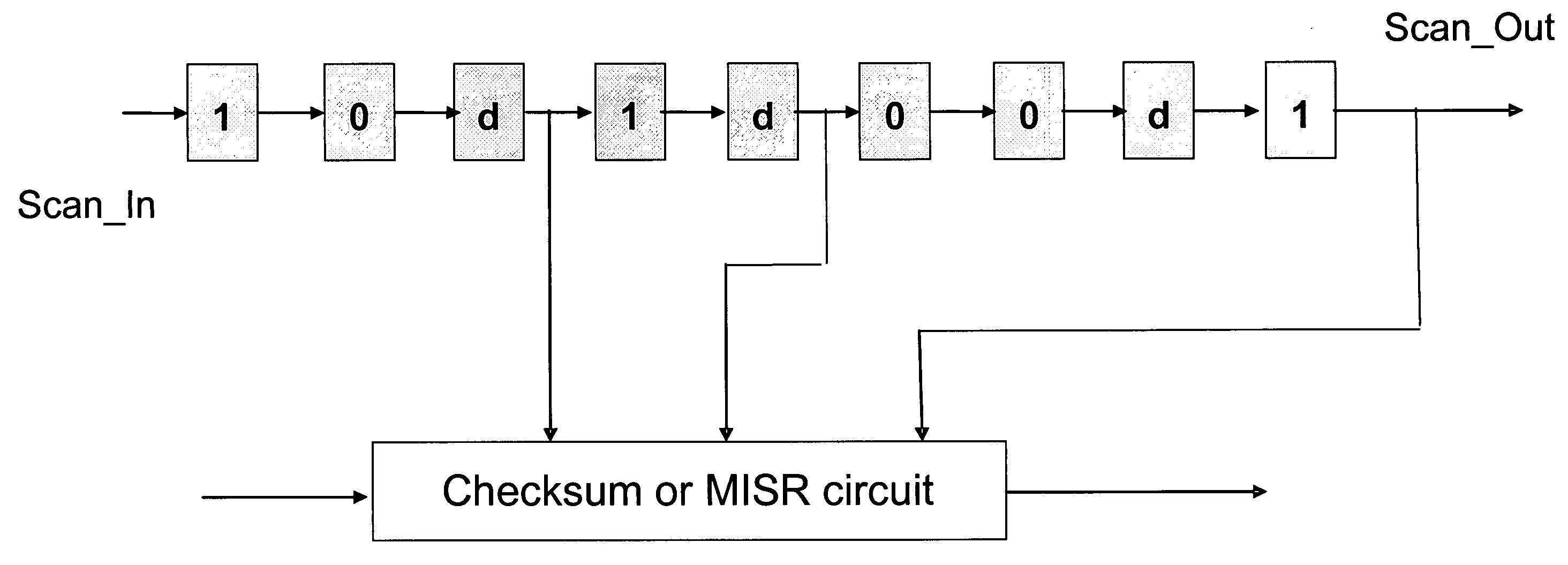
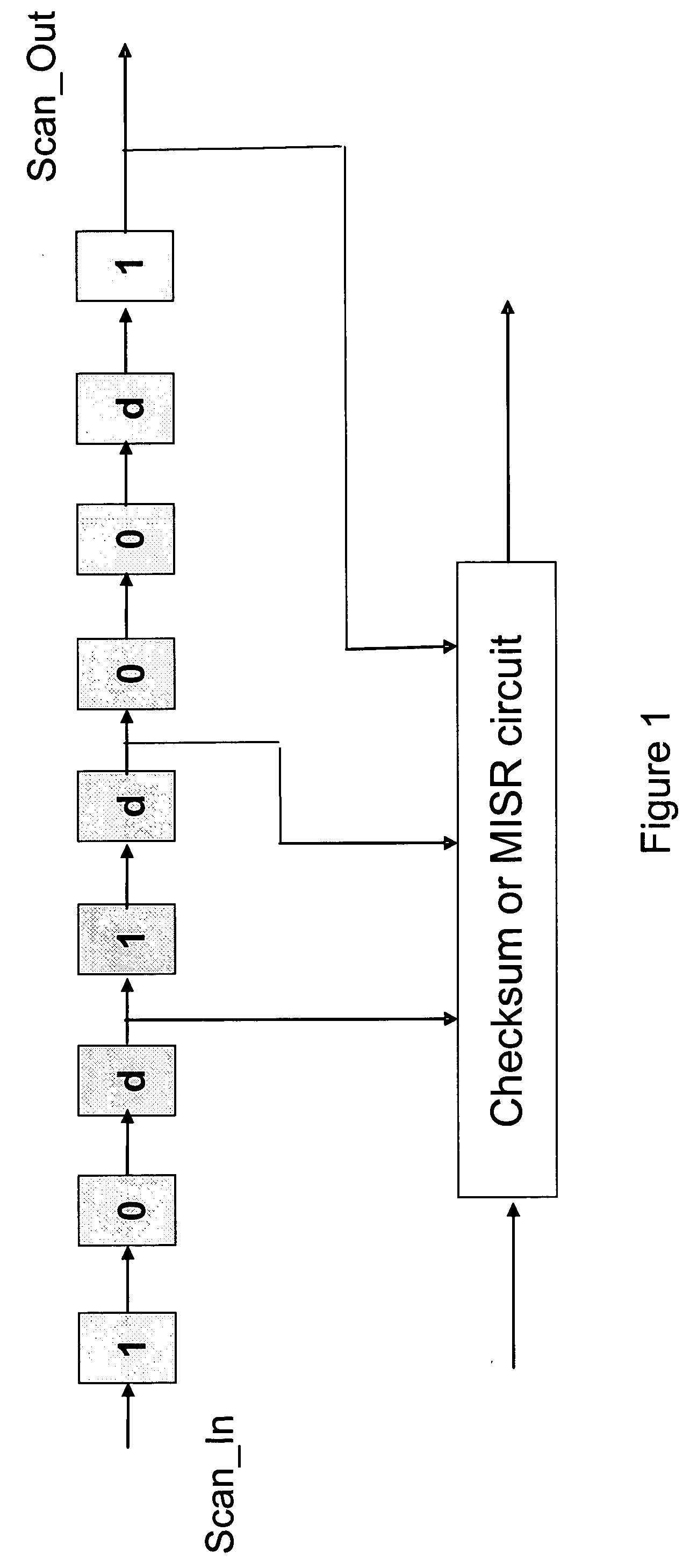
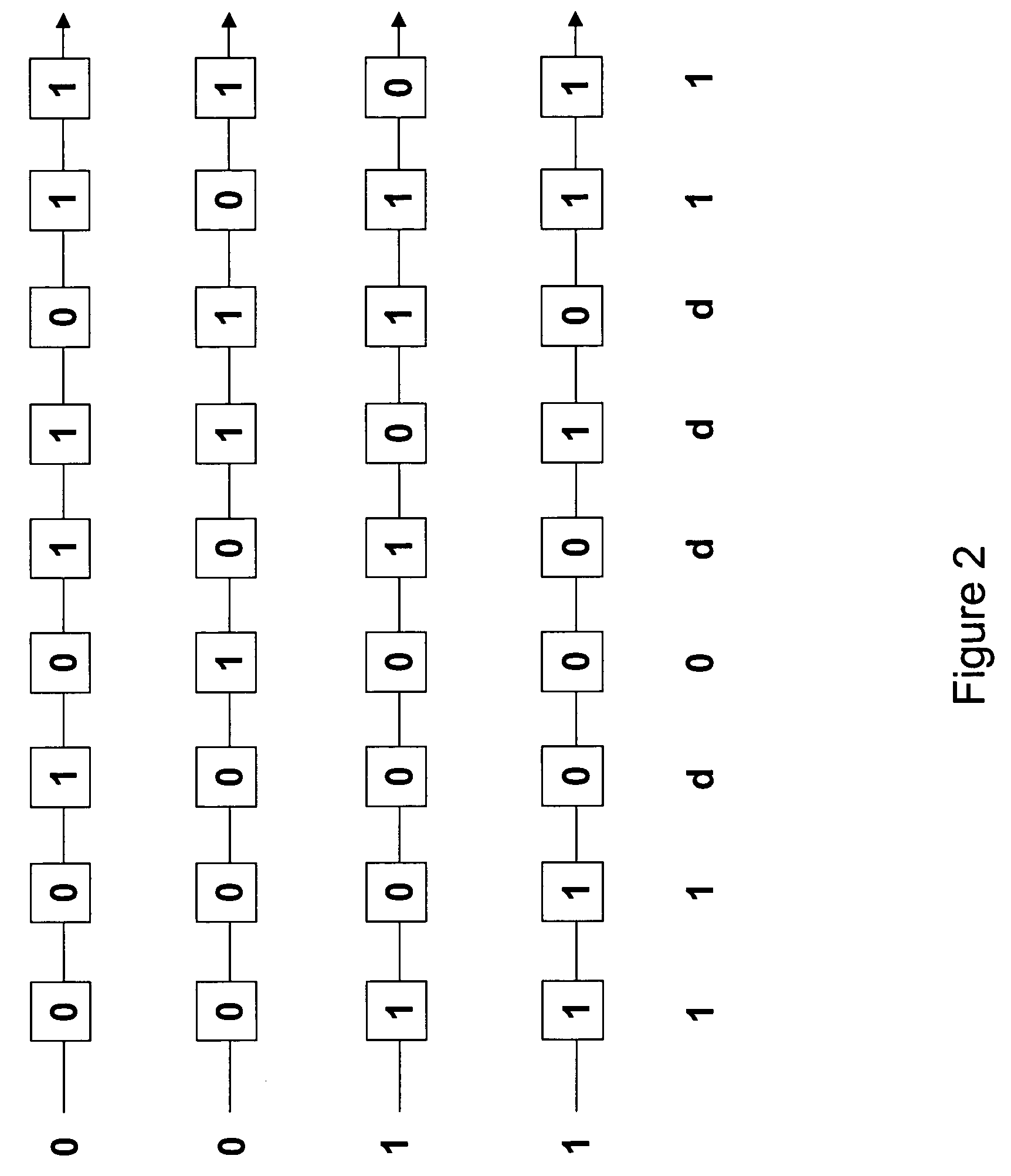
[0031] Traditional approach to scan-based testing employs overlapped Scan_Out of the results for the most recently executes test pattern with the Scan_In for the next test pattern. The primary motivation for doing so has been to take advantage of the ability to feed new serial data (i.e. next test pattern) at one end of the scan-chain while simultaneously receiving the results for the previous test pattern since the two serial streams are of equal length. However, scan-out bits do not all contain useful information regarding the pass / fail status of the previous test vector. Indeed, the only bits where useful information is present are bit positions where at least one fault effect has been propagated. Thus, it is only useful (necessary) to scan-out those bit positions that contain useful information. Here, those bits are referred to as Care_Out bits. It is noted that, typically, each test results vector may contain a small number of Care_Out bits. The remaining bits become set to spe...
PUM
 Login to View More
 Abstract
Description
Claims
Application Information
 Login to View More