
Use of powder metal sintering/diffusion bonding to enable applying silicon carbide or rhenium alloys to face seal rotors
a technology of diffusion bonding and powdered metal, which is applied in the direction of sliding contact bearings, mechanical equipment, transportation and packaging, etc., can solve the problems of brittle monolithic silicon carbide (sic), inability to apply sic, and high cost of monolithic ceramic fabrication, etc., to achieve high thermal conductivity material, high temperature and stress, and improved operation
- Summary
- Abstract
- Description
- Claims
- Application Information
AI Technical Summary
Benefits of technology
Problems solved by technology
Method used
Image

Examples
Embodiment Construction
)
[0019] The detailed description set forth below in connection with the appended drawings (if any) is intended as a description of presently-preferred embodiments of the invention and does not represent the only forms in which the present invention, materials, and / or processes may be constructed and / or utilized. The description sets forth the functions and the sequence of steps for constructing and operating the invention in connection with the illustrated embodiments. However, it is to be understood that the same or equivalent functions and sequences may be accomplished by different embodiments that are also intended to be encompassed within the spirit and scope of the invention.
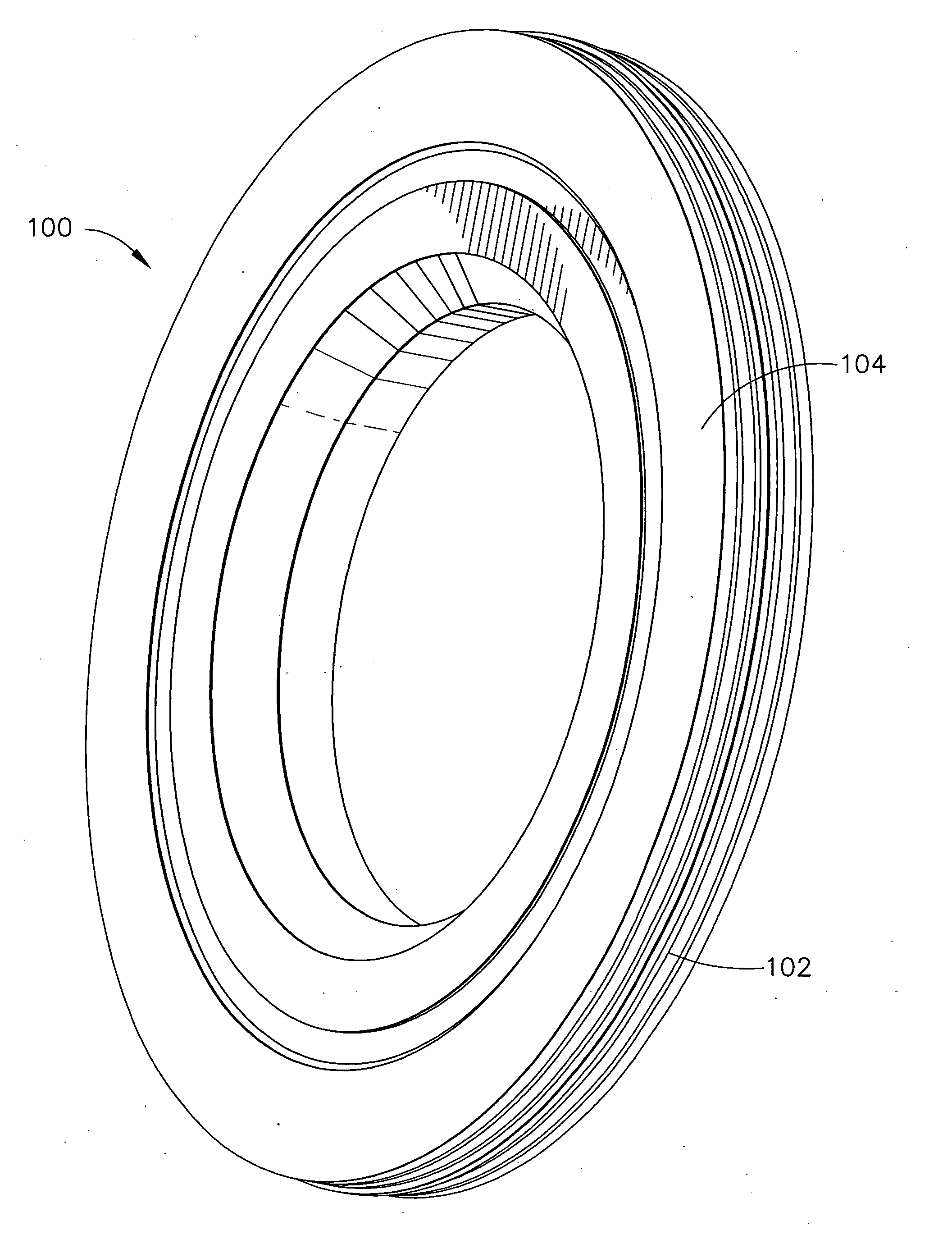
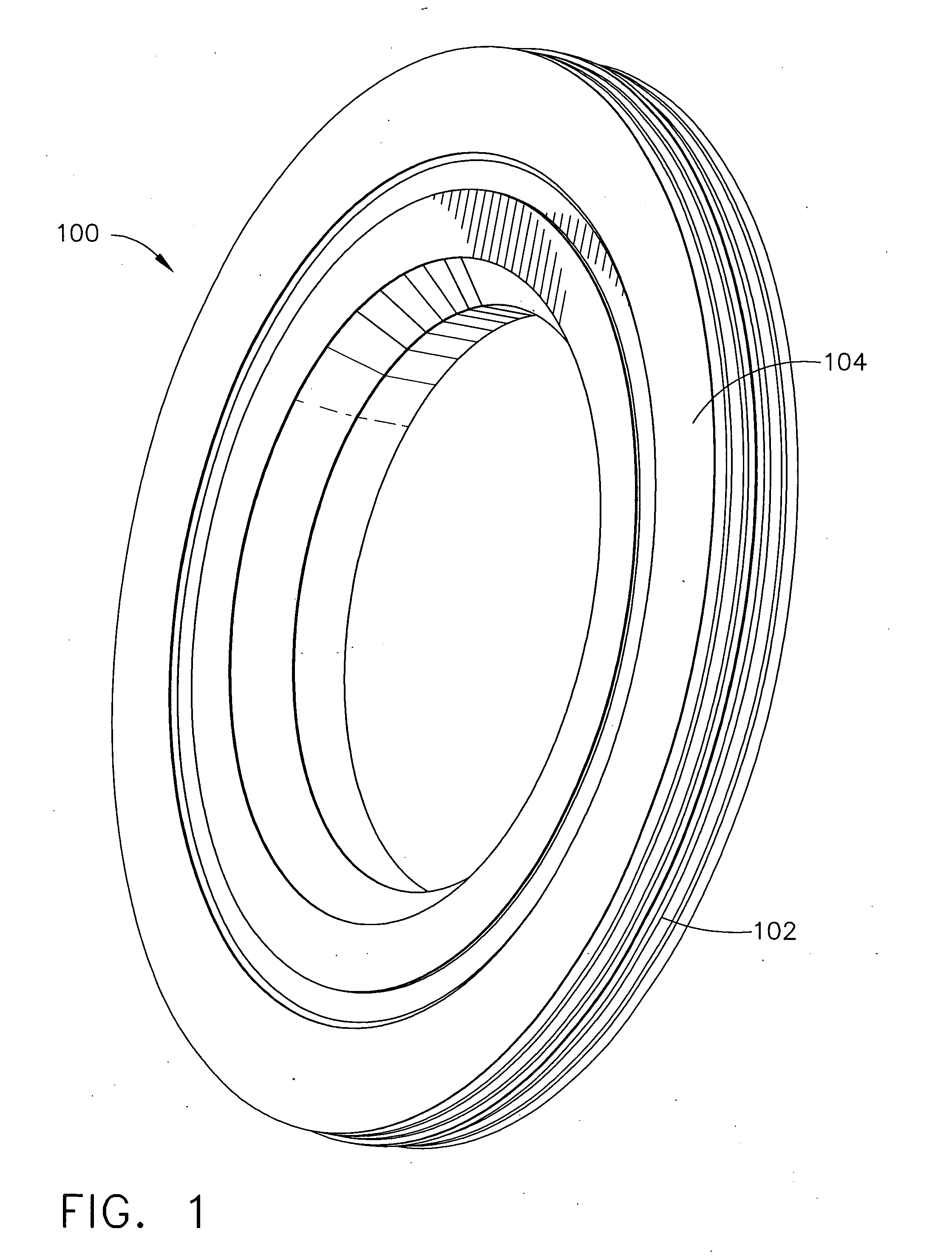
[0020] As shown in FIG. 1, face seal rotor 100 may have a substrate 102 that provides support for a face 104. The face 104 provides one half of a seal (in conjunction with a stator, not shown). The face is where friction may develop and heat and stress may occur. The face 104 provides the operating surface...
PUM
| Property | Measurement | Unit |
|---|---|---|
| melting point | aaaaa | aaaaa |
| melting point | aaaaa | aaaaa |
| refractory | aaaaa | aaaaa |
Abstract
Description
Claims
Application Information
 Login to View More