
Broadband, Nonreciprocal Network Element
a network element and non-reciprocal technology, applied in the field of new broadband, non-reciprocal network elements, can solve the problem of obscurity of the idea/hope of realizing a true passive network component with large gyration effect over a wide bandwidth
- Summary
- Abstract
- Description
- Claims
- Application Information
AI Technical Summary
Benefits of technology
Problems solved by technology
Method used
Image

Examples
Embodiment Construction
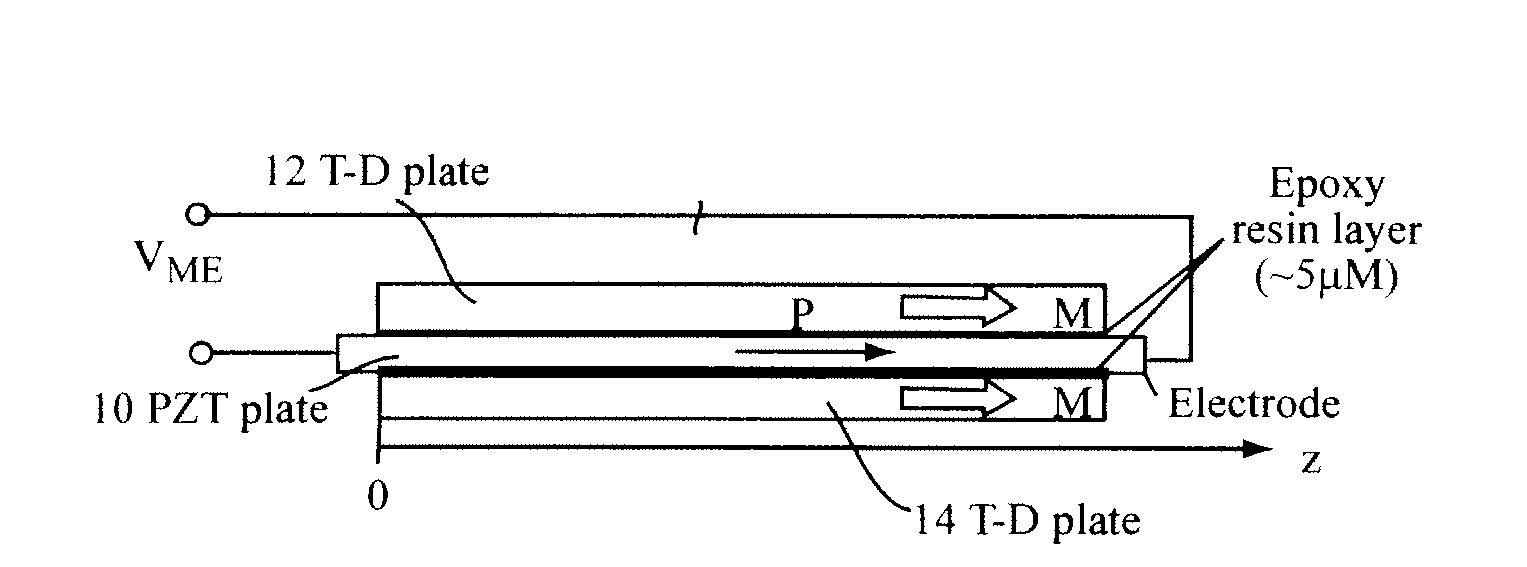
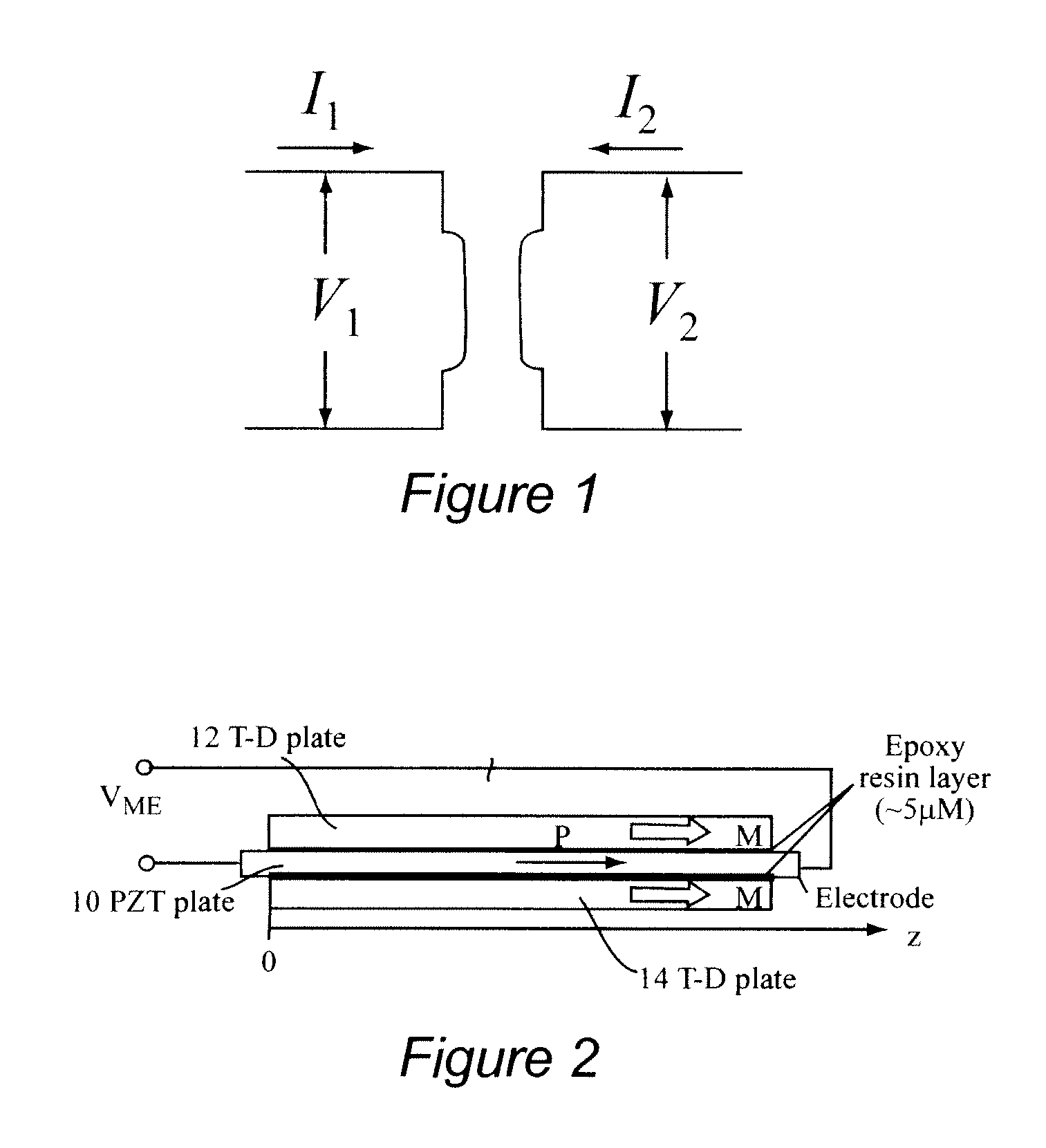
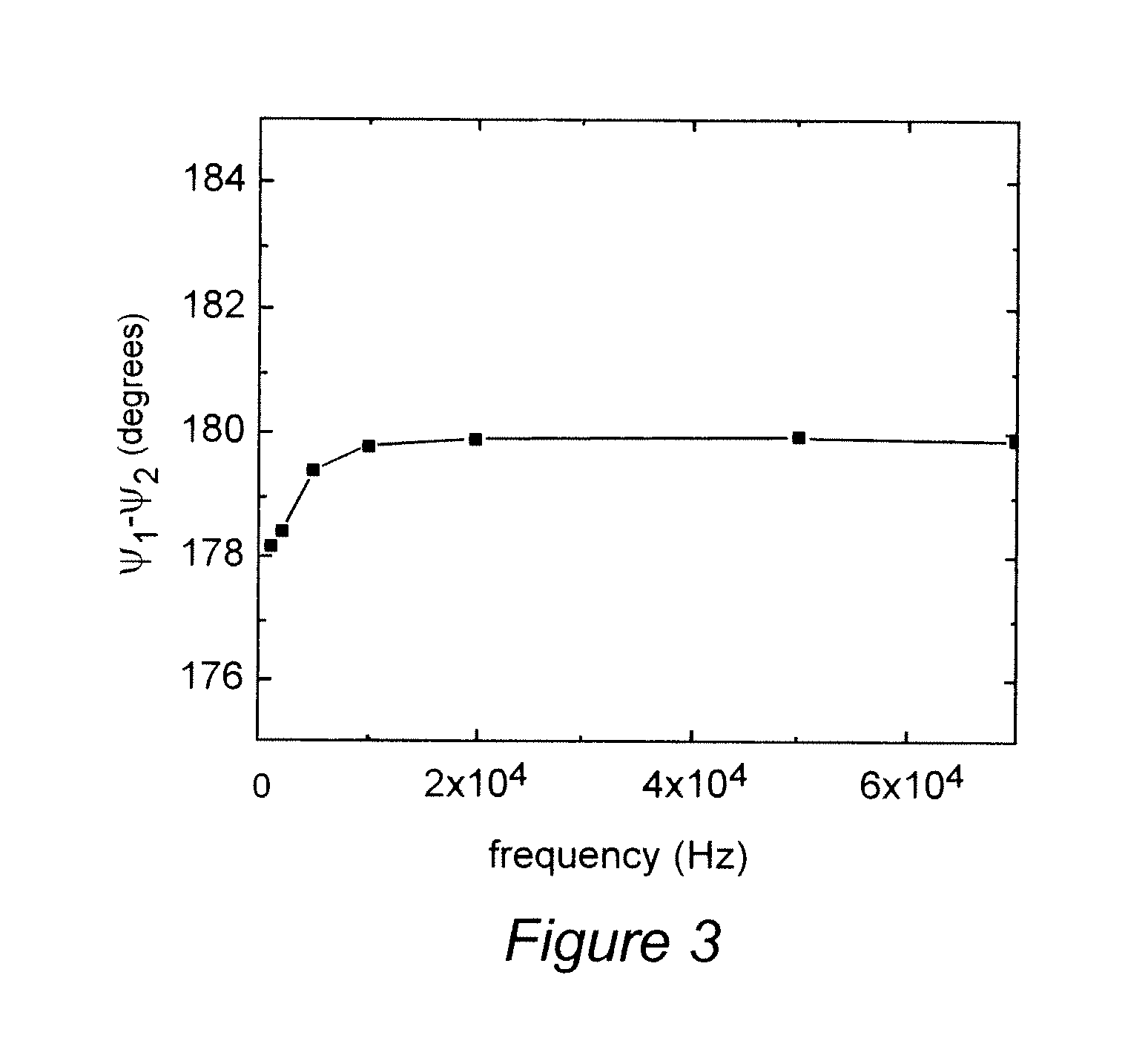
[0019] We have discovered that laminated composites of piezoelectric and magnetostrictive layers come close to meeting the requirements (1a) and (1b) for ideal gyrators. We had previously developed such composites for studying magneto-electric (ME) effects, but had not yet realized the existence or importance of gyration. Here, we conclusively demonstrate the near-ideal gyrator capabilities of composites consisting of a Pb(Zr1-xTi1-x)O3(i.e, PZT) or (1-x)Pb(Mg1 / 3Nb2 / 3)O3−xPbTiO3 (i.e., PMN-PT) piezoelectric layer laminated with magnetostrictive Terfenol-D layers. Terfenol-D has a composition of TbxDy1-xFey, an alloy of rare earths Dysprosium and Terbium with Iron. It is a straight forward conclusion that laminates made of piezoelectric layers such as (1-x)Pb(Zn1 / 3Nb2 / 3)O3-xPbTiO3 or other ferroelectric perovskites and other magnetostrictive layers such as Fe1-xGax (i.e., Galfenol), magnetic alloys manufactured by Metglas, Inc. (Metglas Inc., Conway, S.C.), CoFe2O4 (CFO), NiFe2O4 (NF...
PUM
 Login to View More
 Abstract
Description
Claims
Application Information
 Login to View More