
Protective coatings for drill pipe and associated methods
a protection coating and drill pipe technology, applied in the direction of rotary drilling, borehole/well accessories, mechanical equipment, etc., can solve the problems of increasing the cost of exploration and recovery efforts, increasing the difficulty of finding and recovering economic recovery of energy resources such as petroleum and natural gas, and accumulation of debris
- Summary
- Abstract
- Description
- Claims
- Application Information
AI Technical Summary
Benefits of technology
Problems solved by technology
Method used
Image

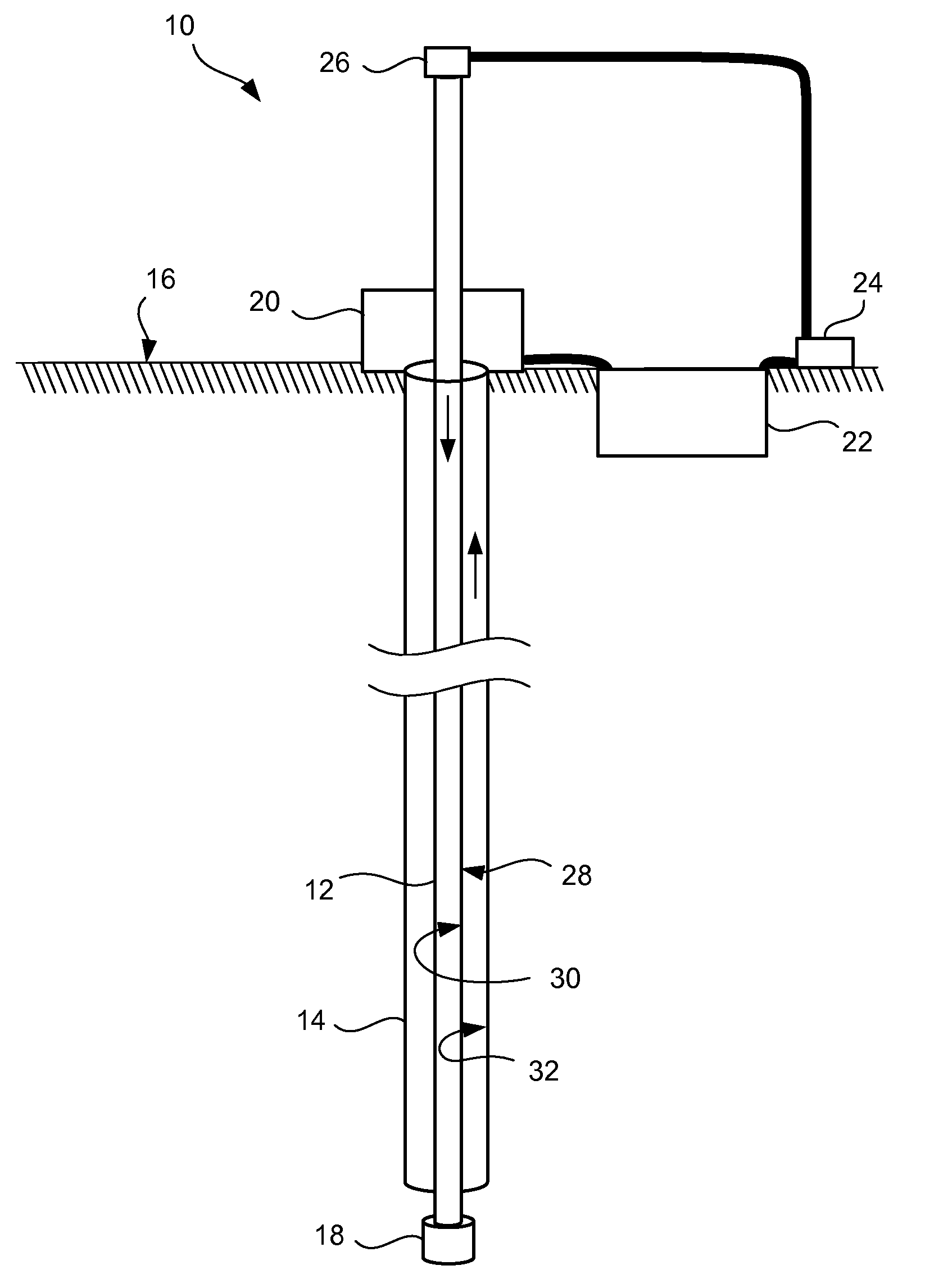
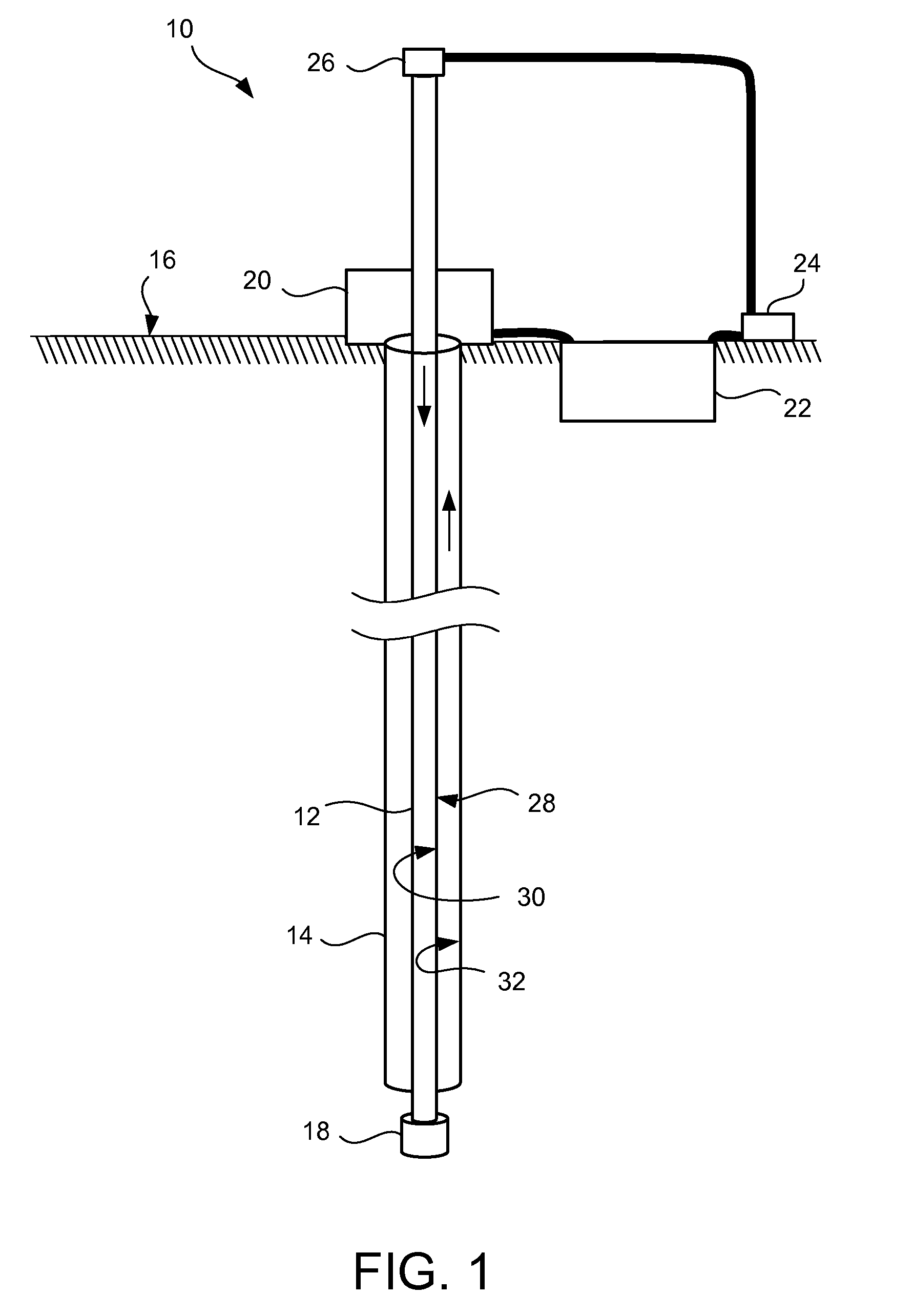
Examples
example
[0042]A six inch diameter steel pipe (½″ thickness and 3 feet in length) was obtained from a drilling operation and used as-is without further treatment. A high pressure proportioning pump (available from Grayco Gusmer as Model H2O / 35) with a GX8 Pro gun sprayer was loaded with Evercoat 900 polyurea. The steel pipe was then sprayed along the entire exterior surface with the polyurea to a coating thickness of about 0.05 inches with a gel time about 5 seconds.
[0043]A conventional drill mud (including debris) was circulated past the coated drill pipe under conditions similar to drilling operations, e.g. about 200 rpm for a period of 700 working hours. No detectable change in appearance of the coating could be detected in terms of coloration, surface marring, or delamination.
[0044]The coated drill pipe was then subsequently exposed to a brine solution for a period of another 700 working hours. As before, there was no detectable change in appearance of the coating could be detected in te...
PUM
 Login to View More
 Abstract
Description
Claims
Application Information
 Login to View More