[0013]According to an aspect of the invention, a method and a
remote system are provided for building a custom dedicated and optimally managed hosted server along with the necessary server infrastructure in real time. The invention aims to reduce the time required to create a customized functional server and IT environment to real time and to solve the inherent collision problems within a virtual layer setup. Embodiments of the invention enable the speeds and convenience that are traditionally associated with
virtualization and server lease, while at the same time maintaining the security and reliability associated with traditional dedicated and managed hosting, where each customer has separate physical machines.
[0014]Various aspects of the subject invention provide a server resources allocation system that reduces the time-consuming process of building a custom made server. In this system, the users merely logs on to the system and specify the customizations that are required for their needs. The system then checks what hardware and
software resources are available within the inventory and immediately begins making the necessary arrangements. These customizations are then done in real time without any
assembly required. Unlike the allocation techniques that a virtual layer would enact, the central
processing system will allocate separate physical server and memory storage subsystems according to the user's requirements in order to provide total autonomy of operation. The
operating system and other software that the user requires will then be promptly uploaded and installed onto the server. Other critical infrastructures that the user might require, such as bandwidth requirements, firewall,
backup storage, etc., are also installed and / or configured automatically. This server is then connected to as communication network, such as
the Internet or customer
private network (
intranet), rendering it available for immediate use to
handle the inbound and outbound connections from the user and capable of handling the user's needs. Furthermore, if changes in the server or IT environment are needed, the user merely has to make those changes in the
user interface or through web services
application programming interface (API) of the central
processing system, and the server along with the accompanying infrastructure is updated in real time. Furthermore, any software licenses needed for the software installed is taken care of by the system.
[0015]According to other aspects of the invention, the system also monitors the available inventory that the vendor has and provides inventory reports so as to enable maintaining a sufficient level of hardware or software parts. For example, if the inventory indicates a short supply of licenses for various software packages, more licenses will be ordered. If there is a short supply of storage or physical servers, more hardware is ordered. This is done in advance in order to meet planned or unexpected demands that users might require. Supply chain management (SCM)
inventory data including calculations of requirements and projections are communicated to the suppliers from the system over a secure
network link in near real time to minimize inventory shortages or accumulations of excess inventory.
[0017]The
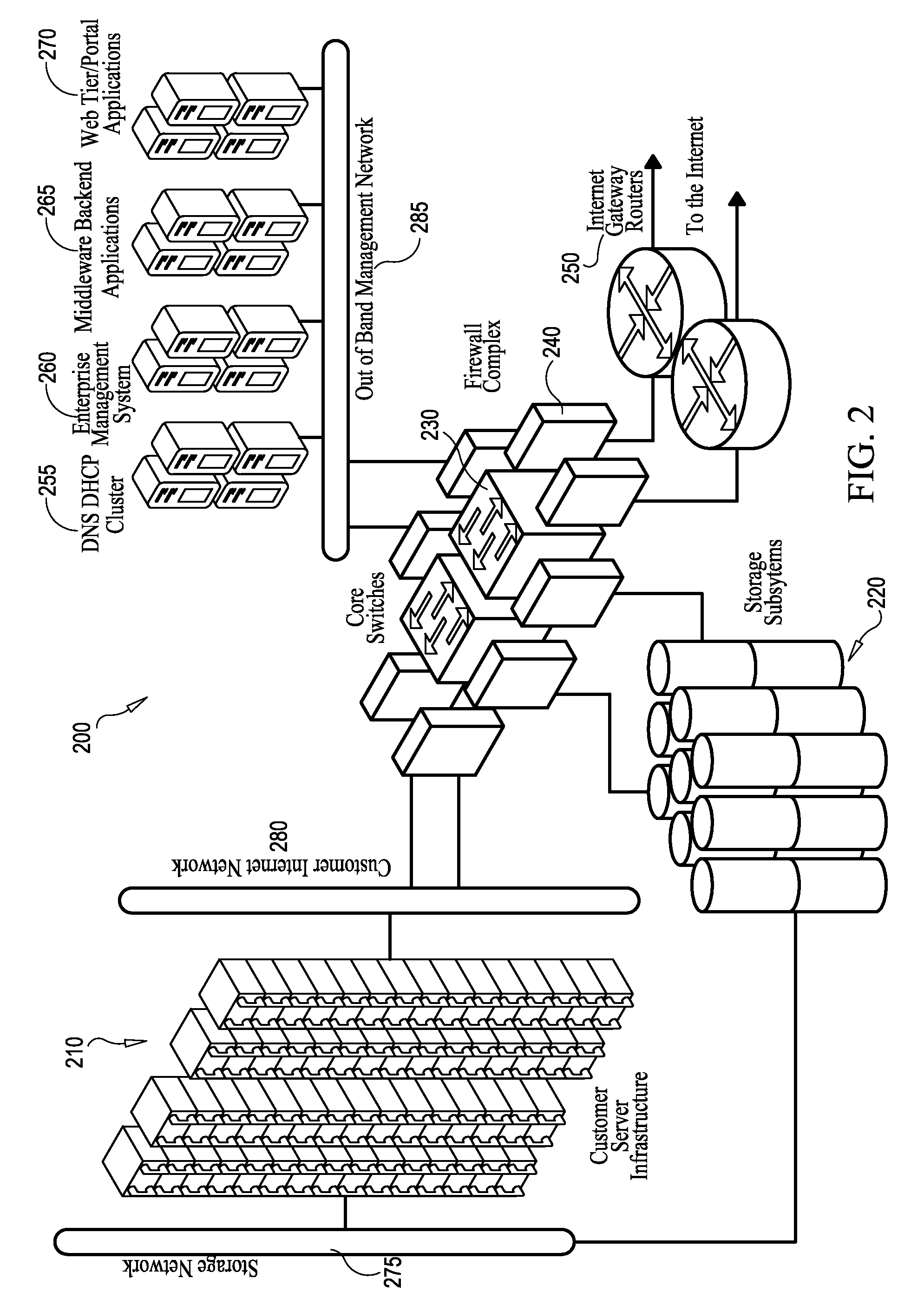
coupling of the assigned server to the assigned storage facility may comprise interposing a backend network between the plurality of servers and the
network storage facility, and operating switches of the backend network to enable communication between the assigned server and the assigned storage facility. Connecting the assigned server to a communication network may comprise
coupling the plurality of servers to a frontend network and operating switches of the frontend network to enable communication between the assigned server and the communication network. Connecting the assigned server to the communication network may further comprise assigning firewall from a
pool of firewall resources to the assigned server. The method may further comprise: operating a monitoring module to monitor the inventory of available hardware and software components and using predictive calculations to issue a notice when more components are needed to be added. The method may further comprise operating the central
processing system to automatically assign and track seat licenses to the user according to the user's request, and install software onto the server according to the seat licenses. The method may further comprise operating the central processing system to assign an automated
backup and archive policy according to the request of the user. The method may further comprise enabling the user to apply API function calls to control the customized IT infrastructure. The method may further comprise constructing a
library of scripts and enabling the user access to apply any script from the
library to the customized IT infrastructure. The method may further comprise operating the central processing system to issue alerts when resources of the customized IT infrastructure should be increased or decreased. The method may further comprise operating the central processing system to provide the user with an estimated cost associated with resources increase or decrease. The method may further comprise operating the central processing system to store a network environment store point, enabling restoring of the entire customized IT infrastructure.


 Login to View More
  Login to View More