
Low current switching magnetic tunnel junction design for magnetic memory using domain wall motion
- Summary
- Abstract
- Description
- Claims
- Application Information
AI Technical Summary
Benefits of technology
Problems solved by technology
Method used
Image

Examples
Embodiment Construction
[0027]In the following description of the embodiments, reference is made to the accompanying drawings that form a part hereof, and in which is shown by way of illustration of the specific embodiments in which the invention may be practiced. It is to be understood that other embodiments may be utilized because structural changes may be made without departing from the scope of the present invention. It should be noted that the figures discussed herein are not drawn to scale and thicknesses of lines are not indicative of actual sizes.
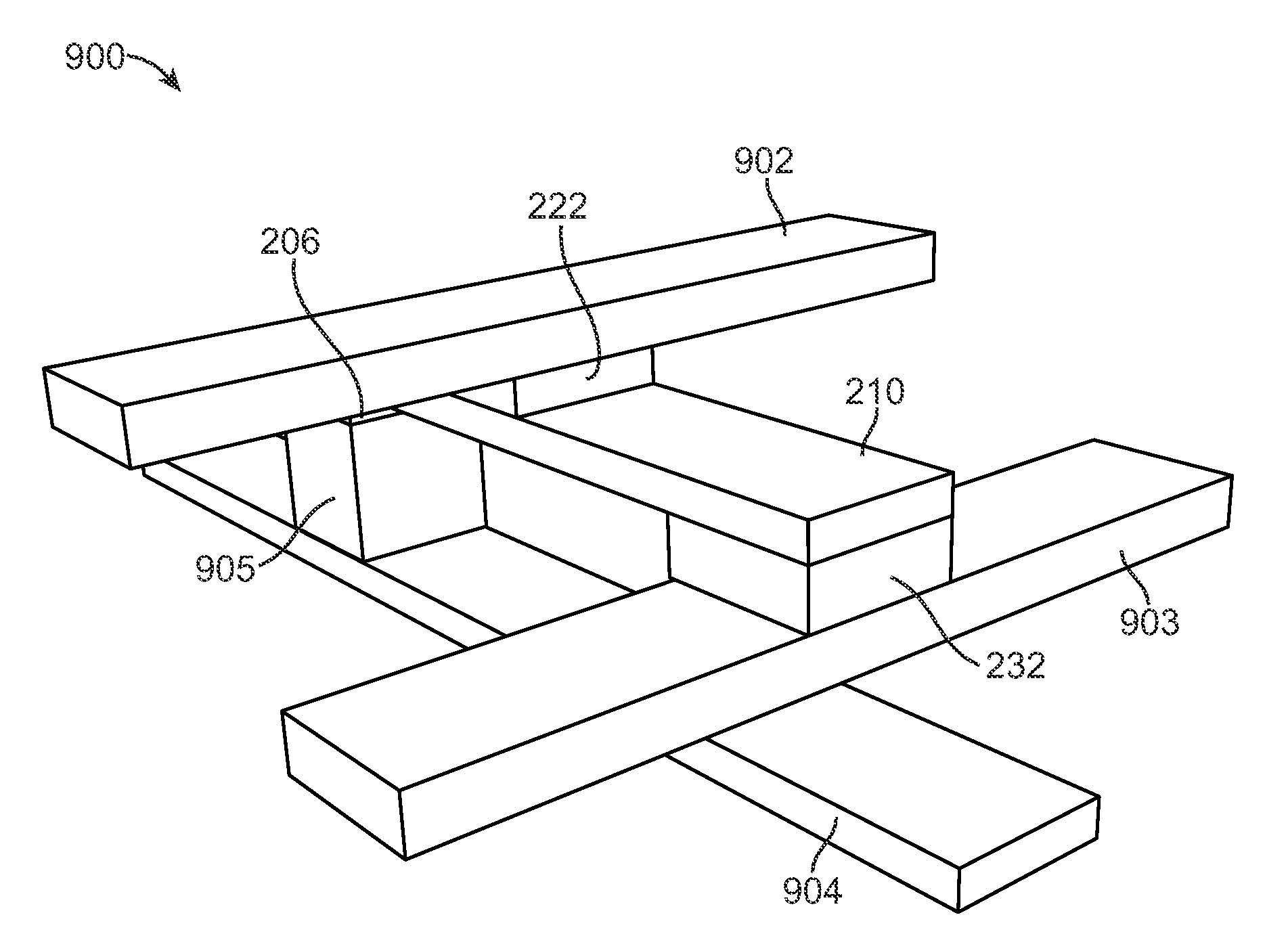
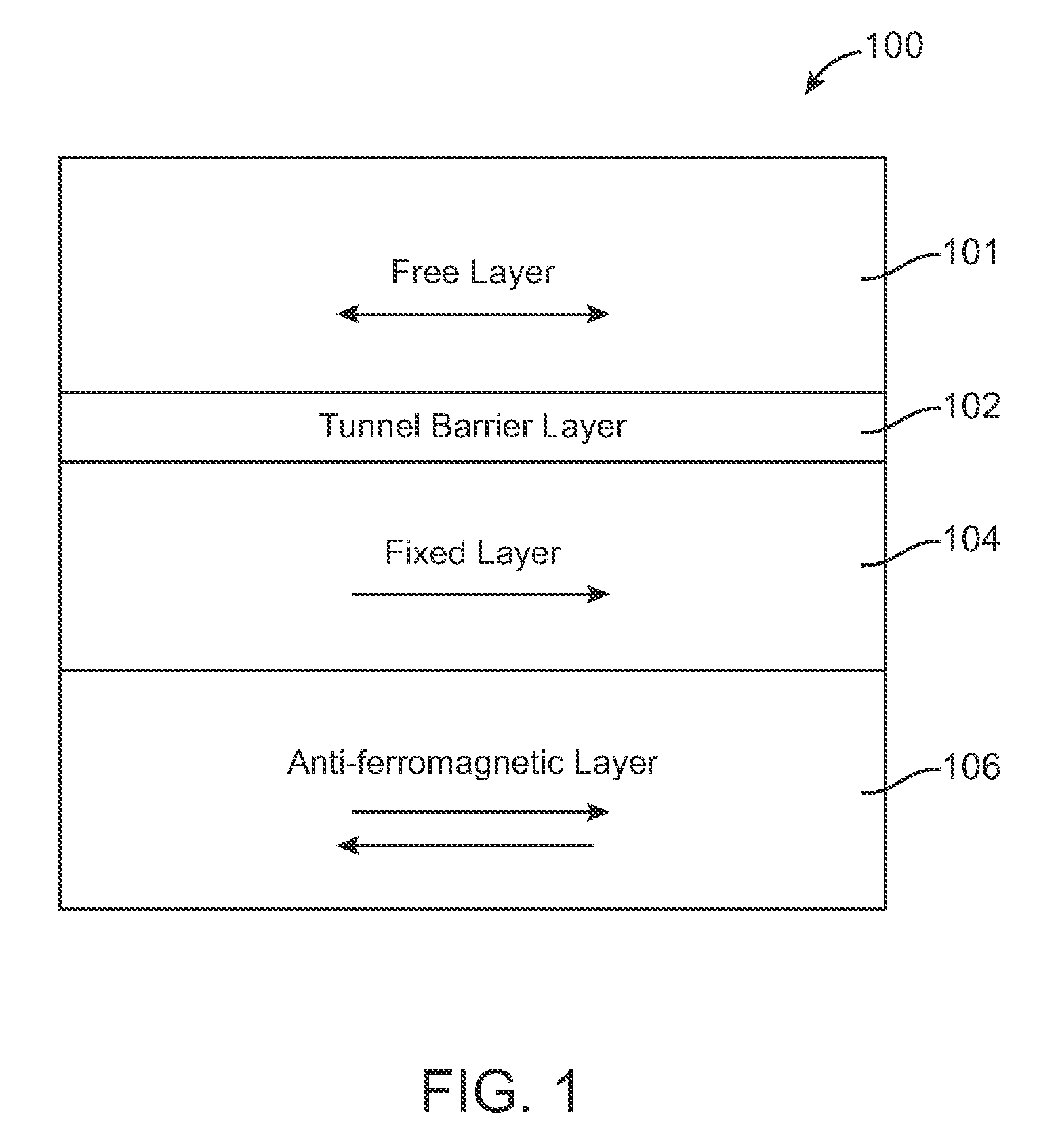
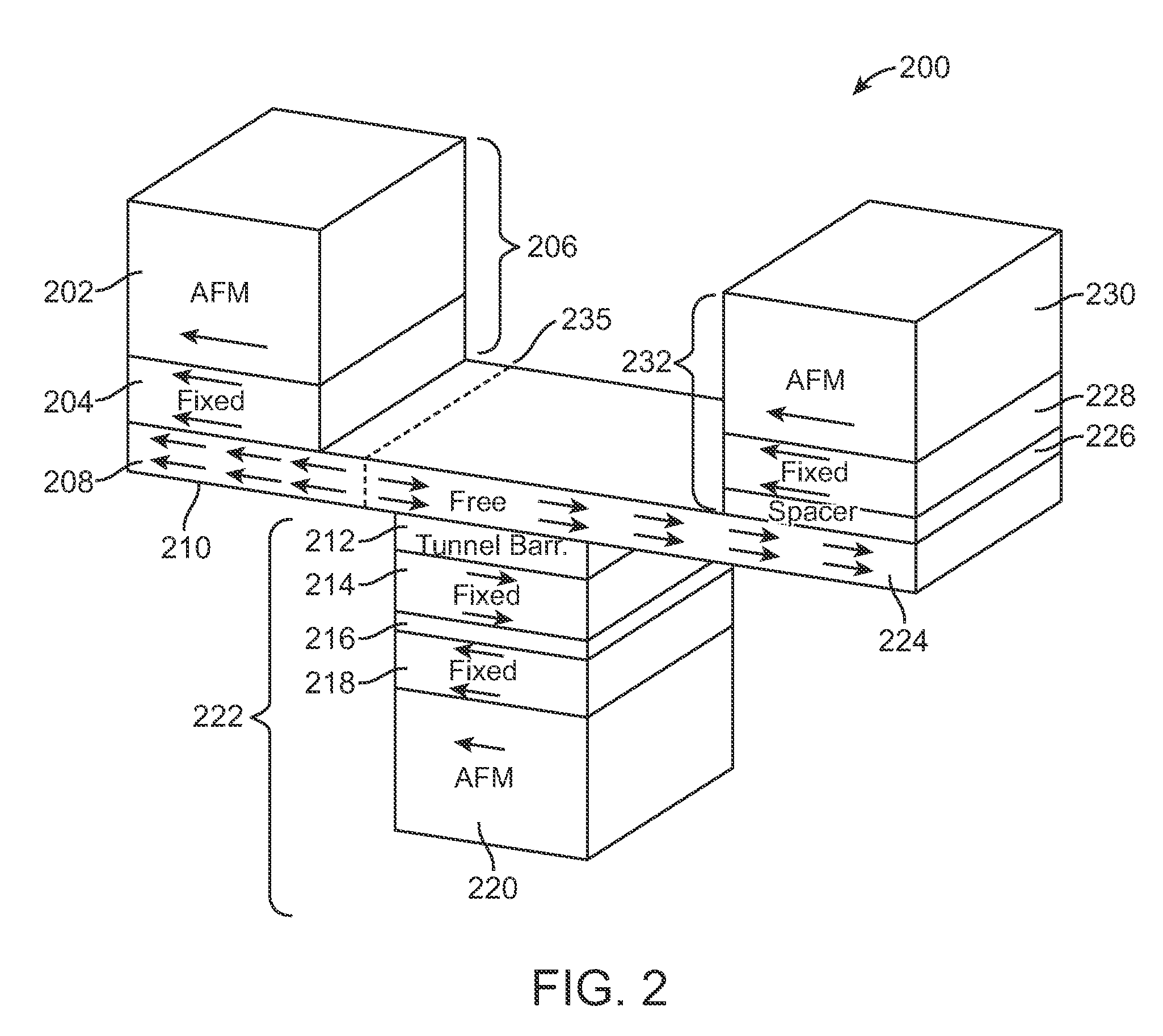
[0028]In an embodiment of the present invention a magnetic tunnel junction (MTJ) is located central to a free layer, with the free layer having stacks with pinned magnetic moments on either end, and the end-defining stacks creating a well defined magnetic domain state of the free layer therebetween. Pushing the free layer's domain wall towards either stack modifies the domain state of the free layer. The domain wall is pushed by the passage of electron cur...
PUM
 Login to View More
 Abstract
Description
Claims
Application Information
 Login to View More