Methods of recovery of pore-forming agents for mesostructured materials
- Summary
- Abstract
- Description
- Claims
- Application Information
AI Technical Summary
Benefits of technology
Problems solved by technology
Method used
Image

Examples
example 1
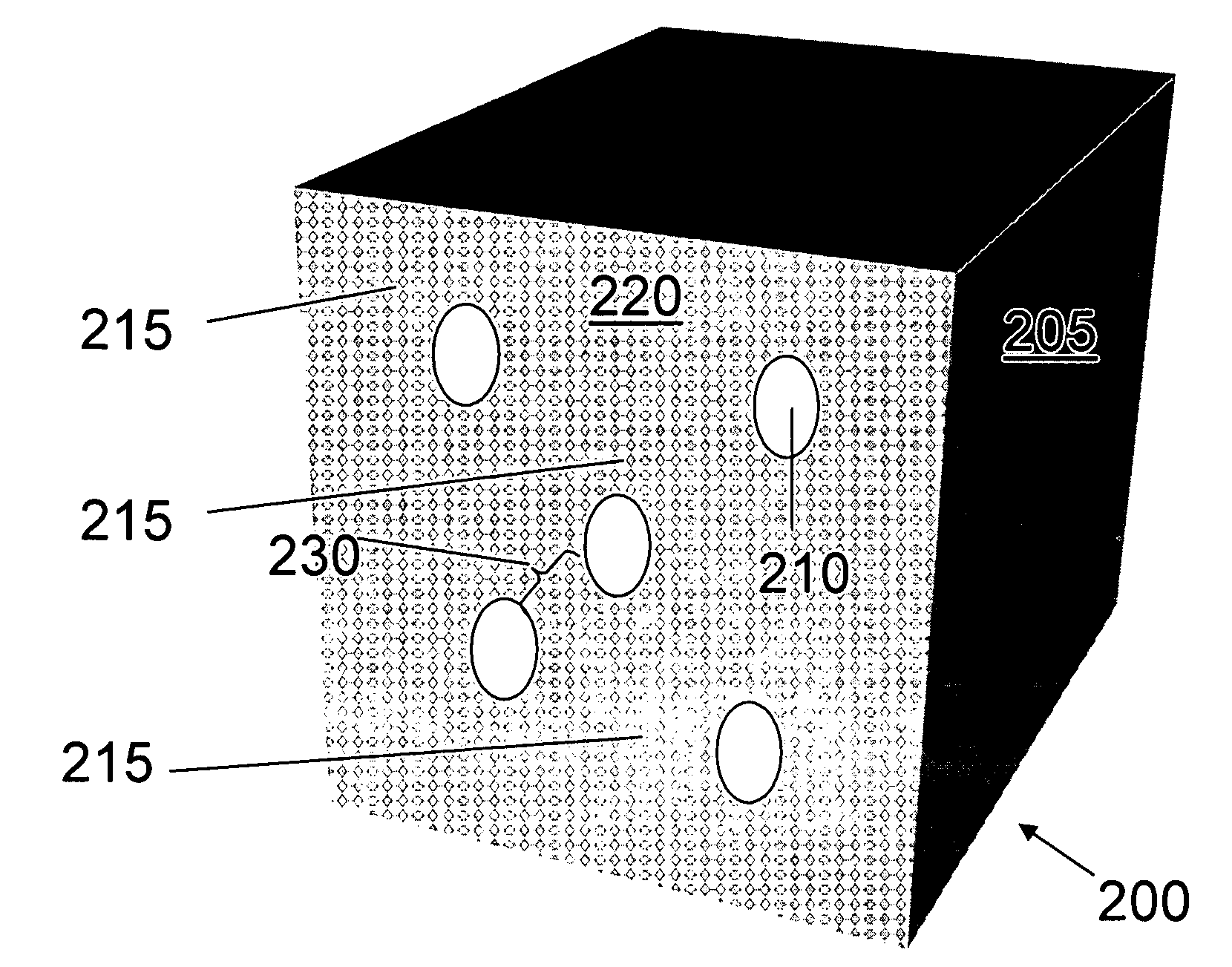
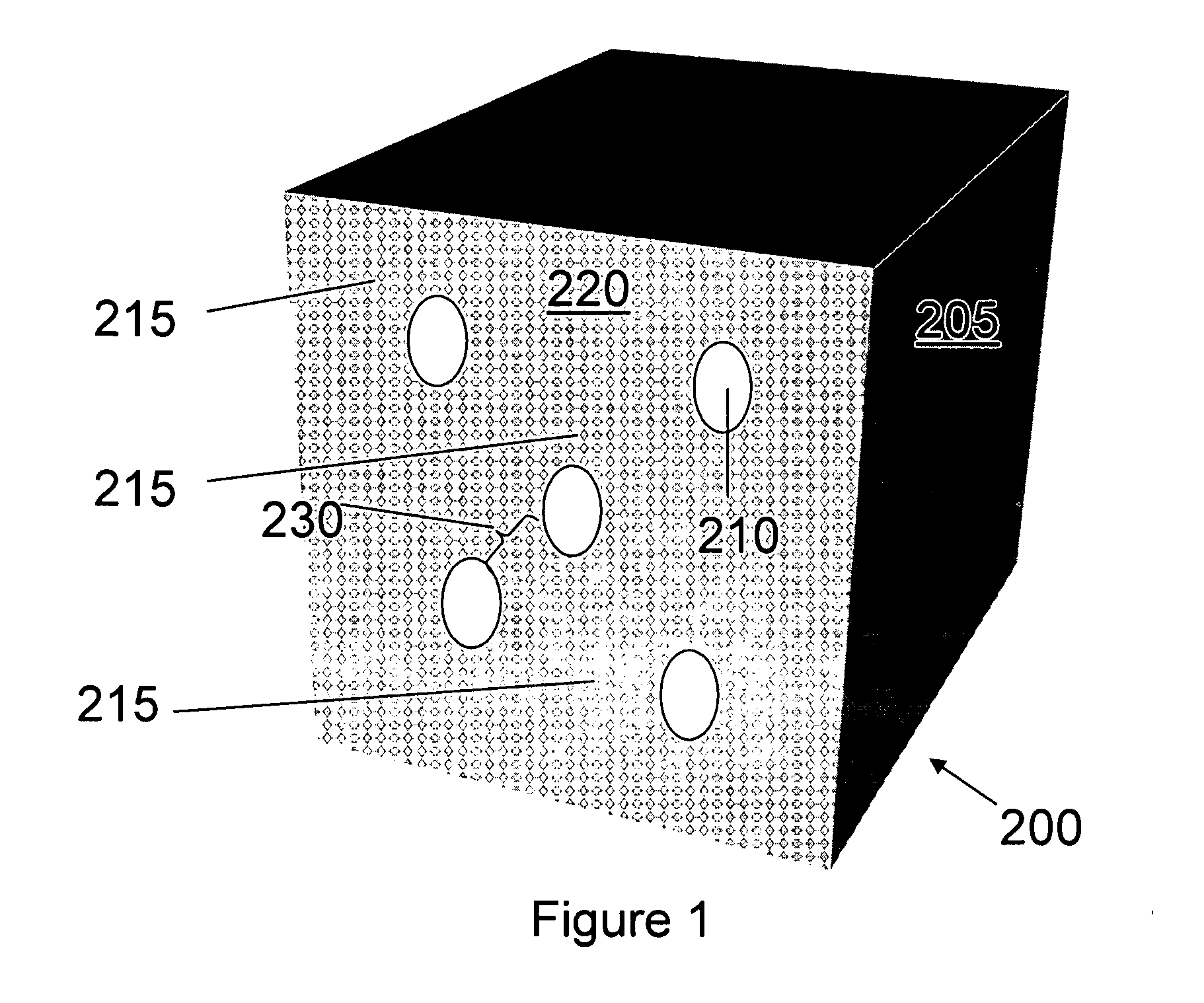
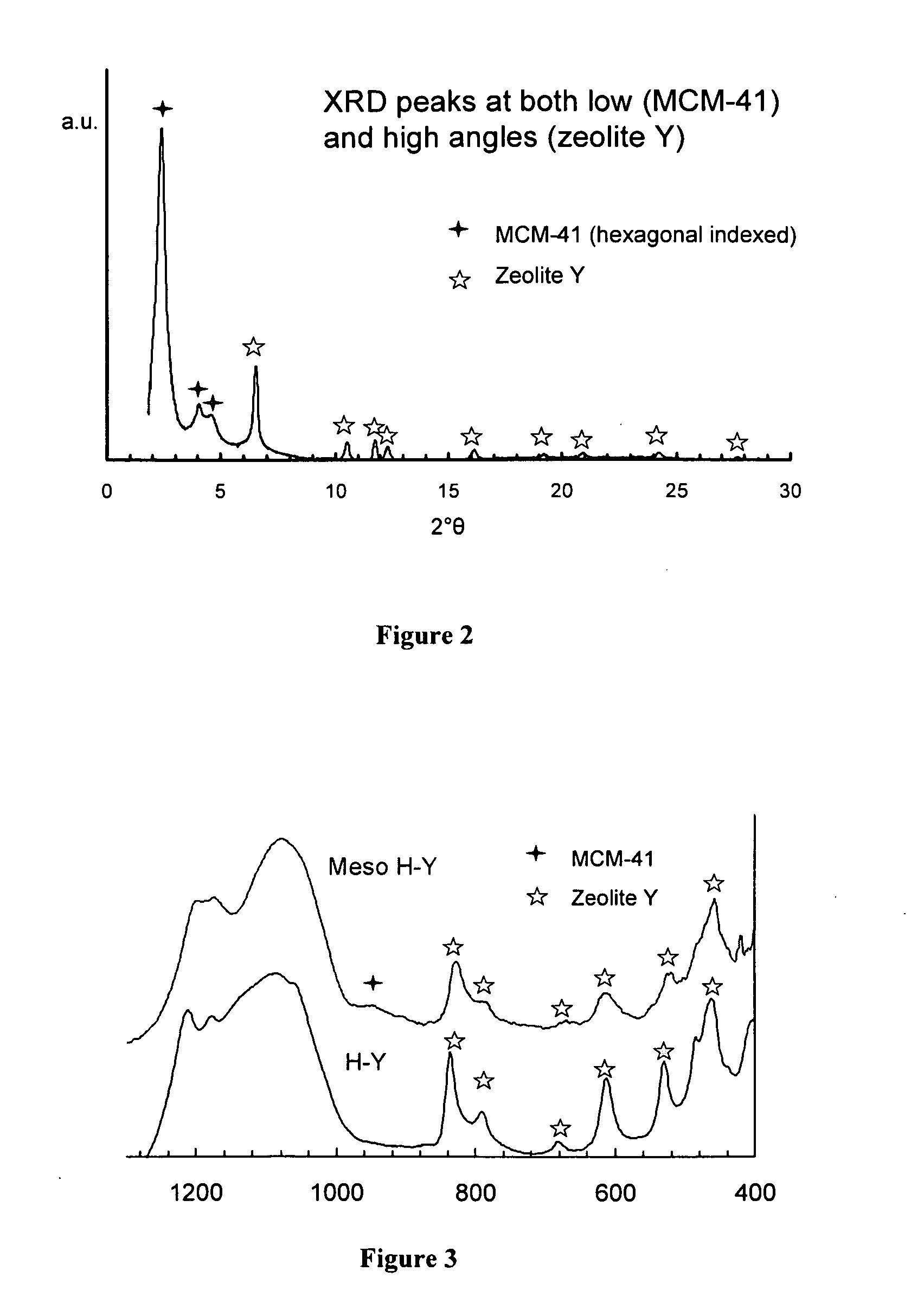
[0077]First, 8 grams of NaOH is dissolved in 1 liter of water to create a pH controlled medium (i.e., a basic medium). Thereafter, 160 grams of the pore-forming agent cetyltrimethylammonium bromide (CTAB) is dissolved in the pH controlled medium. 160 grams of the zeolite USY is exposed to the pH controlled medium and the pore-forming agent. The zeolite USY has long-range crystallinity. Exposure of the zeolite USY to the basic medium and the CTAB is controlled at a temperature of about 120° C. for about two days (i.e., 48 hours) to define, in the zeolite USY, a plurality of mesopores having a controlled cross sectional area to form a mesostructure having long-range crystallinity. At least a portion of the pore-forming agent, CTAB, remains in the mesostructured zeolite formed according to this method.
[0078]The mesostructured zeolite was exposed to a variety of processes that remove at least a portion of the pore-forming agent, i.e., the surfactant CTAB, from the mesostructured zeolite...
example 2
[0086]First, 300 ml NH4OH (30 wt %) is dissolved in 1 liter of water to create a pH controlled medium. Thereafter, 80 g of the pore-forming agent cetyltrimethylammonium bromide (CTAB) is dissolved in the pH controlled medium. 80 grams of the zeolite USY is exposed to the pH controlled medium and the pore-forming agent. The zeolite USY has long-range crystallinity. The exposure of the zeolite USY to the basic medium and the CTAB is controlled at a temperature of about 120° C. for about two days (e.g., 48 hours) to define in the zeolite USY a plurality of mesopores having a controlled cross sectional area to form a mesostructure having long-range crystallinity. The mesostructured zeolite formed according to this method is filtered out of the mixture of pH controlled medium and CTAB. The mixture of pH controlled medium and CTAB is distilled via evaporation on a heated surface to recover a portion of the ammonia and a portion of the CTAB. By this method, almost all of the CTAB left in t...
PUM
 Login to View More
 Abstract
Description
Claims
Application Information
 Login to View More