[0014]It is therefore, an object of the present invention to provide an improved ground-source thermal exchange system that can be more widely used based on the combination of reduced installation cost and the relatively small
above ground surface-area
footprint required.
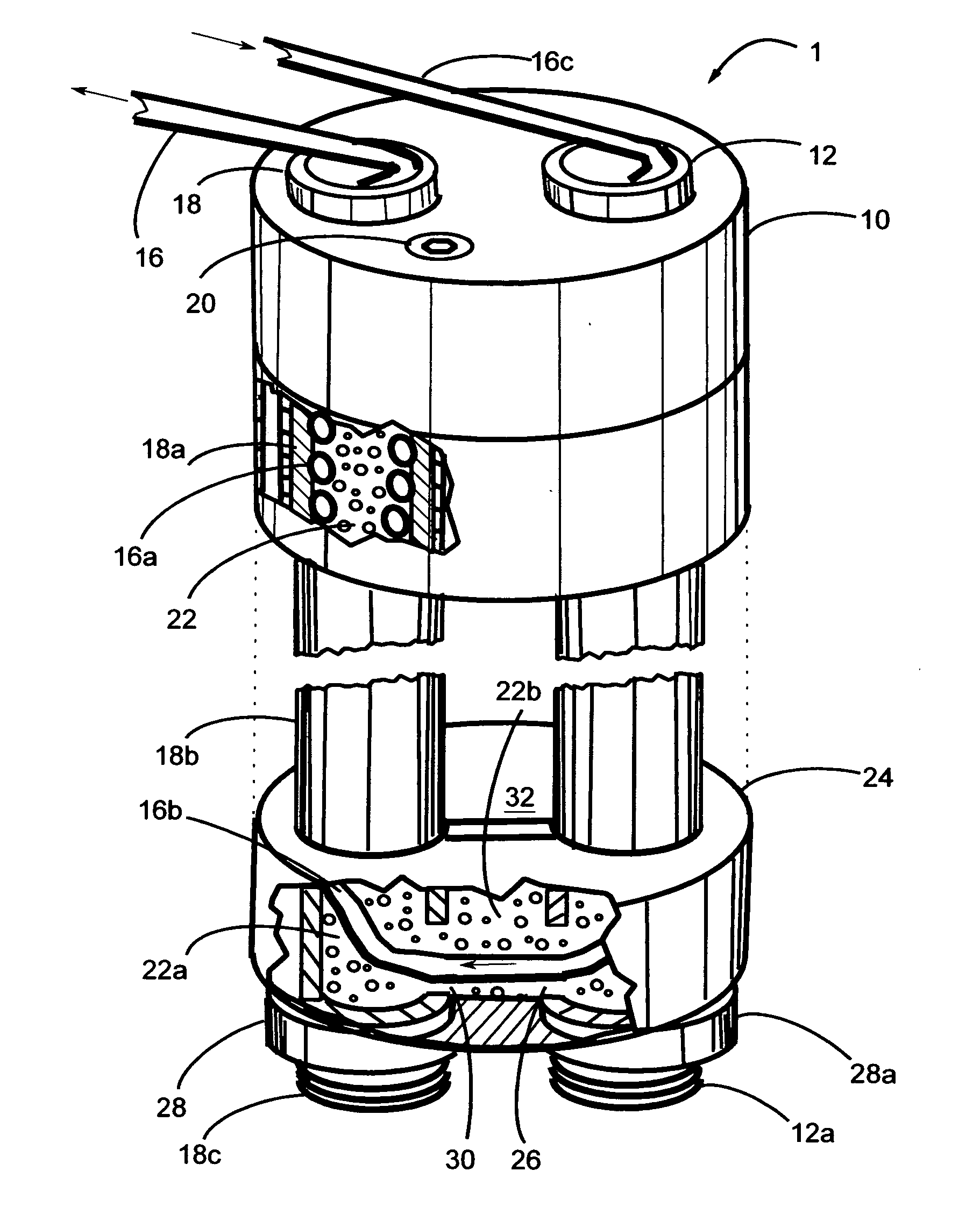
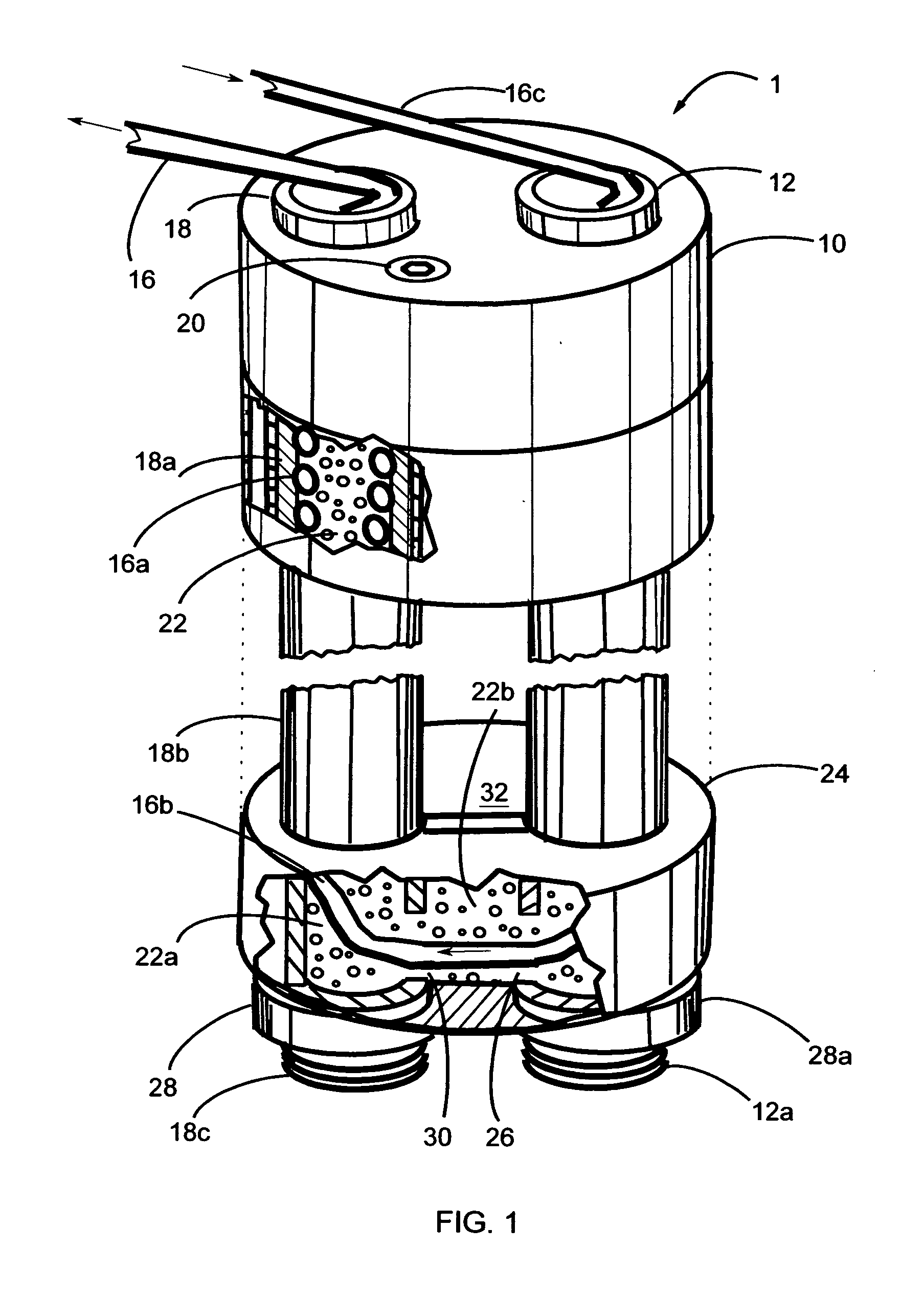
[0015]In accordance with this invention, there is provided a system composed of stackable, geothermal blocks, which can be assembled at the installation site. The blocks are either pre-formed containers that can be filled with material of high thermal capacity or non-containerized blocks cast from such material. By stacking the blocks, one upon another in a relatively shallow borehole, the need for expensive borehole drilling equipment currently used to
drill deep wells is eliminated. Within the blocks, stacked one upon another and aligned, is at least one pair of passageways in the form of a U-shape in which a
thermal transfer loop is placed; sections of the loop are helically wound to increase the total
thermal transfer area. Multiple U-shape pairs of passageways within the stacked blocks, each having a loop, can be used in a single system. It is understood that a single passageway is possible in the present invention although the thermal
transfer efficiency would be greatly reduced.
Thermal transfer fluid, either a
refrigerant or an
aqueous solution, is circulated through the loop, or loops, to provide heating / cooling to an external load.
[0016]The
modular design of the relatively shallow borehole system results in a low cost of installation because the stackable blocks, particularly those of the containerized design, can be filled at the installation site. Also, the need for expensive drilling, excavation or other specialized equipment and the associated high, skilled labor cost, is reduced. At any site, multiple installations of the system can be implemented and operated independently or connected in series / parallel arrangements.
[0017]The
heating efficiency of existing geothermal systems, as measured by
Coefficient of Performance (COP), usually range in COP values from 2 to 5. A COP of 2 corresponds to an efficiency of 200% in comparison with
fossil fuel systems. The average heating COP is more likely to be about 3.5 for the entire
heating season. The reason for this is the variance of ground temperatures surrounding the ground loops. There is a seasonal influence on this variance as well as a
heating system usage component determined primarily by the ground
loop design and size. A system that has a minimum ground loop size may effectively be “short-looped”, resulting in lower COP when outside temperatures are at their lowest values. Increasing the
loop length during installation mitigates this lowering of efficiency but the increased installation cost and increased fluid transfer pumping costs are a negative consequence.
[0018]The modular, stackable, geothermal block system disclosed herein can be supplemented with a solar hot water collector system. The helically wound ground loop is enclosed within a thermally conductive conduit within stacked blocks that can be sealed and either filled with a conductive
grout material or a fluid, such as a solar transfer fluid. A
solar thermal collector system, used for hot
water heating or to supply domestic hot water, or both, can circulate some of its hot water in the conduit space surrounding the ground loop. This would result in a significant increase in seasonal COP for the geothermal system and would reduce the size, and therefore the cost, of the ground loop system needed. It could reduce the size of the
geothermal heat pump required, also reducing the installation cost. Since the ground loop is not in direct physical contact with the surrounding ground, most of the
thermal energy supplied by the solar hot water collector system would be absorbed by the loop and the high
thermal mass of the modular, stackable blocks. In addition, not being in direct contact with the surrounding ground lessens that probability of damage to the ground loop from abrasion with rocks and pebbles. No additional
storage tank would be needed to store the solar thermal transfer fluid for the geothermal system.



 Login to View More
  Login to View More