

Method and apparatus for smooth convergence during audio discontinuous transmission
a technology of discontinuous transmission and smooth convergence, applied in the field of communication systems, can solve the problems of loss of synchronization and convergence between the transmitter and the receiver, inconsistency between the information that is processed by the encoder and the decoder, and artifacts in the audio output, so as to reduce the h/w and s/w resources and save the need
- Summary
- Abstract
- Description
- Claims
- Application Information
AI Technical Summary
Benefits of technology
Problems solved by technology
Method used
Image

Examples
Embodiment Construction
[0034]The invention generally relates to a system and methods for maintaining convergence during quiet periods when there is no audio signal and most important to the moment of resuming the audio signal.
[0035]It should be noted that term “quiet period” that is used in this disclosure refers to any case where there is a discontinuity in the transmission, and its scope should not be limited to any specific type of discontinuity in the transmission. This term encompasses other terms as known in the art such as gaps in transmission, speech pauses etc.
[0036]For clarity of the description, a non-limiting example of a multi-media conferencing service system is described as an exemplary embodiment of the invention.
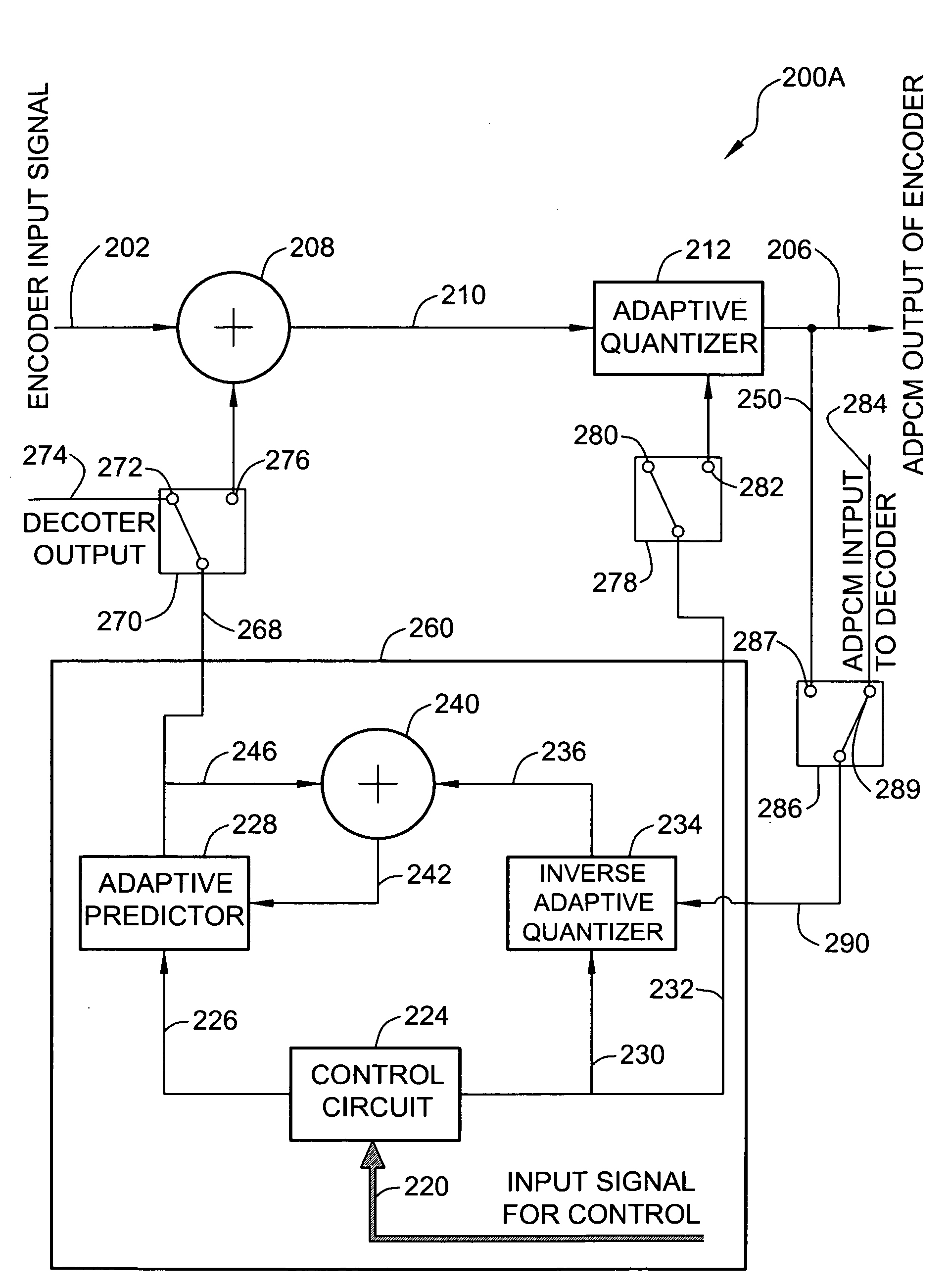
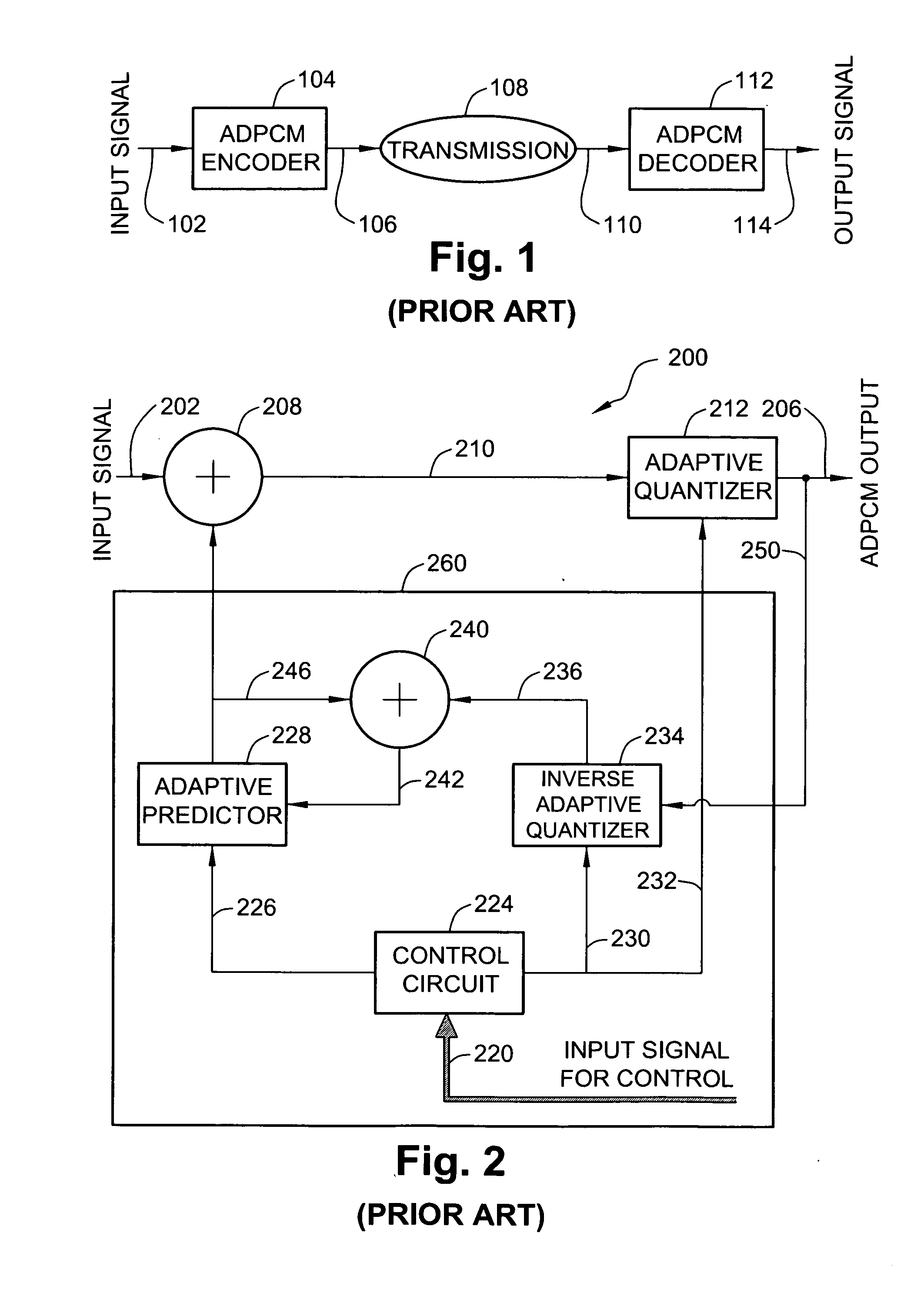
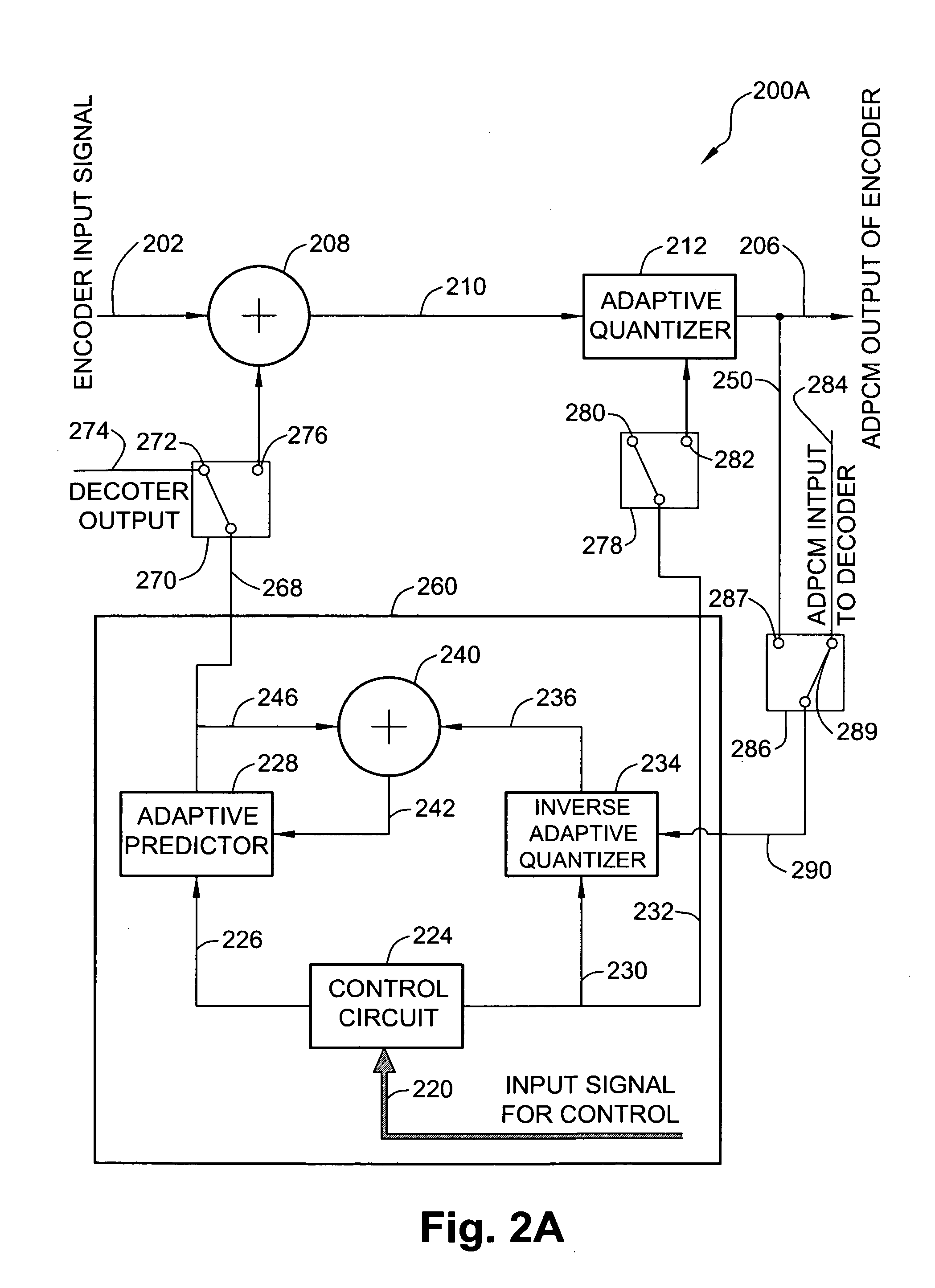
[0037]FIG. 1 is a schematic illustration of a general ADPCM transmission scheme as commonly conducted according to the prior art. The general scheme shows an input signal 102, being an input to an ADPCM encoder 104. The ADPCM encoder provides an encoded ADPCM output 106 which is t...
PUM
 Login to View More
 Abstract
Description
Claims
Application Information
 Login to View More