Apparatus and methods of operation of passive LED lighting equipment

US20100270942A1Active Publication Date: 2010-10-28CITY UNIVERSITY OF HONG KONG

Image

Smart Image Click on the blue labels to locate them in the text.
Viewing Examples
Smart Image
  • Apparatus and methods of operation of passive LED lighting equipment
  • Apparatus and methods of operation of passive LED lighting equipment
  • Apparatus and methods of operation of passive LED lighting equipment

Examples

Experimental program
Comparison scheme
Effect test

Embodiment Construction

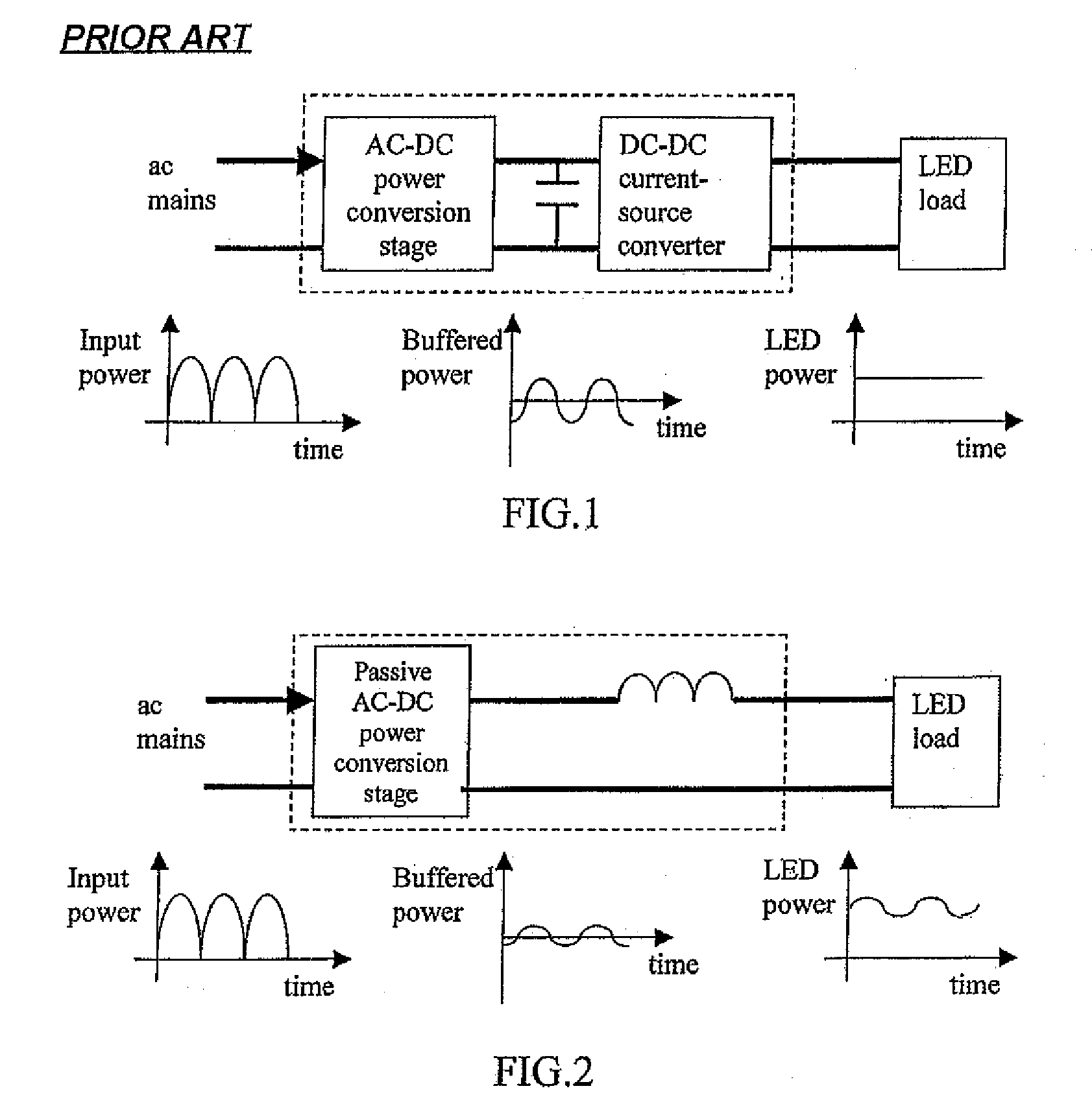
[0086]One important aspect of this invention at least in its preferred forms is to provide a way to reduce the size of the capacitors that is needed so that capacitors other than the electrolytic type can be used. With electrolytic capacitors eliminated in the lighting system, the whole system can be more reliable and last longer.

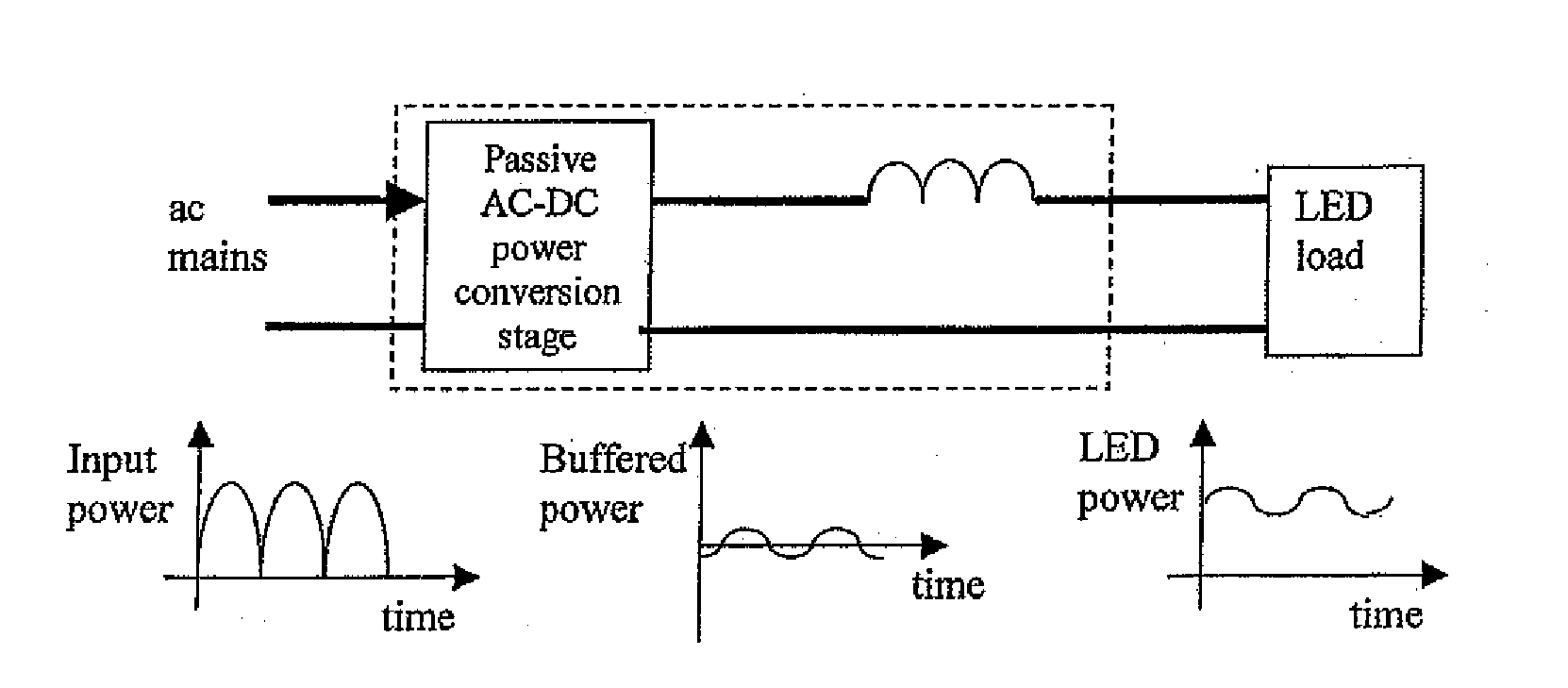
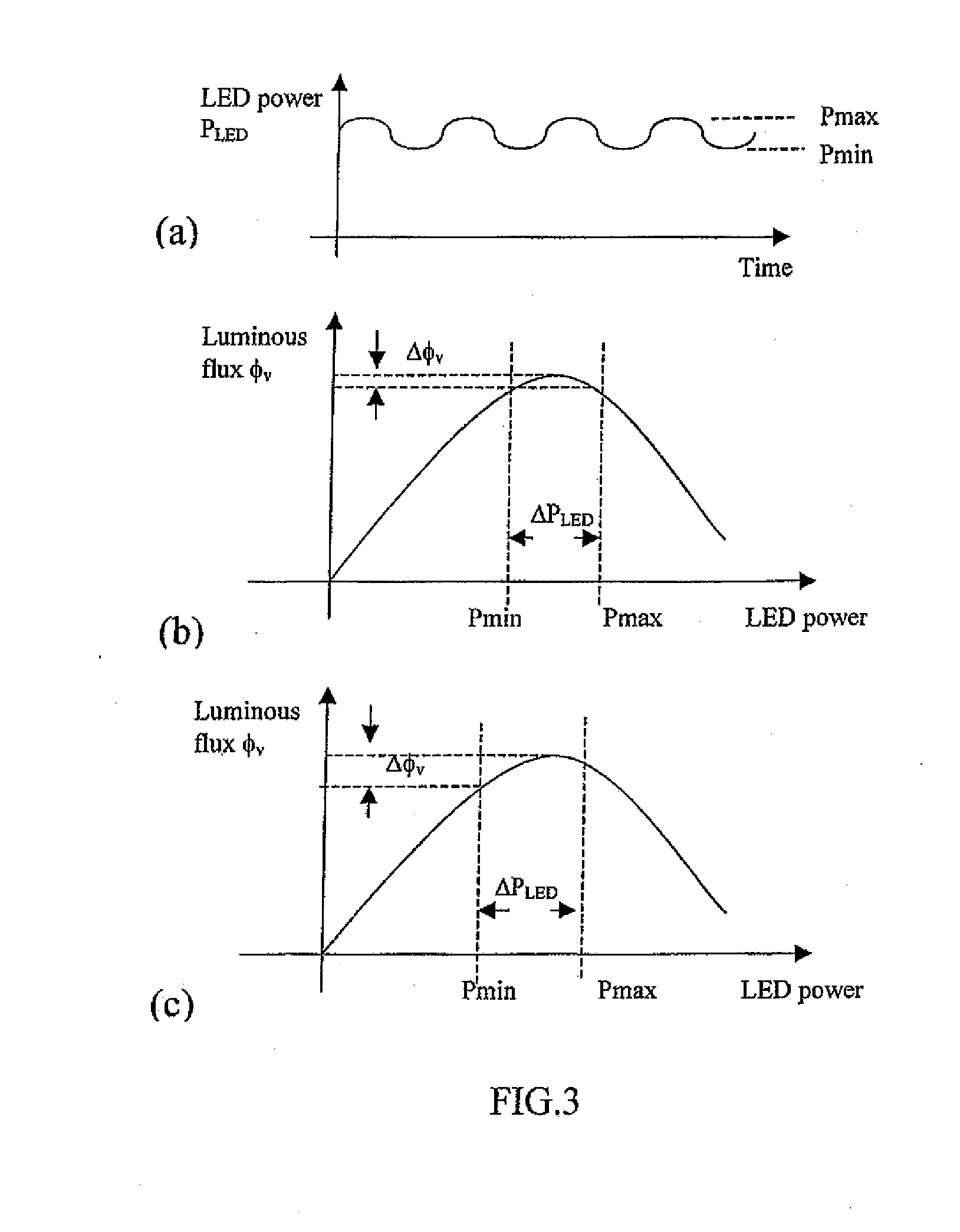
[0087]FIG. 2 is a modified version of FIG. 1 and is used to illustrate this aspect of the invention. If the LED load power is allowed to fluctuate to some extent, the amount of energy buffer required in the energy-storage element of the system becomes less and therefore the size of the capacitance can be reduced to a level that other non-electrolytic capacitors can be used to replace the electrolytic capacitor. Furthermore as the circuit contains only passive components rather than active components complicated control circuitry (which may also require electrolytic capacitors) can be avoided.

[0088]In addition to the elimination of electrolytic capacitors, t...

the structure of the environmentally friendly knitted fabric provided by the present invention; figure 2 Flow chart of the yarn wrapping machine for environmentally friendly knitted fabrics and storage devices; image 3 Is the parameter map of the yarn covering machine
Login to View More

PUM

No PUM Login to View More

Abstract

This invention is concerned with the control and design of a LED lighting system that does not need electrolytic capacitors in the entire system and can generate light output with reduced luminous flux fluctuation. The proposal is particularly suitable, but not restricted to, off-line applications in which the lighting system is powered by the ac mains. By eliminating electrolytic capacitors which have a limited lifetime of typically 15000 hours, the proposed system can be developed with passive and robust electrical components such as inductor and diode circuits, and it features long lifetime, low maintenance cost, robustness against extreme temperature variations and good power factor. No extra electronic control board is needed for the proposed passive circuits, which can become dimmable systems if the ac input voltage can be adjusted by external means.

Description

CROSS-REFERENCE TO RELATED APPLICATIONS[0001]This application is a continuation-in-part of U.S. patent application Ser. No. 12 / 544,545, filed Aug. 20, 2009, which is a continuation-in-part of U.S. patent application Ser. No. 12 / 474,001, filed May 28, 2009, which is a continuation-in-part of U.S. patent application Ser. No. 12 / 429,792, filed Apr. 24, 2009, each of which is hereby incorporated herein by reference in its entirety.FIELD OF THE INVENTION[0002]This invention relates to apparatus and methods for the operation of passive light emitting diode (LED) lighting equipment, and in particular to such apparatus and methods as may avoid the need to use electrolytic capacitors.BACKGROUND OF THE INVENTION[0003]LED technology has been promoted as a promising lighting technology to replace energy-inefficient incandescent lamps and mercury-based linear and compact fluorescent lamps. It is often claimed by LED manufacturers that the LED devices have a long lifetime that could be higher tha...

Claims

the structure of the environmentally friendly knitted fabric provided by the present invention; figure 2 Flow chart of the yarn wrapping machine for environmentally friendly knitted fabrics and storage devices; image 3 Is the parameter map of the yarn covering machine
Login to View More

Application Information

Patent Timeline
28 Oct 2010
Publication
US20100270942A1
IPC
H05B37/02; H05B44/00
CPC
Y02B20/342; H05B33/0809; H05B45/355; H05B45/375; Y02B20/30
Inventors
HUI, RON SHU YUEN; CHEN, WU