
Image sensor structure and fabricating method therefor
a technology of image sensor and manufacturing method, which is applied in the direction of electrical equipment, semiconductor devices, radio frequency controlled devices, etc., can solve the problems of reducing the focal length, and reducing the focal angl
- Summary
- Abstract
- Description
- Claims
- Application Information
AI Technical Summary
Benefits of technology
Problems solved by technology
Method used
Image

Examples
Embodiment Construction
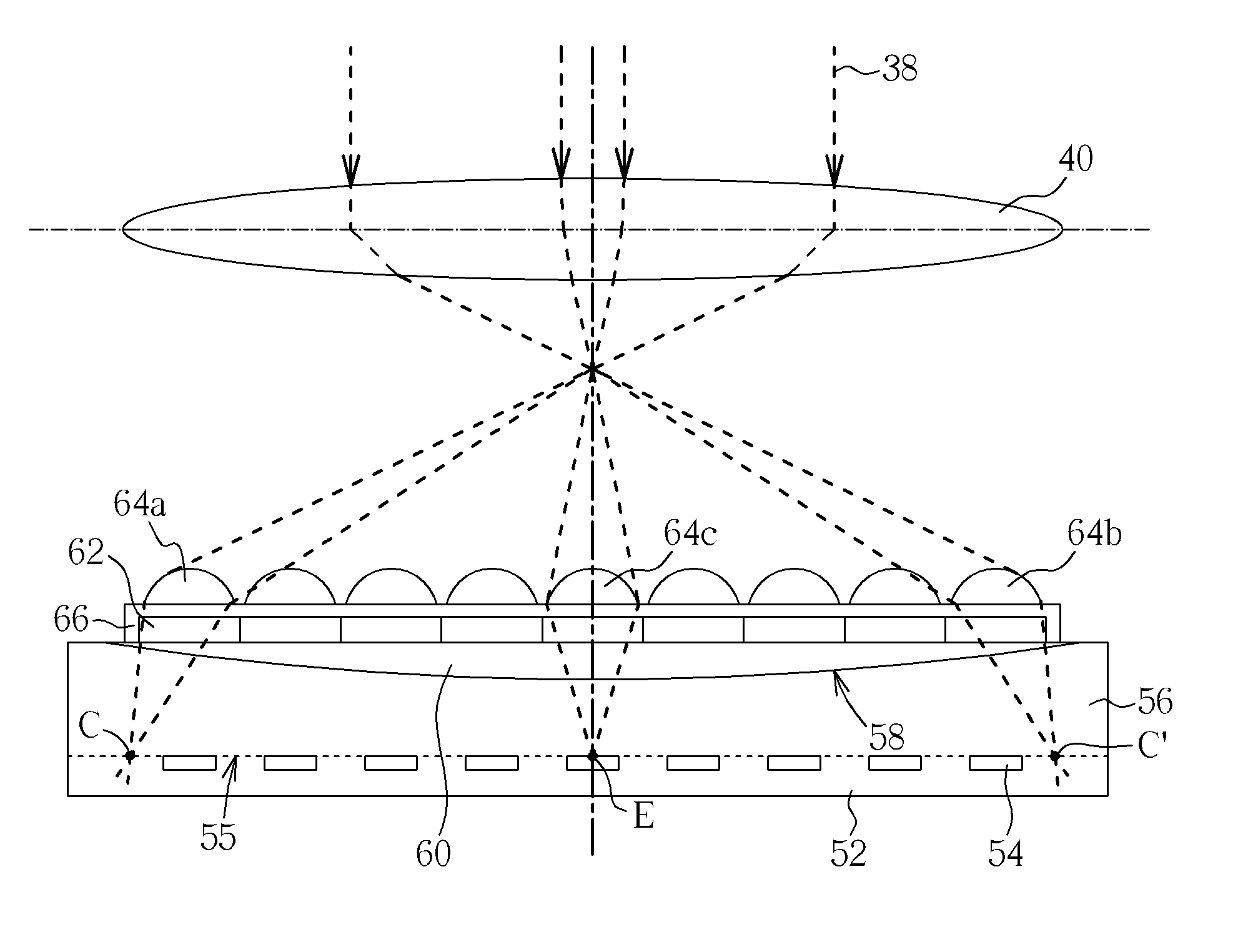
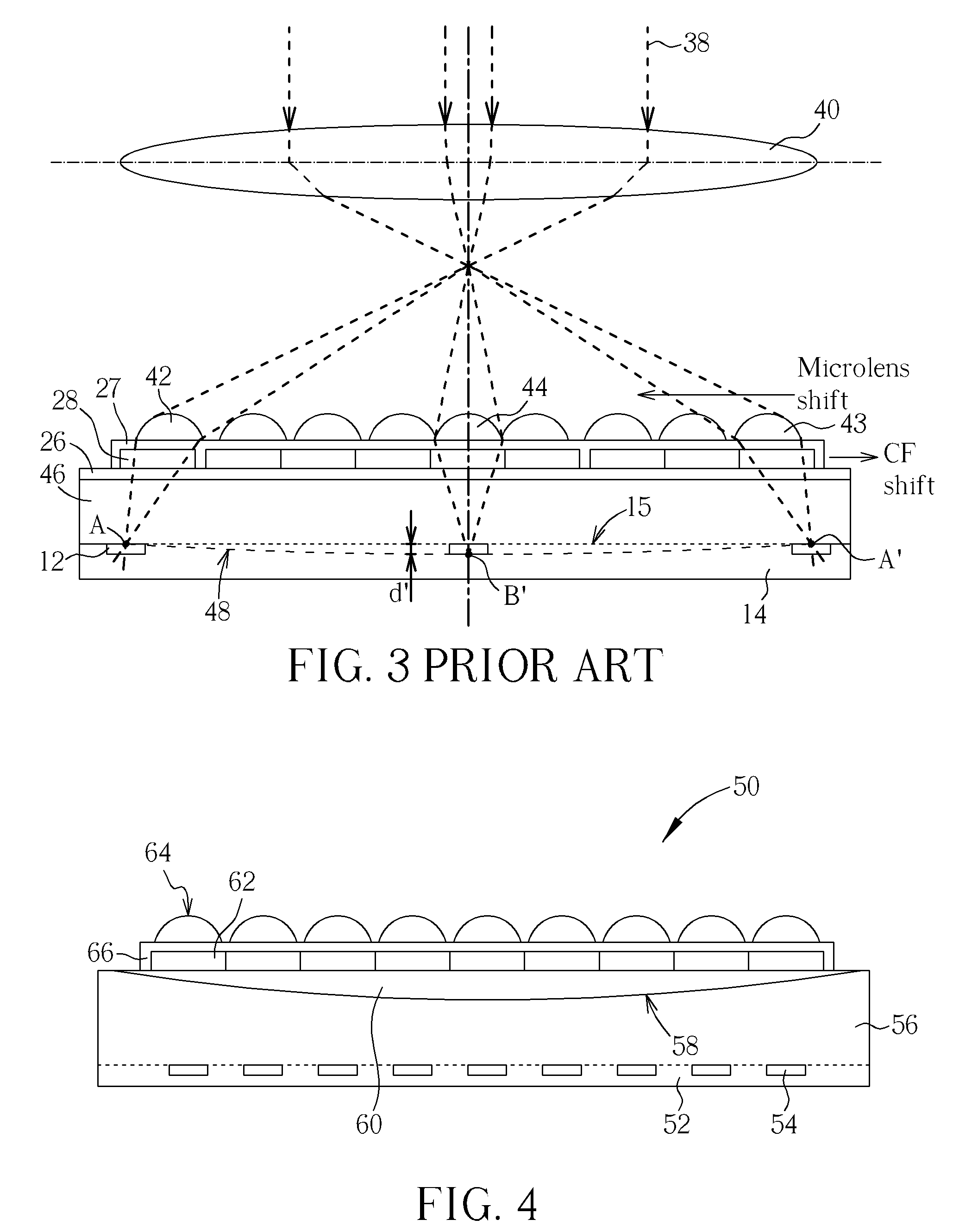
[0021]The image sensor structure according to the present invention may be applied to CMOS image sensor (CIS) devices or charge coupled devices (CCD) FIG. 4 illustrates a cross-sectional diagram of an embodiment of the image sensor structure according to the present invention. As shown in FIG. 4, the image sensor structure 50 includes a substrate 52, a sensor array 54, a dielectric layer 56, an under layer 60, a filter array 62, and a microlens array 64. The substrate 52 may be for example a semiconductor substrate. The sensor array 54, i.e. an array of sensing elements, is disposed at the surface of the substrate 52. It may be disposed in or on the substrate surface without particular limitation but in accordance with the properties of the sensing element or device design. The sensing element may be, for example, photo-sensing element, such as photodiode. The dielectric layer 56 covers the sensor array 54 and the substrate 52. The dielectric layer 56 includes a top surface 58 and i...
PUM
 Login to View More
 Abstract
Description
Claims
Application Information
 Login to View More