
Dual port static random access memory cell layout
a static random access and memory cell technology, applied in the field of semiconductor devices, can solve the problems of increased parasitic interconnection capacitance, adversely affecting read and write margins, and increasing parasitic interconnection capacitan
- Summary
- Abstract
- Description
- Claims
- Application Information
AI Technical Summary
Problems solved by technology
Method used
Image

Examples
Embodiment Construction
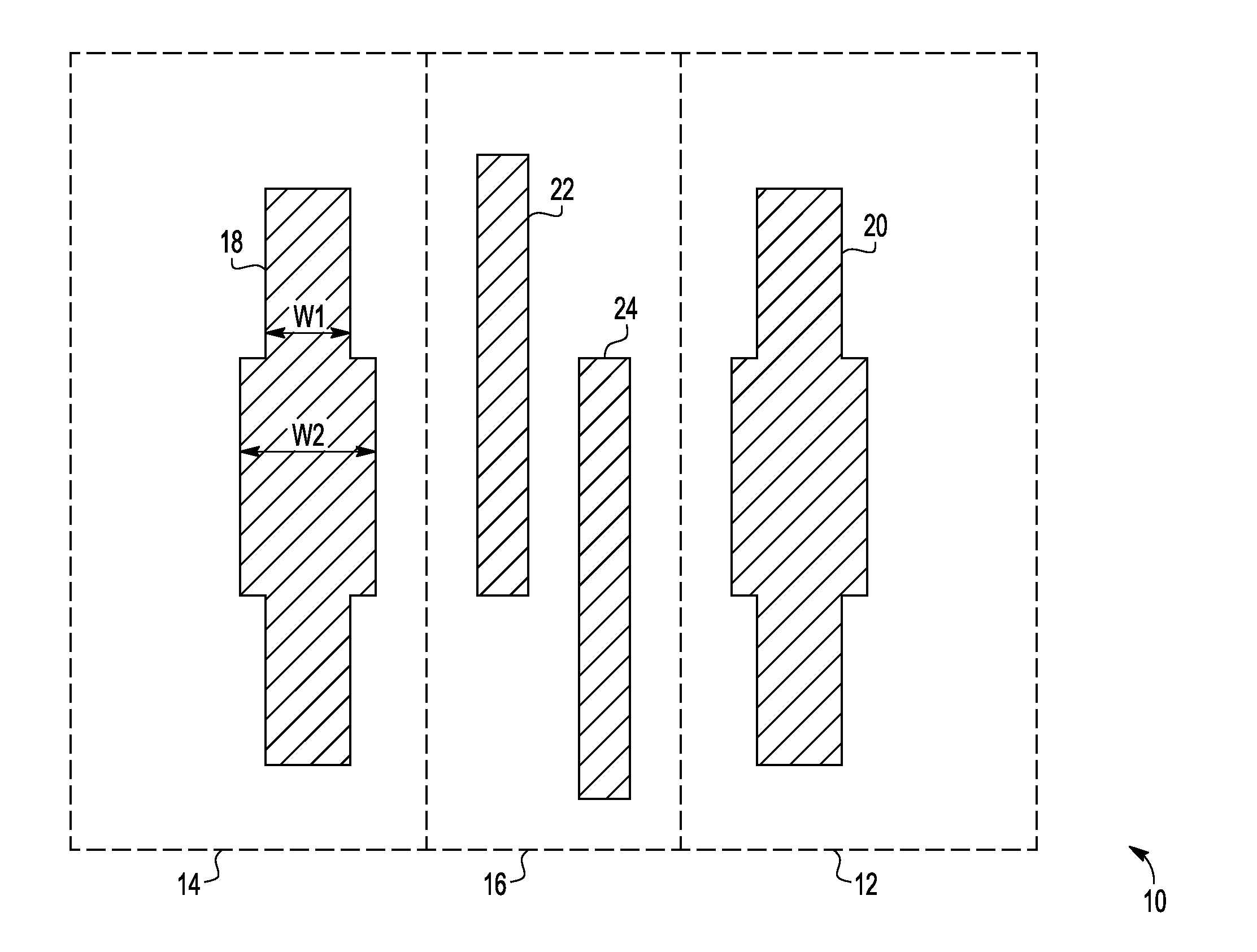
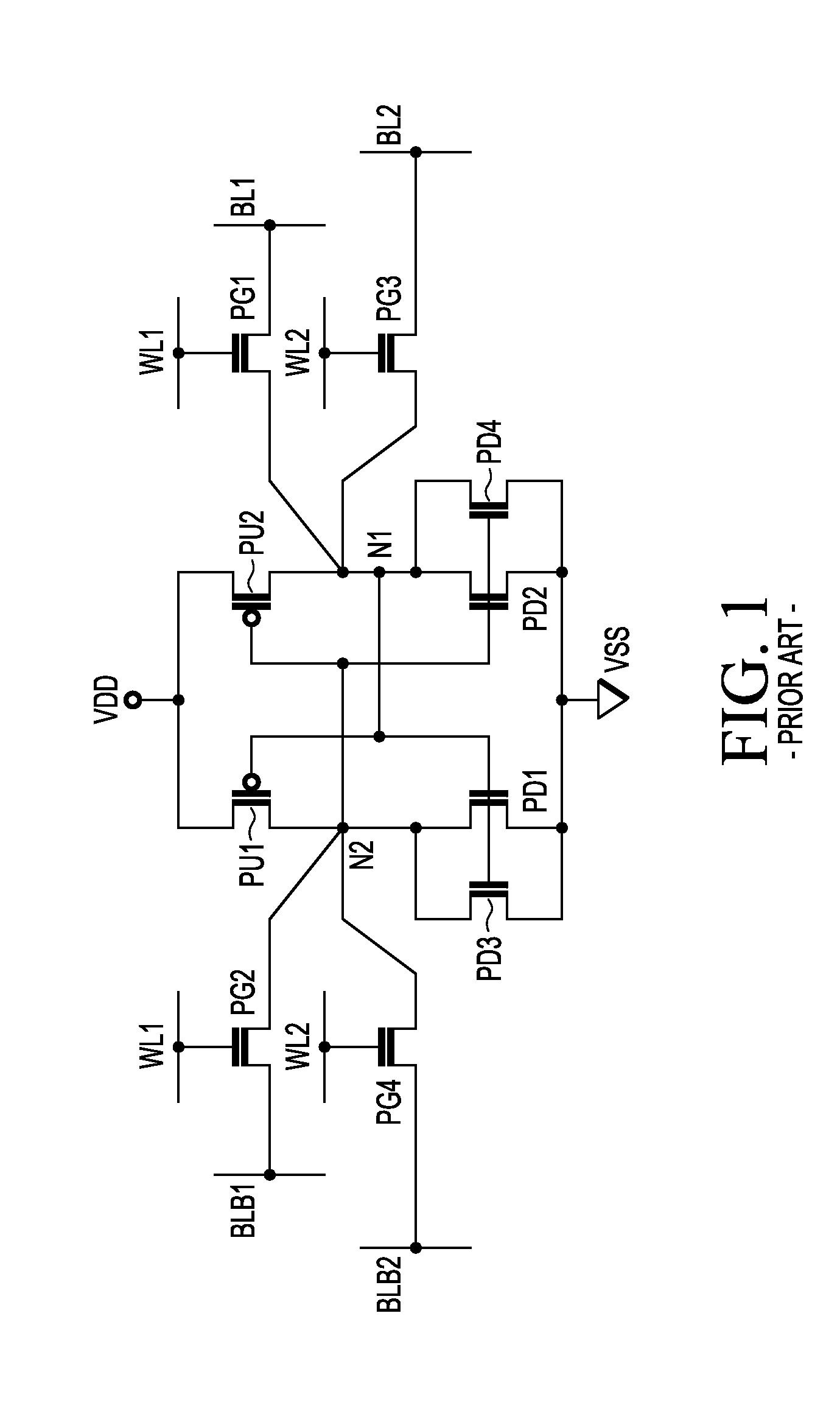
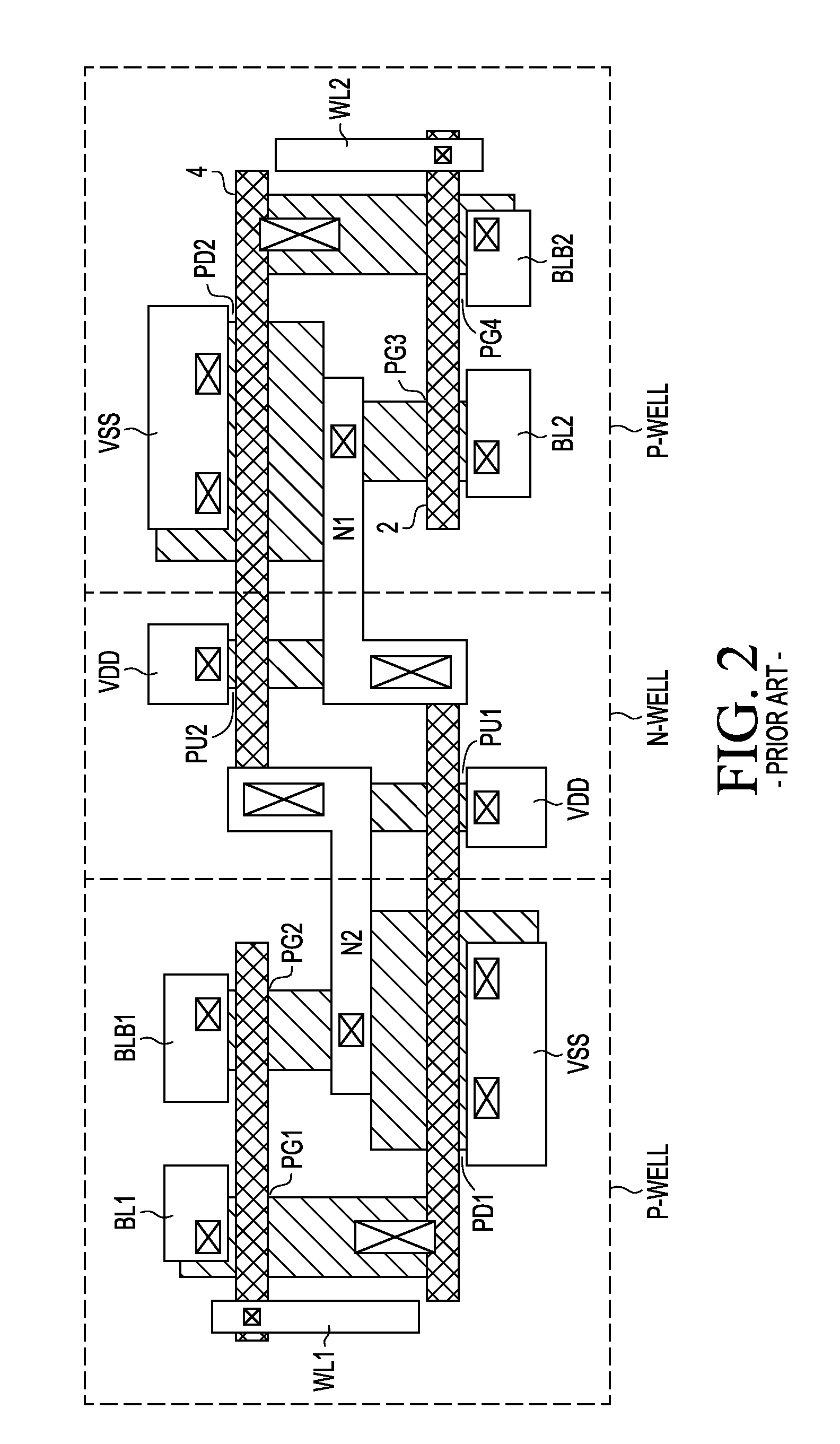
[0011]Generally, there is provided, an SRAM cell layout having symmetrical access transistors and multiple parallel-connected pull-down transistors. The symmetrical access transistors provide lower mismatch while the parallel-connected pull-down transistors provide a better width transition than one very wide transistor. Also, all of the access transistors are connected to the internal storage nodes using metal and are fully symmetrical, thus reducing mismatch. The layout also provides a better height to width ratio reducing the word line parasitic capacitance as compared to the prior art layout of FIG. 2.
[0012]In one aspect, there is provided dual port static random access memory cell having pull-down transistors, pull-up transistors, and pass transistors, comprising: a first active region having a first pull-down transistor coupled to a first data node, a second pull-down transistor coupled to a complementary data node that is complementary to the first data node; a first pass tra...
PUM
 Login to View More
 Abstract
Description
Claims
Application Information
 Login to View More